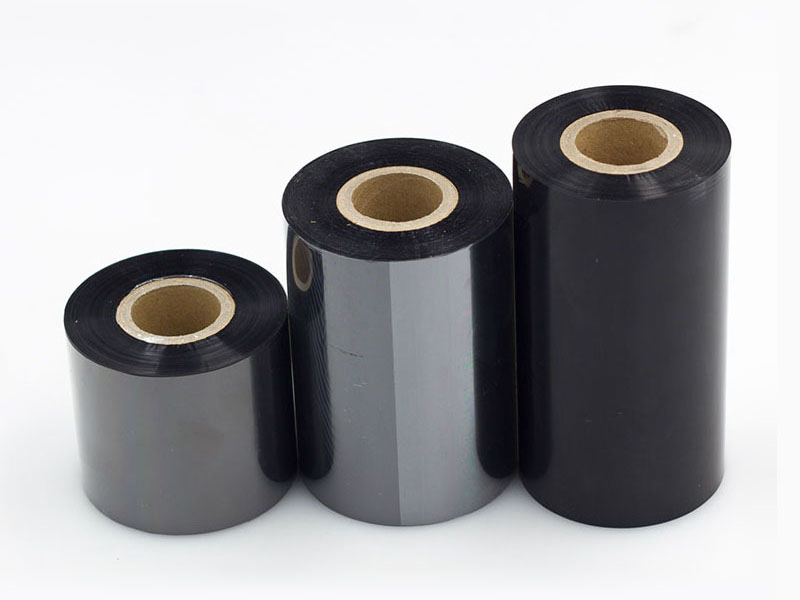
As a key consumable for barcode printers, the quality of ribbon directly determines the printing effect. In ribbon production, slitting is the last critical process, and coating scratches are one of the most common and difficult problems in the process. Once the coating is scratched, it will cause the printing to be white, and the whole ribbon will be scrapped. This paper will systematically explain the causes and avoidance measures of coating scratches during ribbon slitting from five dimensions: human, machine, material, method and environment.
1. Source control: preparation before slitting
1. Master Roll Inspection
Strict visual inspection of the master roll should be carried out before slitting, using strong light transmission to check the surface of the master roll for original scratches, bubbles, or impurities. For ink or wax coatings, special attention should be paid to the dryness of the edge area, which is prone to chips and scratches during slitting.
2. Clean environment
The slitting workshop should maintain a purification standard of 100,000 levels, and the temperature and humidity should be controlled at 23±2°C and 50±10%RH. Once the dust particles in the air fall on the coating surface, they will wear the coating like sandpaper under the action of slitting tension. It is recommended to install an FFU air filtration unit and regularly check the amount of dust.
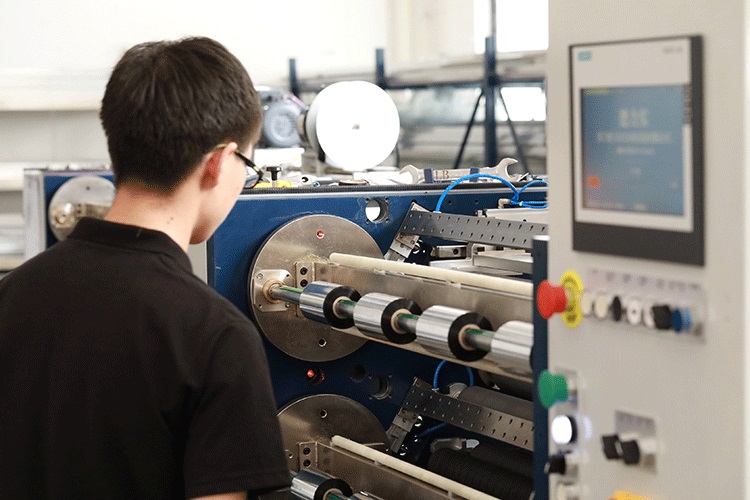
2. Equipment optimization: fine adjustment of the slitting machine
1. Over-roll surface treatment
All over rollers in contact with the ribbon should prefer super-mirror aluminum guide rollers (Ra≤0.05μm) or ceramic-coated guide rollers. For parts that are prone to static electricity, anti-static polyurethane rubber rollers can be installed. Special attention should be paid to: any corroded, worn or aging over rollers must be replaced immediately.
2. Slitting tool selection
Air knife slitting or high-quality round blades are used. It is recommended to use cemented carbide or ceramic blades for round blade materials, with a blade edge angle of 30°-35° and a blade hardness not lower than HRC65. Regularly inspect the edge with a 200x microscope and replace it immediately if micro-serrated wear is found. The overlap of the upper and lower knives is controlled at 0.5-1.0mm, and the lateral clearance is 0.02-0.05mm.
3. Tension control system
The slitting tension should be differentiated according to the ribbon substrate thickness and coating type:
• Wax-based ribbon: tension controlled at 3-5N
• Mixed base ribbon: 5-8N
• Resin-based ribbons: 8-12N
The closed-loop automatic tension control system is used to ensure that the tension is constant throughout the whole process from unwinding to winding, avoiding relative slippage between the coating and the guide roller caused by tension fluctuations.
4. Static elimination
When the ribbon is slit, it is very easy to generate static electricity, and the dust adsorbed by electrostatic electricity is the indirect driver of scratches. AC or pulsed DC static elimination rods are installed at the unwinding, slitting and rewinding positions, respectively, and the ion needle tips are cleaned regularly. At the same time, ensure that the equipment is reliably grounded, and the grounding resistance is less than 4Ω.
3. Operating specifications: standardized operating procedures
1. Belt path optimization
Reasonably plan the direction of the ribbon to avoid sharp angle bending. Make sure that the ribbon coating surface (usually the outer surface) does not come into contact with any fixed metal parts. All contact points should use free-rotating guide rollers instead of fixed guide rods.
2. Cleaning and maintenance system
• Before the start of each shift: Wipe down all rollers with a dust-free cloth dipped in anhydrous ethanol
• After slitting each roll: check whether the winding end face is neat and free of burrs
• After each shift: Clean the toner debris in the tool slot
• Weekly: Disassemble the tool holder for deep cleaning
3. Start-stop control
When starting the slitting machine, the principle of "low speed start-constant speed operation - low speed finishing" should be followed. Avoid sudden acceleration or stop, sudden speed changes will cause the ribbon to slip instantly on the guide roller, which is the high incidence of coating scratches.
4. Auxiliary measures: tooling and testing
1. Paper tube retraction
Using high-precision paper tubes, the roundness error ≤ 0.1mm. The end face of the paper tube must be chamfered and smoothed to avoid sharp edges scratching the side of the ribbon during winding. For narrow slitting (width less than 20mm), it is recommended to use plastic or aluminum alloy tubes.
2. Online inspection system
An online surface defect detection system is installed to monitor the coating surface in real time using a CCD camera. When continuous scratches are detected, the system automatically alarms and stops to avoid batch defects. It is recommended to set the detection accuracy to scratches above 0.1mm to identify them.
5. Troubleshooting guidelines for common problems
| Scratch features | Possible causes | Investigation direction |
| Periodic scratching (fixed spacing) | A certain guide roller does not rotate or there is a foreign object | Check the rotation flexibility of the rollers one by one |
| Continuous scratches (throughout the volume) | Blade chipping or over roller with hard spots | Examine the blade edge under a microscope |
| Irregular short line scratches | Caused by electrostatic adsorption of dust | Detect the working status of the static eliminator |
| Scratches on one side | The end face burrs or baffles of the paper tubes are too tight | Check the winding tooling |
6. Conclusion
Avoiding scratches on ribbon slitting coatings is a systematic project that involves multiple dimensions such as equipment accuracy, process parameters, environmental control, and personnel operation. It is recommended that enterprises establish the management concept of "prevention first, supplemented by testing", regularly calibrate the accuracy of the slitting machine, and conduct standardized training for operators. It has been proved that through the comprehensive application of the above measures, the defective rate caused by coating scratches can be reduced from the conventional 2-3% to less than 0.5%.
Finally, it should be emphasized: while pursuing slitting speed, do not sacrifice equipment maintenance and inspection time. A well-maintained slitting machine creates far more value than a blind pursuit of capacity.
 English
 Deutsch
 Français
 Español
 Português
 日本語
日本語 русский
 한국어
한국어 عربي
عربي ภาษาไทย
 Tiếng Việt
 Italiano

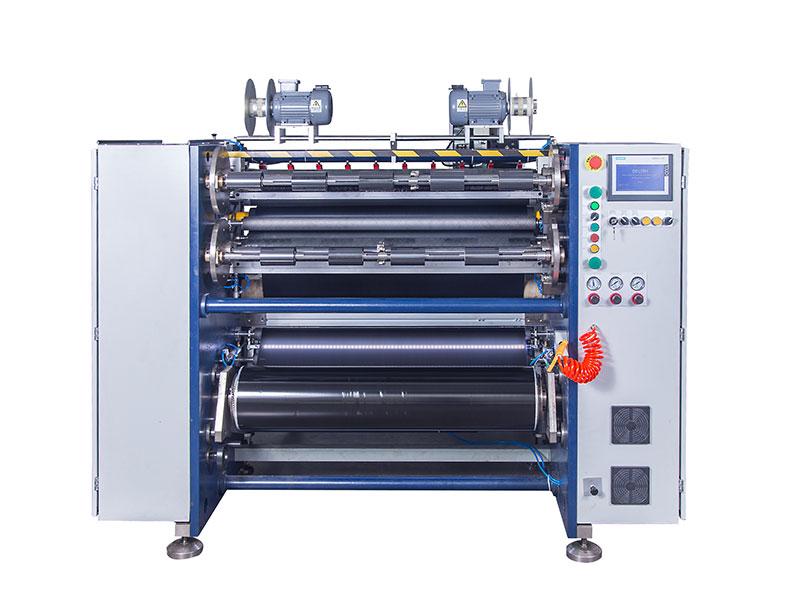 Ribbon Slitting Machine
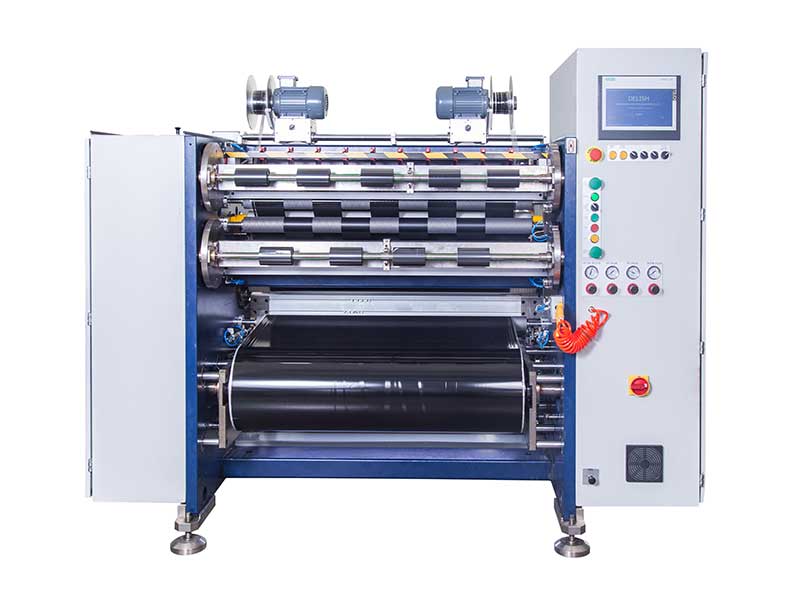 Barcode Ribbon Slitting Machine
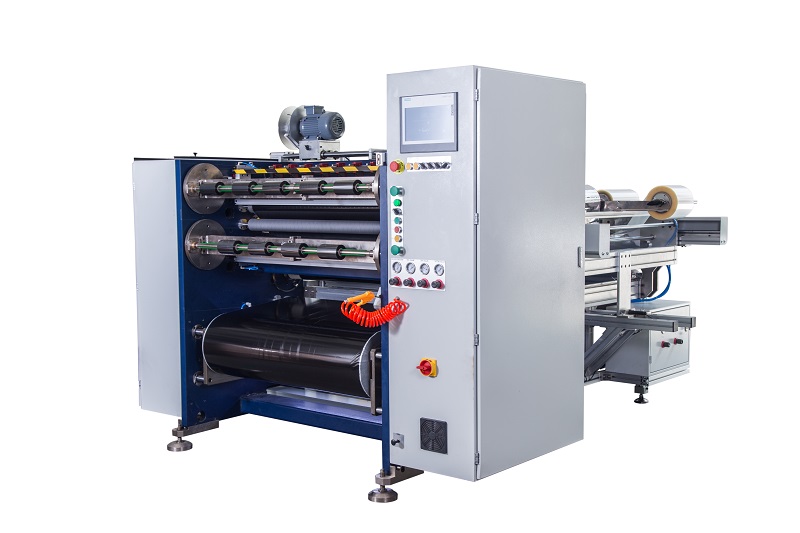 Semi Automatic Thermal Transfer Ribbon Slitter RSDS5 PLUS
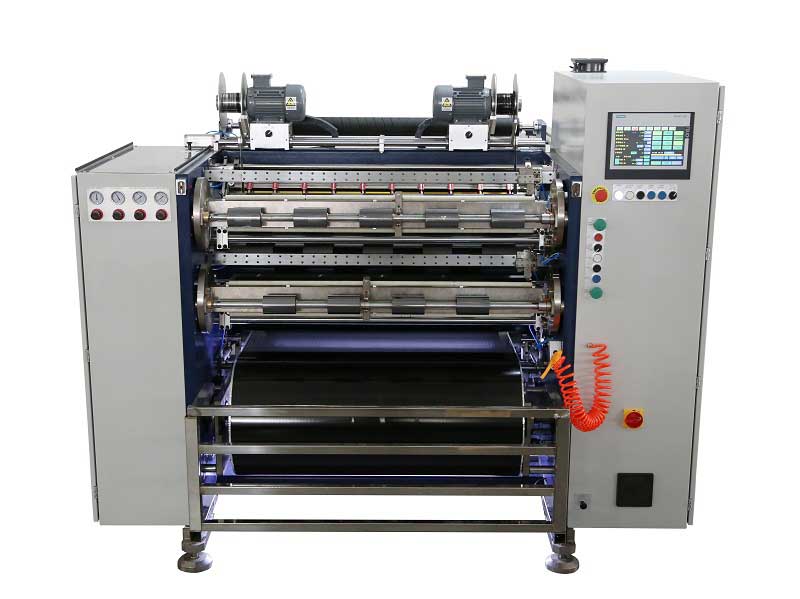 Automatic Thermal Transfer Ribbon Slitter RSDS8 H PLUS
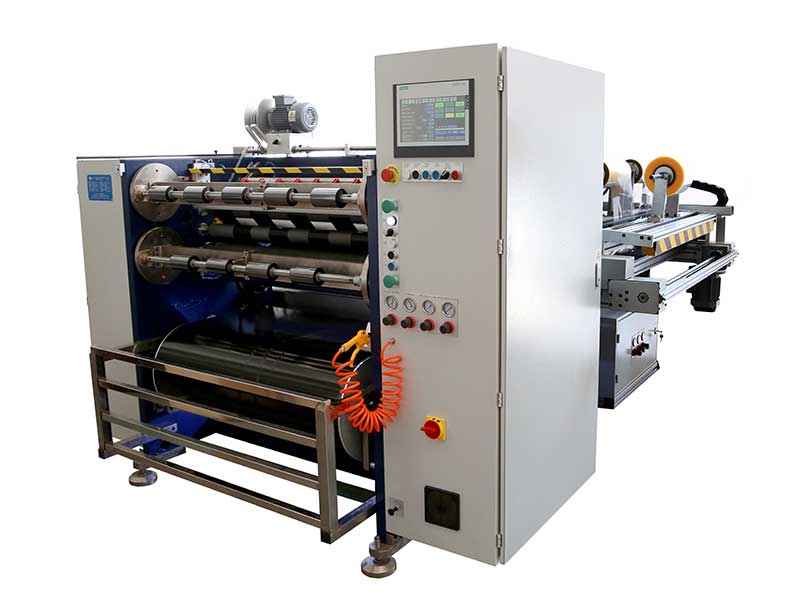 Automatic Thermal Transfer Ribbon Slitter RSDS6 PLUS
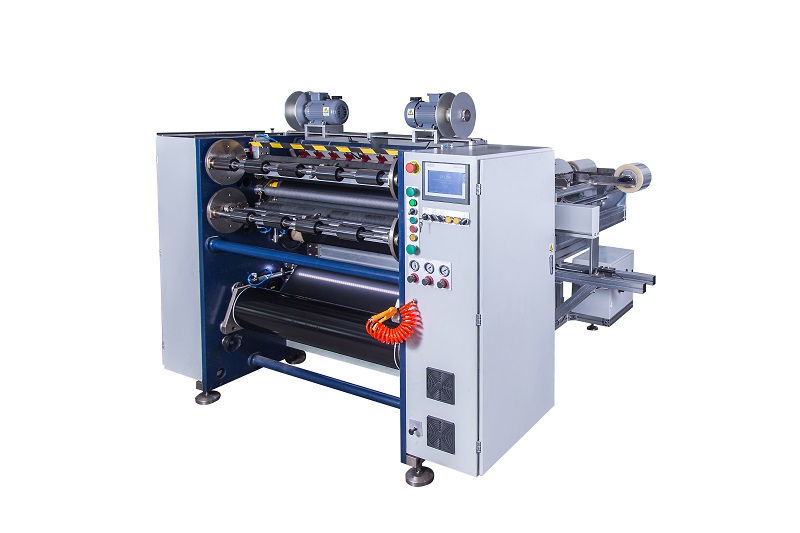 Semi Automatic Thermal Transfer Ribbon Slitter RSDS1 PLUS
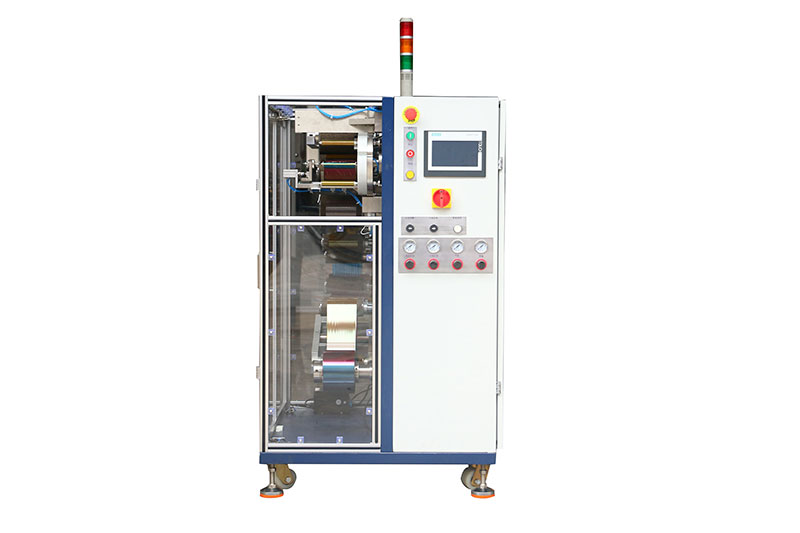 Card Print Ribbon Rewinder
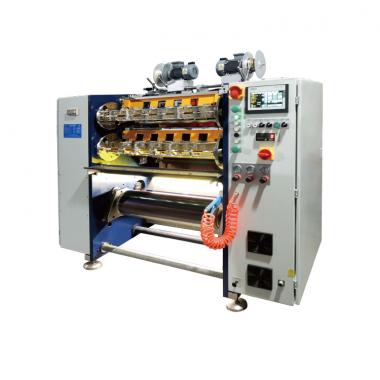 Card Print Ribbon Slitter