The slitting link of solar film (thermal insulation film, automotive film, building film) directly affects the quality and efficiency of subsequent films. Choosing the right slitting machine can not only reduce material loss, but also improve the yield. This article helps you clarify your selection ideas from the two dimensions of core parameters and applicable scenarios.
1. Clarify the requirements first: What kind of membrane are you slitting?
There are many types of solar films, and the requirements for slitting machines vary greatly between different materials:
• Automotive film: usually about 1.5m wide, requiring neat cutting edges and no burrs, especially magnetron sputtering film, which wears out quickly
• Building film: The width can reach 1.8m or even more than 2m, and the film layer is thicker, which requires higher tension and stability of the slitting machine
• PPF (Paint Protective Film): High elasticity, with adhesive layer, it is easy to stretch and deform or produce rubber wires when slitting, and it needs to be equipped with special anti-stick treatment
Suggestion: First sort out the membrane types, commonly used widths and thickness ranges of your main processing, and then select the type in a targeted manner.
2. Detailed explanation of key parameters
1. Slitting method
This is the core process of the slitting machine and directly determines the quality of the finished product:
| way | Principle | Applicable scenarios | Pros and cons |
| Round knife slitting | Rotary disc cutter shearing | Ordinary PET solar film, thinner building film | Fast and efficient, but prone to indentation on thick or durable films |
| Flat knife slitting | The upper and lower knife dies are punched and cut | Multi-layer composite film, adhesive film, PPF | The cuts are smooth and indentation-free, but the tool cost is slightly higher |
| Air knife slitting | High-pressure airflow assisted slitting | Ultra-thin, easy-stretch film | No physical contact, no damage to the film surface, but high equipment investment |
Suggestion: If you mainly use ordinary automotive film, the round knife type is cost-effective; If PPF or high-end magnetron sputtering film is involved, the flat knife or air knife model is preferred.
2. Tension control system
Tension control is the "soul" of the slitting machine. the tension is too large, and the edges of the membrane roll are wrinkled or even broken; If the tension is too small, the film roll is loose and uneven.
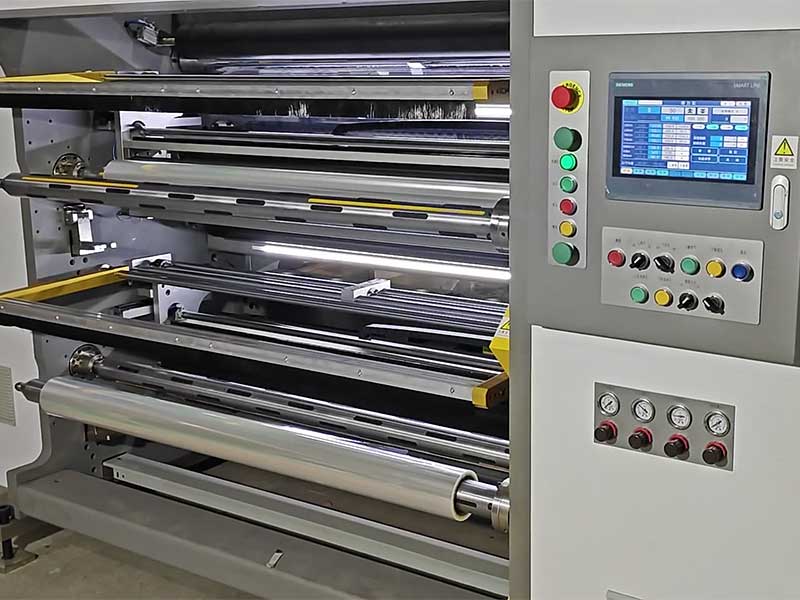
• Closed-loop tension control: Equipped with real-time feedback from tension sensors, automatically adjusting unwinding and rewinding torques – standard on mid-to-high-end models, highly recommended
• Open-loop control: Relies on experience to preset tension values, suitable for experienced masters, but difficult for newcomers to get started
Recommendation: Regardless of the budget, try to choose a model with automatic tension adjustment, especially when dealing with wide or thin films, this configuration can significantly reduce scrap rates.
3. Winding method
The neatness of winding directly affects the unwinding experience during subsequent filming:
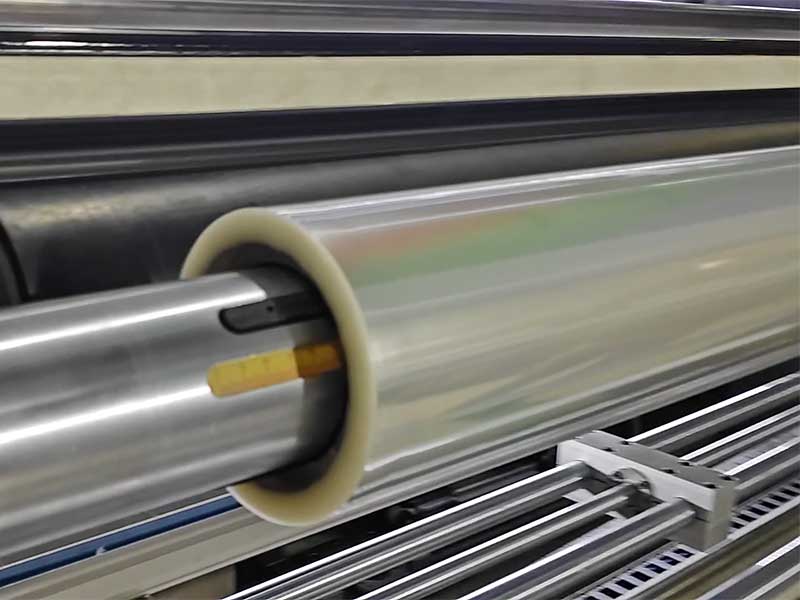
• Center winding: core driven, suitable for small rolls and narrow products, commonly used in automotive film cutting
• Surface winding: contact roller driven, suitable for large rolls, wide products, commonly used for building films
• Center + surface combination winding: high-end models are adopted, taking into account the advantages of both, and the finished roll surface is smoother
Recommendation: If the finished roll is mostly used for direct film in the store, it is recommended to choose combination winding or high-quality center winding to avoid "telescope" rolls (protruding edges) or loose inner cores.
4. Slitting accuracy and minimum slitting width
• Accuracy: The slitting width error of high-quality models can be controlled within ±0.1mm, and ordinary models are mostly ±0.3-0.5mm
• Minimum slitting width: If there is often a need for narrow strip slitting (such as automotive side window film, narrow building decorative film), it is necessary to pay attention to whether the minimum slitting width of the equipment can be met, generally up to 10-20mm
Suggestion: The accuracy parameters should not only look at the nominal value of the manufacturer, but preferably require on-site proofing and actual measurement.
5. Cutter shaft and cutter
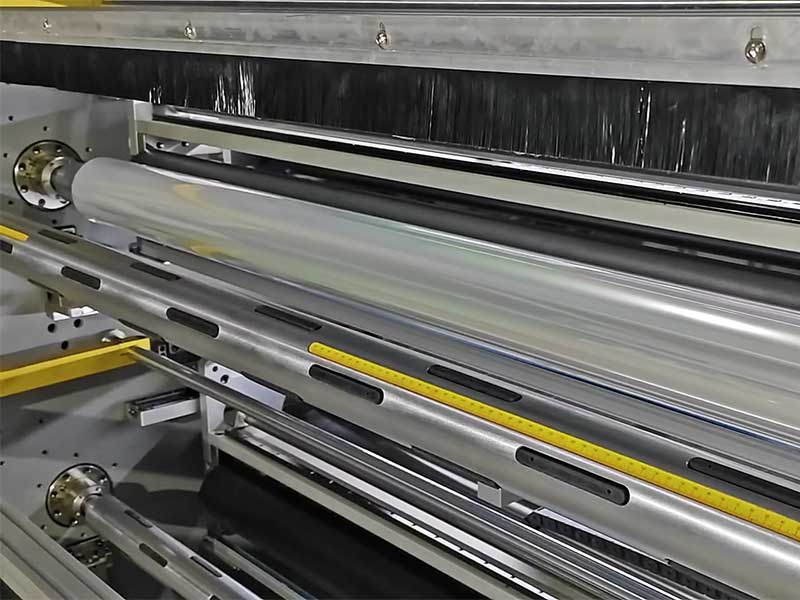
• Axis dynamic balance level: It is recommended to choose G2.5 or above, which has less vibration and smoother incision during high-speed operation
• Tool material: When slitting magnetron sputtering film or film containing ceramic particles, ordinary tools wear out very quickly, so it is recommended to use carbide or diamond-coated tools
6. Degree of automation
• Semi-automatic: manual feeding, tool adjustment, and unwinding, suitable for flexible production of small batches and multiple specifications
• Fully automatic: Equipped with automatic positioning, automatic tool adjustment, and automatic unwinding, suitable for large-scale standardized production, but the equipment investment and maintenance cost are higher
3. Applicable scenarios and selection suggestions
Scenario 1: Automobile film franchise store / small cutting and processing workshop
Features: Many specifications, small batches, width concentrated within 1.52m, sensitive to equipment footprint.
Recommendation: Semi-automatic circular knife slitting machine with a width of about 1.6m, equipped with basic tension control, taking into account both cost-effectiveness and flexibility. If you need to slitting magnetron sputtering film, you can upgrade the flat cutter module or choose a model with reduced speed operation of the tool shaft.
Scenario 2: Building film wholesaler / medium and large processing plant
Characteristics: wide width (1.8-2m), large order batch, high requirements for winding neatness.
Recommendation: Automatic slitting machine with a width of more than 2m adopts closed-loop tension control + surface winding method, and is equipped with automatic deviation correction system as standard. It is recommended to reserve the dust removal device interface, which is easy to vacuum electrostatic when the building film is slit.
Scenario 3: PPF / High-end functional film manufacturer
Characteristics: Expensive materials, difficult to slit, and extremely high requirements for zero defects in finished products.
Recommendation: Flat knife or air knife slitting model, equipped with high-precision closed-loop tension control (it is recommended to use imported brand tension sensor), winding adopts center + surface combination method, and the whole machine runs in a dust-free workshop environment. The tool is recommended to be treated with a special anti-stick coating.
Scenario 4: Multi-variety and multi-specification flexible production
Characteristics: The order structure is complex, there are both narrow automotive films and wide construction films, and frequent order changes.
Recommendation: Choose a slitting machine with modular design, the tool holder can be quickly replaced, equipped with an automatic tool position positioning system, and control the order change time within 15 minutes. It is recommended to connect with the MES system to realize the automatic retrieval of process parameters.
4. Other details that cannot be ignored
1. Static electricity elimination: Solar film slitting is very easy to generate static electricity, and "black spot" waste products are formed after adsorbing dust. It is important to have an electrostatic elimination rod, especially in dry areas or when producing in winter.
2. Dust removal device: High-end models can be equipped with dust collection rollers or blow suction dust removal, which is almost a necessity for film types that require high cleanliness (such as invisible car jerseys).
3. Manufacturer service: The slitting machine involves many precision components such as tool shafts, knives, and tension systems, and localized service capabilities are crucial. It is recommended to check whether the manufacturer has a permanent after-sales engineer and whether the spare parts are supplied in a timely manner.
4. On-site proofing: Before purchasing, be sure to use your own film to the manufacturer to try cutting on site, observe the flatness of the cut, the neatness of the winding, and measure the consistency of the slitting width. This is the most straightforward way to verify that the device is adaptable.
Summary
When choosing a solar film slitting machine, there is no "best" model, only the "most suitable" configuration. The core ideas are:
1. Membrane type determination process - determine the slitting method according to the type and thickness of the membrane
2. Width specifications - reserve allowance according to the maximum width, but do not blindly pursue ultra-wide models
3. Precision grading - according to the quality requirements of the finished product, choose the appropriate accuracy level and control system
4. Budget automation - within the budget, priority is given to ensuring tension control and tool quality, and the degree of automation can be moderately trade-off
A stable and reliable slitting machine can often be used for 8-10 years, which is the key equipment in the production line. It is recommended to compare several mainstream manufacturers and make rational choices based on their own order structure and development plans for the next 3-5 years.
 English
 Deutsch
 Français
 Español
 Português
 日本語
日本語 русский
 한국어
한국어 عربي
عربي ภาษาไทย
 Tiếng Việt
 Italiano
 Solar Film Slitter