Abstract
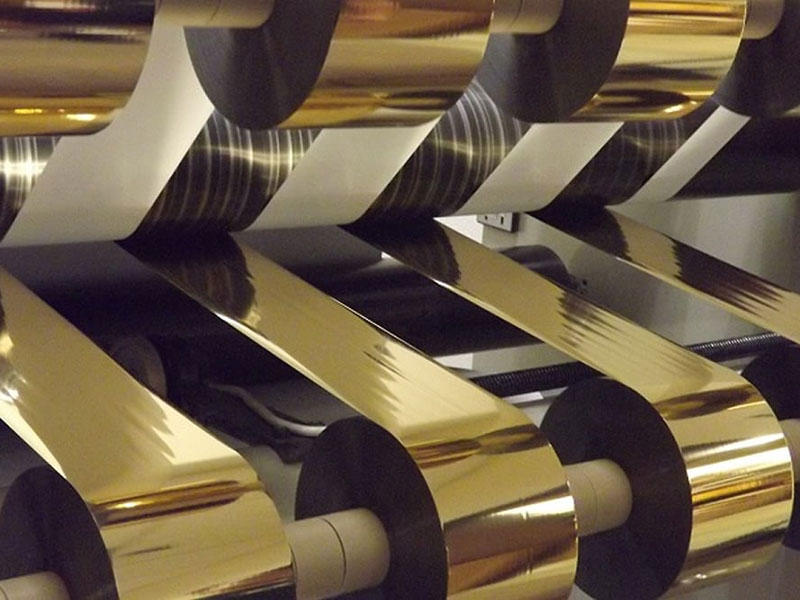
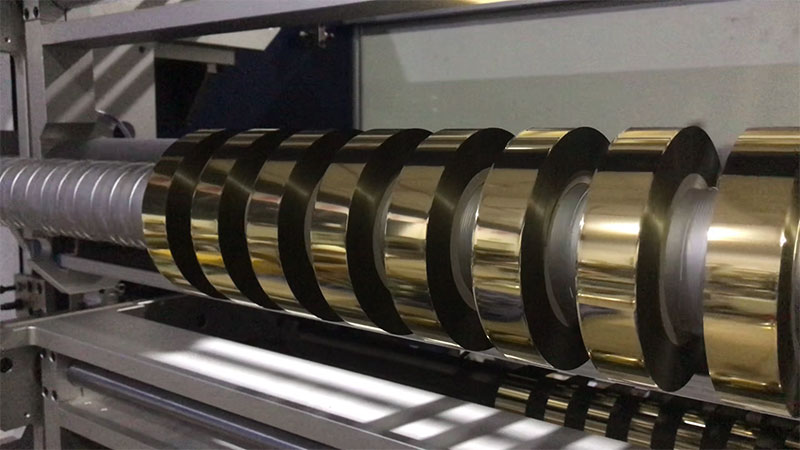
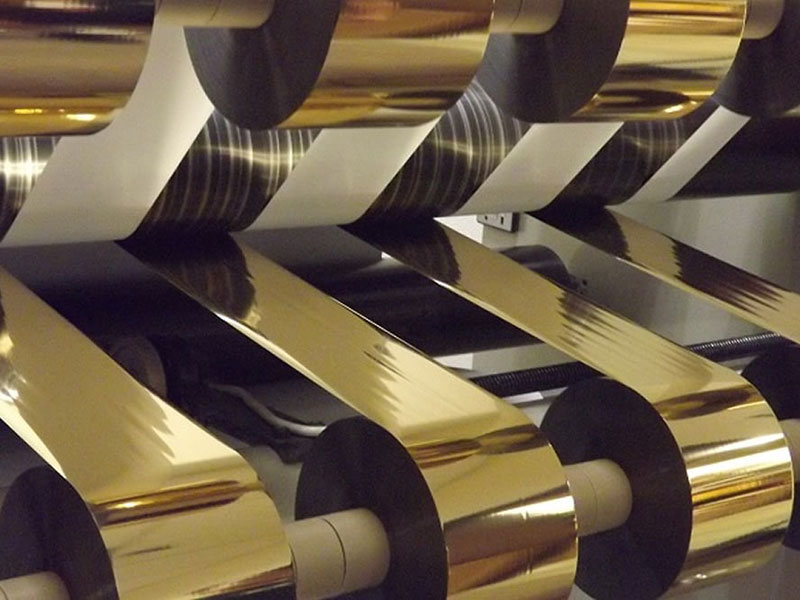
As a high value-added packaging material, the quality of the hot stamping foil is directly related to the smoothness and yield of the subsequent hot stamping process. In the slitting process, winding neatness is one of the core indicators to measure product quality. Poor neatness not only leads to uneven end faces and poor appearance, but also easily leads to serious problems such as "tendoning", deviation and even broken belts in the unwinding process. This paper systematically analyzes the key factors affecting the winding neatness of hot stamping foil slitting machine from four dimensions: equipment accuracy, process parameters, material characteristics and operating environment, aiming to provide theoretical basis and optimization direction for production practice.
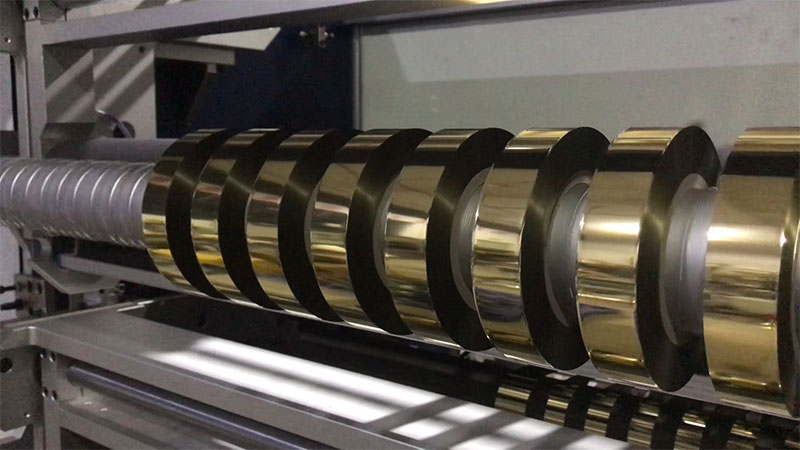
1. Equipment accuracy and mechanical status
The mechanical precision of the equipment is the cornerstone of ensuring the neatness of the winding. Any slight mechanical deviation can be amplified during high-speed operation, leading to uneven winding endfaces.
1. The dynamic balance and straightness of the winding shaft (inflatable shaft).
The winding shaft is the core component that carries the finished coil. If the inflatable shaft itself has bending deformation or poor dynamic balance, radial runout will occur when rotating at high speeds. This runout will cause the foil coil to be subjected to uneven force during the winding process, resulting in changes in the friction distribution between the film layers, resulting in local accumulation or collapse.
2. Parallelism and horizontality of guide rollers
Slitting machines usually consist of multiple guide rollers, flattening rollers and pressing rollers. If the parallelism error between the rollers exceeds the allowable range (usually within 0.05mm/m), the foil will cause lateral drift during the travel process. Especially for extremely thin foil stamping foil thickness (usually only a few microns to more than ten microns), this drift will be directly reflected on the winding end face, forming a "spiral pattern" or "telescope" deviation.
3. The sensitivity of the correction system
Slitting machines are usually equipped with photoelectric or ultrasonic correction systems. If the response speed of the correction sensor is lagging, or there are gaps and stucks in the correction actuator (such as screw rod and guide rail), it will not be possible to correct the offset generated during the unwinding or intermediate process in time. Insufficient correction accuracy is one of the most direct causes of uneven winding edges.
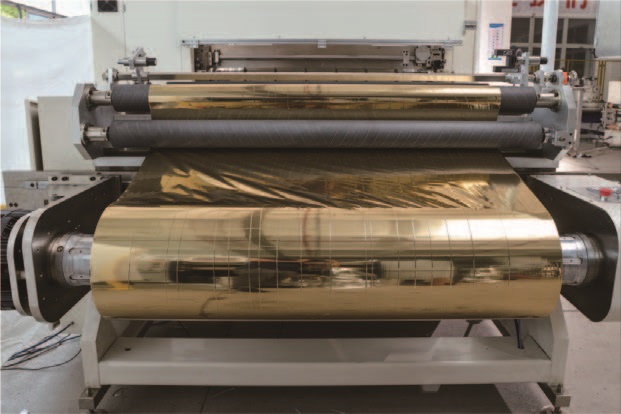
2. Process parameter setting
The matching of process parameters is the core of dynamic control, and improper parameter settings can disrupt the mechanical balance of winding.
1. Rewinding tension control
Foil stamping foil is extremely sensitive to tension.
• Excessive tension: It will cause the foil to be stretched and deformed, and even produce a "chrysanthemum core" shaped hard roll, and the tension difference between the inner and outer layers is too large, which is prone to rolling up in storage or subsequent use.
• Too little tension: It will cause the core to loosen and slip between the foil layers, resulting in misalignment of the end face.
• Taper tension setting: Modern slitting machines mostly use taper tension control (i.e., the tension gradually decreases as the coil diameter increases). If the taper slope is not set reasonably, the outer layer tension cannot compensate for the shrinkage of the inner layer, which will lead to the extrusion of the inner layer or the loosening of the outer layer, which will directly affect the neatness.
2. Slitting speed
Changes in slitting speed affect the dynamic stability of tension. In the acceleration and deceleration stage, if the automatic tension compensation function of the equipment is not perfect, it will cause the tension to fluctuate instantaneously. In addition, excessive linear speed will aggravate the jitter of the foil, especially when slitting narrow strips, which can easily lead to serpentine deviation.
3. The pressure and position of the pressure roller (contact roller).
The function of the press roller is to evenly press the foil on the winding core and discharge the air between the layers.
• Uneven pressure of the roller: If the pressure at both ends of the roller is inconsistent, it will cause one end of the winding to be tight and the other end to be loose, forming a "tapered roll".
• Roller angle: The contact angle between the roller and the rewinding shaft (wrap angle) affects the effect of exhaust and the direction of lateral force, and improper angle will introduce additional lateral force and push the end face of the foil coil unevenly.
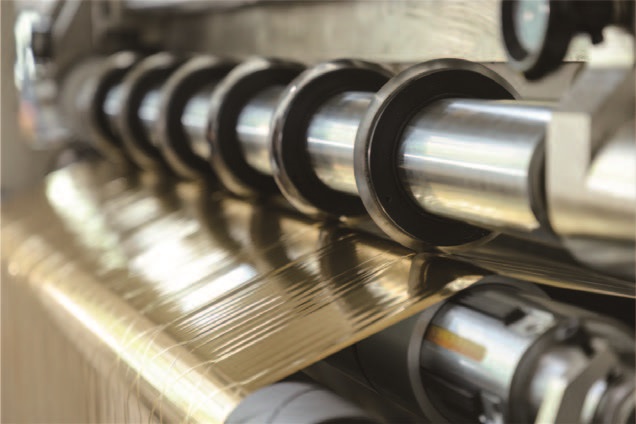
3. Material characteristics
The physical properties of hot stamping foil itself are the internal factors that determine whether it can form a neat core.
1. Substrate thickness uniformity
Hot stamping foil is composed of a base film (such as PET), a release layer, a coloring layer and an adhesive layer. If the thickness tolerance of the substrate itself (TD and MD) is too large, more material will accumulate in the thicker areas under the same tension, resulting in local stress concentration and "burst ribs" during winding, which in turn affects the overall flatness of the end face.
2. Coefficient of friction
The static friction coefficient and dynamic friction coefficient of the foil surface directly affect the sliding ability between layers.
The friction coefficient is too large, and it is difficult to slide relative between the foil layers, and it is easy to produce wrinkles when winding.
If the friction coefficient is too small, the inside of the foil coil is prone to interlayer slippage when the tension fluctuates, resulting in the end face flying out (commonly known as "fried edge").
3. Rewinding diameter and width
• Large coil diameter: As the winding diameter increases, the winding length increases and the cumulative error increases. The large coil diameter requires extremely high levels of rigidity and precise control of the tension of the equipment.
• Narrow slitting: When the slitting width is narrow (such as a few millimeters to tens of millimeters for narrow hot stamping machines), the bending stiffness of the foil is reduced, and it is very susceptible to airflow disturbances and mechanical vibrations, and the alignment difficulty is much higher than that of wide slitting.
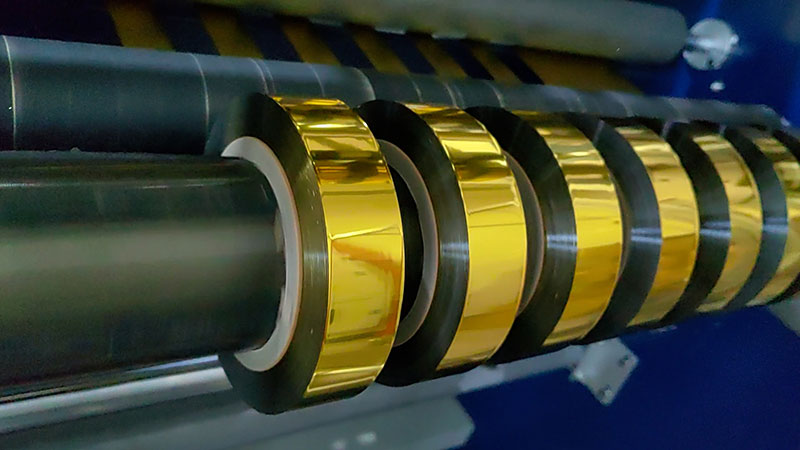
4. Operation specifications and knife die configuration
The selection of human factors and auxiliary tools is also a link that cannot be ignored.
1. Knife die and indentation
Slitting is usually done with a round or flat knife. If the tool is severely worn or improperly installed, the slitting edge can develop burrs or tiny folds. These edge defects can become a "fuse" when rewinded, causing uneven edges to overlap. In addition, if there are small wavy edges on the edges after slitting, it will be difficult to align when winding.
2. Core quality
The flatness of the end face, the uniformity of the wall thickness, and the mating clearance between the inner diameter and the air expansion shaft of the paper or plastic tube used for winding are crucial. If the end face of the coil core itself is uneven, no matter how precise the equipment is, the finished end face of the reeled product will inevitably be skewed.
3. Static elimination
Hot stamping foil is mostly polymer material, which is very easy to generate static electricity in high-speed slitting friction. Static electricity accumulation will cause the foils to adsorb or repelle each other, causing the foil to float irregularly before entering the winding roller, thus affecting the neatness. A good static elimination system is a necessary guarantee to ensure the neatness of narrow or high-speed slitting.
5. Conclusion and optimization suggestions
The slitting and winding neatness of hot stamping foil is the result of a multi-factor coupling. To improve the quality of winding, it is necessary to carry out systematic control from four aspects: "machine, material, method and environment":
1. Improve equipment support capabilities: Regularly check the parallelism and horizontality of each roller to ensure that the expansion shaft does not wear and deform, and select a high-response correction system.
2. Optimize tension control strategies: Establish a database according to different specifications (width, thickness, roll diameter), and use automatic taper tension control to ensure consistent tightness inside and outside the winding.
3. Strictly control raw material indicators: Detect the thickness tolerance and friction coefficient of the substrate before slitting, and pre-screen unqualified raw materials.
4. Standardize the operation process: Unify the core standard to ensure the sharpness of the tool, and adjust the power of the static elimination device in a timely manner according to the change of environmental humidity.
Through the above comprehensive measures, it can effectively solve the quality problems such as uneven end faces, collapsed edges, and fried coils in the process of hot stamping foil slitting, and significantly improve the product qualification rate and processing efficiency of the post-process.
 English
 Deutsch
 Français
 Español
 Português
 日本語
日本語 русский
 한국어
한국어 عربي
عربي ภาษาไทย
 Tiếng Việt
 Italiano
 Cold Foil Slitter
 Card Print Ribbon Rewinder
 Card Print Ribbon Slitter
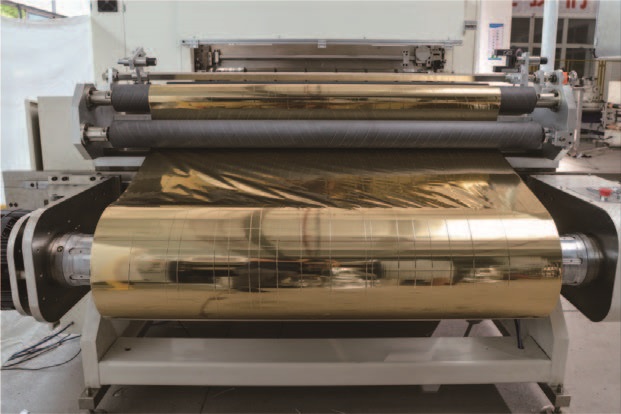
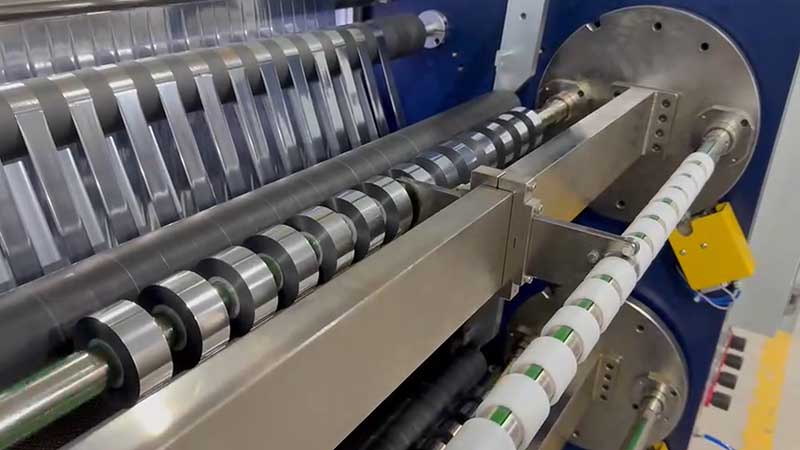
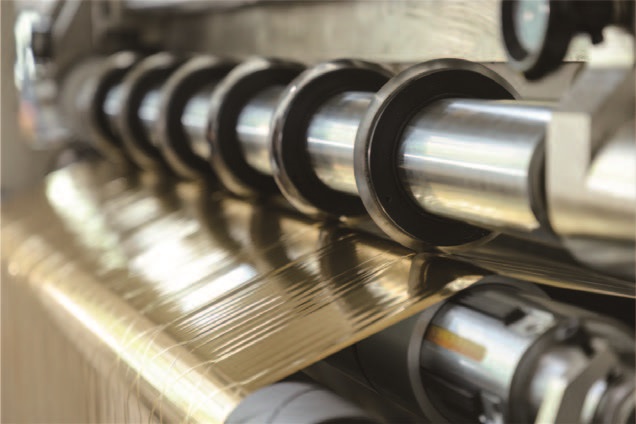
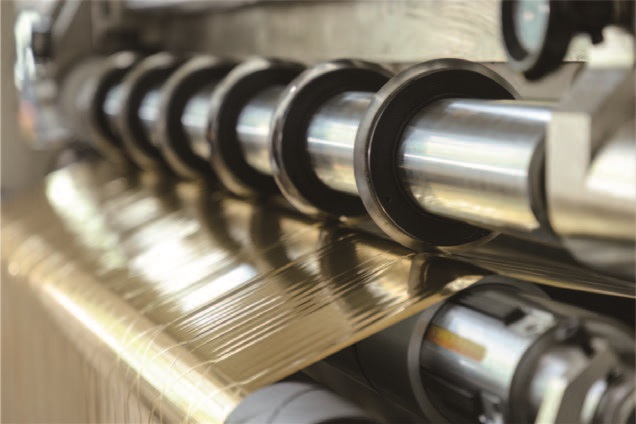 Hot Stamping Foil Slitting Machine
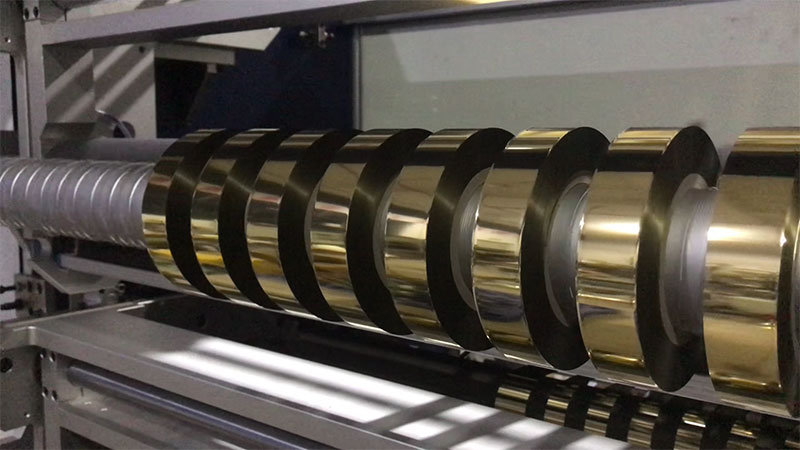 Holographic Foil Slitter
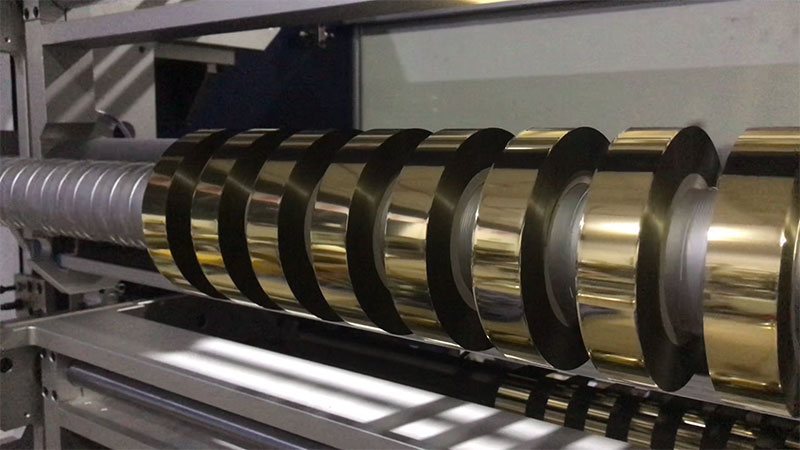 Digital Enhancement Foil Slitter
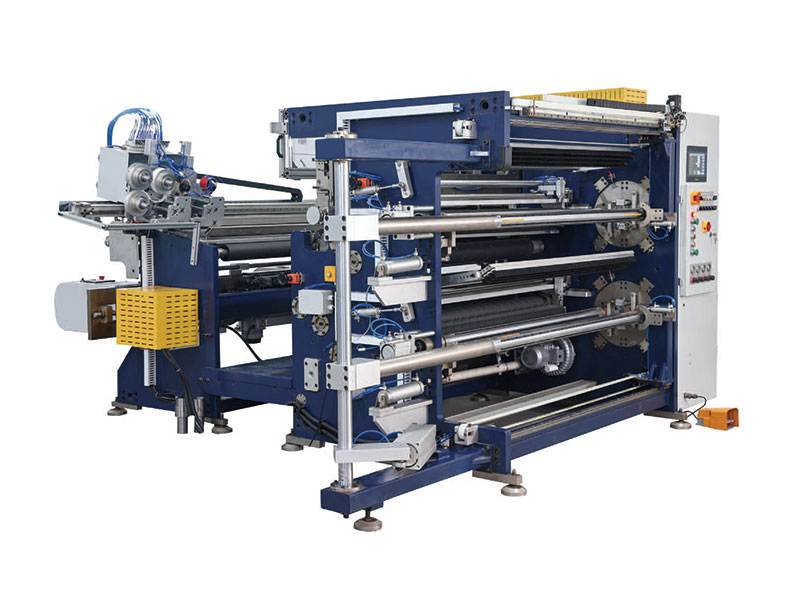 Hot Stamping Foil Slitter RSDS7H 1350 PLUS
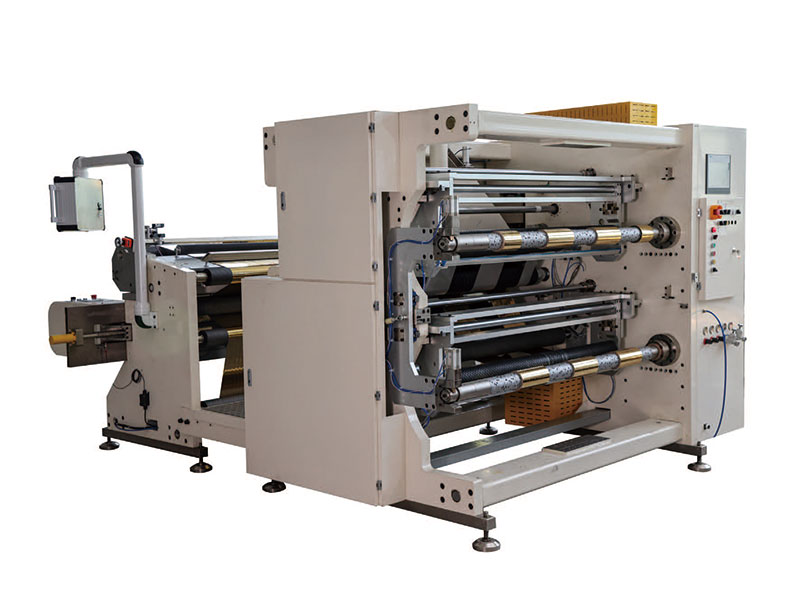 Hot Stamping Foil Slitter (RSDS7H) 1350