One slitter can run all three materials—but only if you stop treating “film” as a single specification.
Most buyers shopping for a plastic film slitting machine start with a simple question: “Can this machine handle BOPP, PE, and laminated film?” The honest answer is yes, often it can. But the more important question is whether the machine is configured to handle each substrate well, without the compromises that show up as wrinkles, telescoping, delamination, or inconsistent roll hardness three shifts into production.
BOPP, PE, and laminated films behave nothing alike at the slitting line. BOPP is stiff and static-prone. PE stretches before it cuts. Laminates carry internal bond strength that a careless blade or winding profile can destroy. A machine sized around one BOPP sample may technically accept a roll of stretchy PE or a thick PET/PE laminate, but “accepting” the roll and producing a saleable finished roll are two different things.
Here is what actually changes when you move between these three substrate families, and what to specify on your machine to avoid expensive workarounds later.
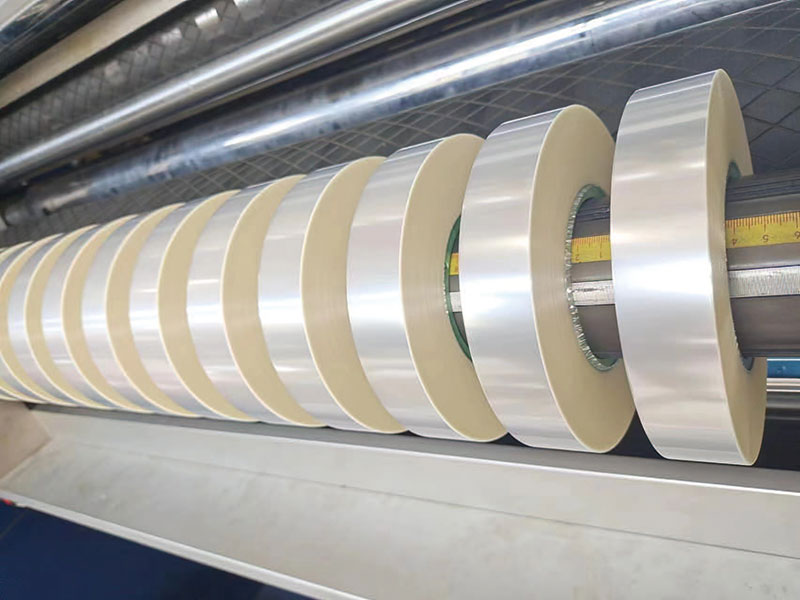
BOPP: Stiff, Static, and Unforgiving of Poor Web Guiding
BOPP (biaxially oriented polypropylene) is the workhorse of flexible packaging—think snack wrappers, label facestock, and overwrap film. It is dimensionally stable, optically clear, and prints beautifully. On the slitting line, those virtues come with specific demands.
Because BOPP is stiff, it does not drape or conform to rollers the way PE does. Web guiding must be precise; a few millimeters of lateral drift that a PE web would absorb becomes a hard crease or an uneven slit edge on BOPP. Edge quality matters more than many converters initially expect, because BOPP’s stiffness means any burr or dust generated at the slit line can migrate into downstream printing or lamination processes rather than being trapped in a soft film layer.
Static is the other BOPP headache. The same surface resistivity that makes BOPP a good printing substrate makes it a magnet for dust and fines at high line speeds. Active static elimination—ionizing bars positioned before and after the slitting knives—is not optional on BOPP if you care about edge cleanliness. Passive brushes help, but they fall short as line speeds climb above 200 m/min.
Configuration note for BOPP: Prioritize a robust web guide (EPC or LPC) and active static control. Razor slitting is often adequate for thin BOPP, but blade freshness matters; a dull razor on stiff BOPP produces dust and ragged edges rather than a clean shear.
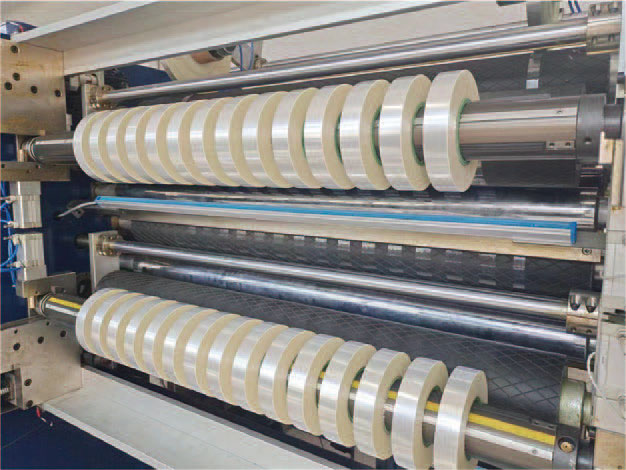
PE: Low Tension, High Patience
Polyethylene is the opposite problem in almost every way. Where BOPP is stiff, PE is extensible. Where BOPP holds its dimensions, PE stretches under tension and tries to return to its original state after the tension is released—a property that becomes a liability in slitting and rewinding.
The cardinal rule for slitting PE is low, stable tension. Too much unwind tension causes neck-in: the web narrows between the unwind and the slitting station, which throws off slit width and creates edge trim that varies meter to meter. Too much rewinding tension causes the wound roll to continue stretching after the slitter, and when that tension relaxes, the roll telescopes or develops soft, baggy edges.
Telescoping on PE rolls is rarely a mystery. The usual culprits are excessive or unstable tension, poor web alignment, trapped air between layers, and incorrect winding hardness. A machine with a narrow tension range tuned for BOPP or PET will struggle here. PE demands the ability to run at the low end of the tension spectrum—often in the 0.5–2.0 PLI range depending on thickness and additives—with taper tension control that decreases pressure as the roll builds.
Configuration note for PE: Verify the machine’s minimum tension capability, not just its maximum. A dancer roll or load-cell feedback system with a wide turndown ratio is more valuable here than a high-speed drive. Differential slip shafts on the rewind can help compensate for gauge variation across the web, which PE tends to have more of than BOPP.
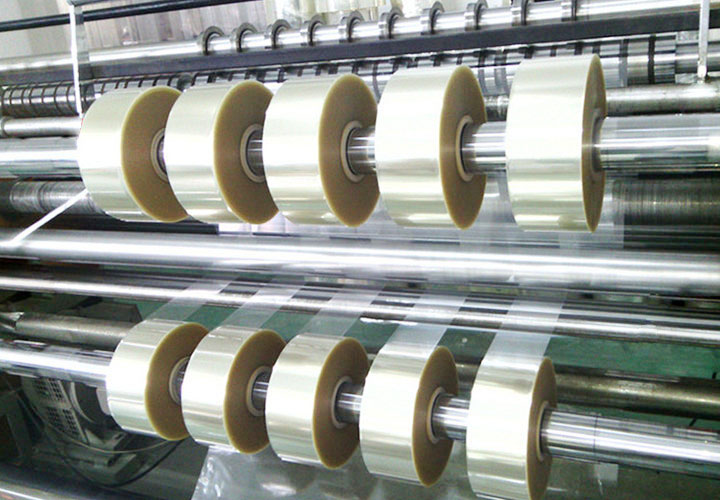
Laminated Film: Where the Bond Is the Product
Laminated films—PET/PE, BOPP/CPP, metallized structures, foil-containing laminates—are where slitting mistakes become unrecoverable. The entire value of a laminate lies in the integrity of the bond between layers. A slitting process that shears those layers at different rates, or that generates enough heat or mechanical stress to weaken the adhesive interface, produces rolls that may look acceptable on the outside and fail in the customer’s pouch-forming line.
This is why blade selection shifts for laminates. A single razor blade pushed through a multi-layer structure tends to shear the layers sequentially rather than simultaneously, which can cause delamination at the slit line—especially on foil-containing or metallized laminates where the layers have very different mechanical properties. Circular shear slitting, with a top blade overlapping a bottom blade like scissors, applies shear force through all layers at once and is generally the safer choice for laminates.
Winding control is equally critical. Laminates can curl or telescope when the constituent layers respond differently to tension and relaxation. If one layer has more memory than the other—PE is notoriously “a material with memory,” as one film supplier puts it—the finished roll may develop corrugation or tracking problems days after slitting. Stable, preferably taper-controlled winding tension, combined with a lay-on roll that maintains consistent nip pressure, protects both the bond and the roll profile.
Configuration note for laminates: Specify shear slitting as the primary cutting method, with the ability to adjust blade overlap precisely. For heavy laminates or foil-containing structures, consider blade geometry that accounts for abrasive metallized layers; standard steel blades wear faster on these materials. Rewind tension control should be capable of a taper profile that matches the laminate’s stiffness, not a flat tension curve inherited from a BOPP recipe.
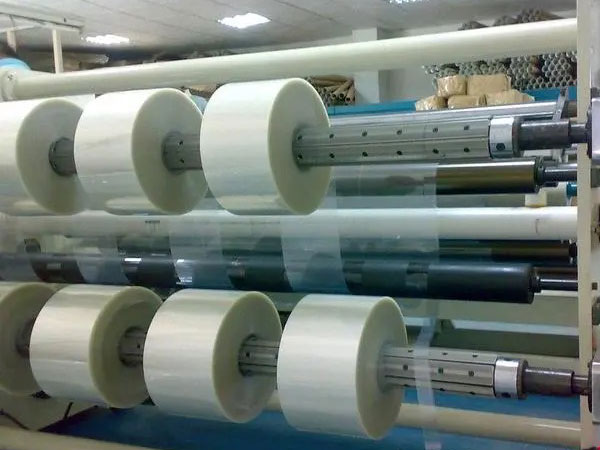
The Real Question: One Machine or Two?
The practical answer for most converters is that one well-specified slitter can cover BOPP, PE, and common laminates—provided the machine was bought with the full material range disclosed, not just a single sample. The specification conversation should include the minimum and maximum thickness for each substrate, whether any film is metallized or coated, and the expected finished roll diameters and slit widths.
What you cannot do is buy a machine configured around one substrate and expect it to run the others at the same quality and speed without adjustment. The tension range that makes BOPP sing will stretch PE. The razor blade that cleanly trims thin PE will delaminate a foil laminate. The static control adequate for slow-speed PE will leave BOPP covered in dust.
Ask your supplier to demonstrate the machine on your actual material range—not a generic sample. A slitter that produces a clean, telescope-free roll from each of your substrates, at the speeds you need, is a slitter that was configured with those substrates in mind. Anything less is a machine that happens to accept the film but may not produce the roll.
Ready to verify your material range against a machine specification? Send us your substrate list—thicknesses, structures, and finished roll requirements—and we will confirm the tension, cutting, and winding configuration that covers all three without compromise.
 English
 Deutsch
 Français
 Español
 Português
 日本語
 русский
 한국어
 عربي
 ภาษาไทย
 Tiếng Việt
 Italiano

 Ribbon Slitting Machine
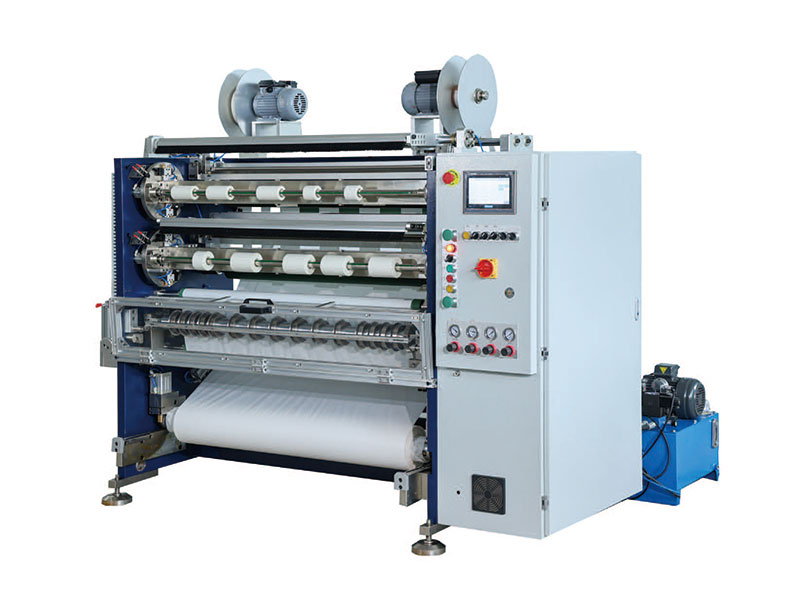 Tape Slitter
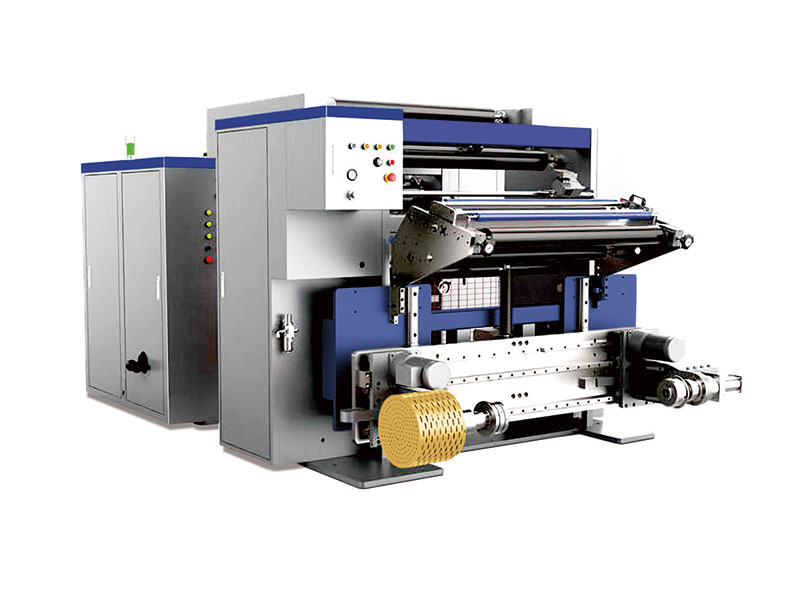 High Speed Slitting Machine
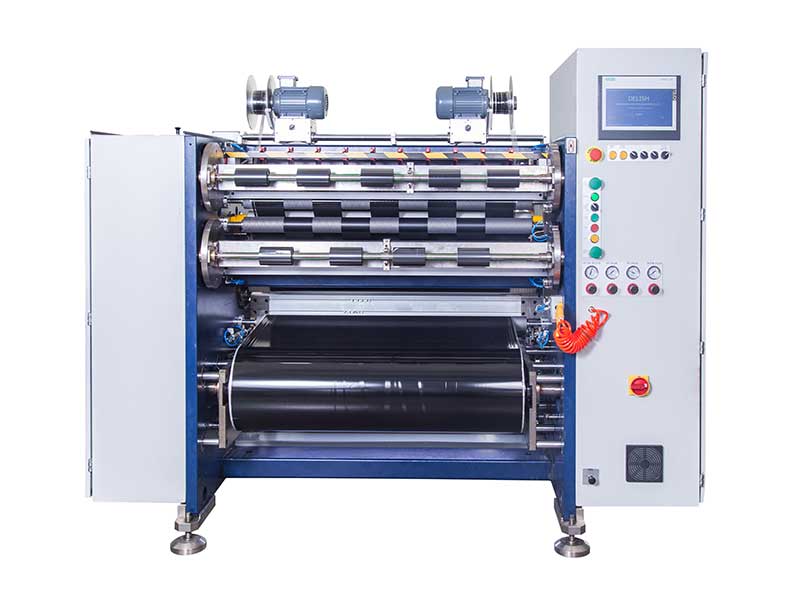 Barcode Ribbon Slitting Machine
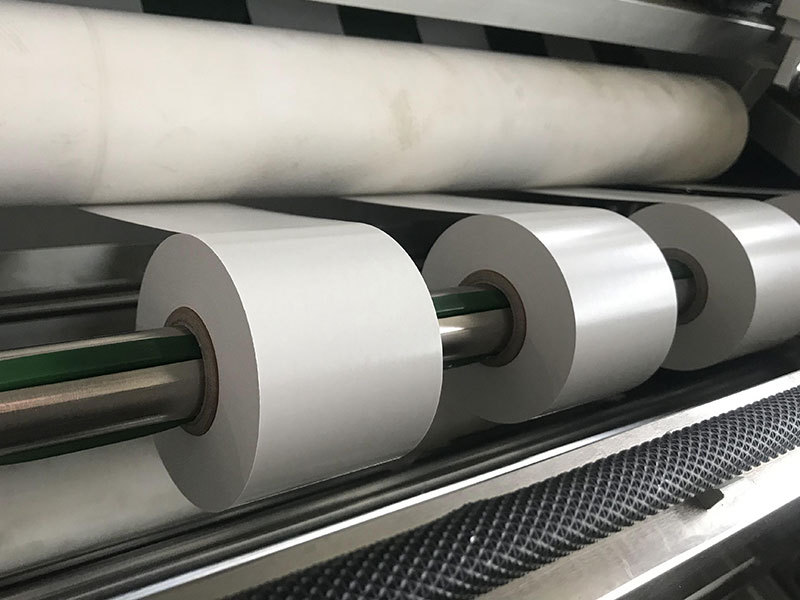 Single Side Adhesive Slitter
 Double Side Adhesive Slitter
 Capacity Film Slitter
 Automatic Foil Roll Cutter