Introduction
The film slitting machine is an indispensable key piece of equipment in industries such as packaging, electronics, new energy, and printing. Its core task is to precisely slice wide-width large-roll film into multiple narrow strips according to specifications, and then rewind it into finished products. As downstream industries increasingly demand film precision, surface quality, and production efficiency, the technical solutions for slitting machines are continuously evolving—upgrading from early mechanical control to fully servo drive and intelligent closed-loop control.
A complete slitting machine solution requires a comprehensive consideration of mechanical structure, tension control, slitting methods, winding technology, and automation levels, while also designing targeted designs based on the characteristics of the materials being processed.
1. Basic Equipment Composition and Process Flow
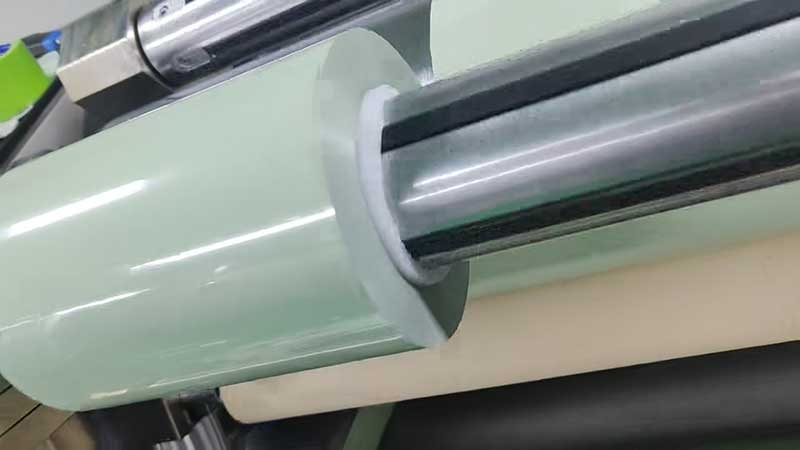
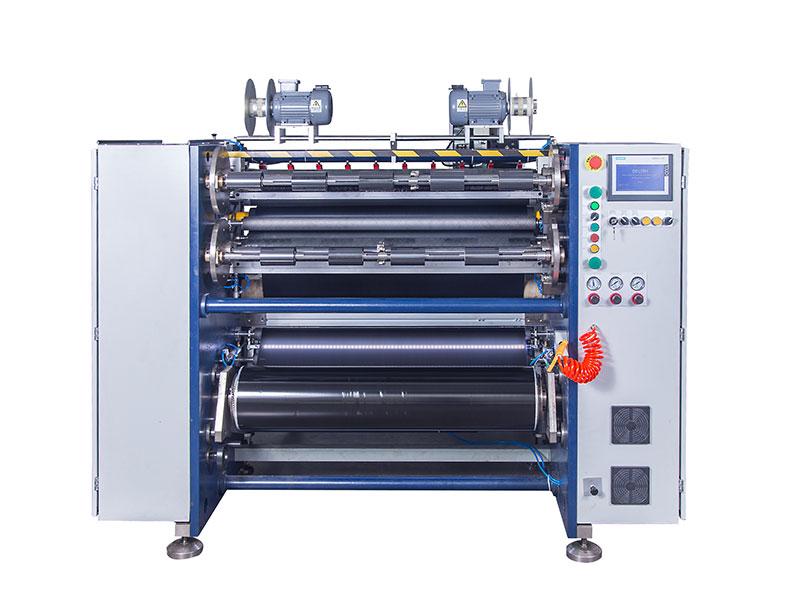
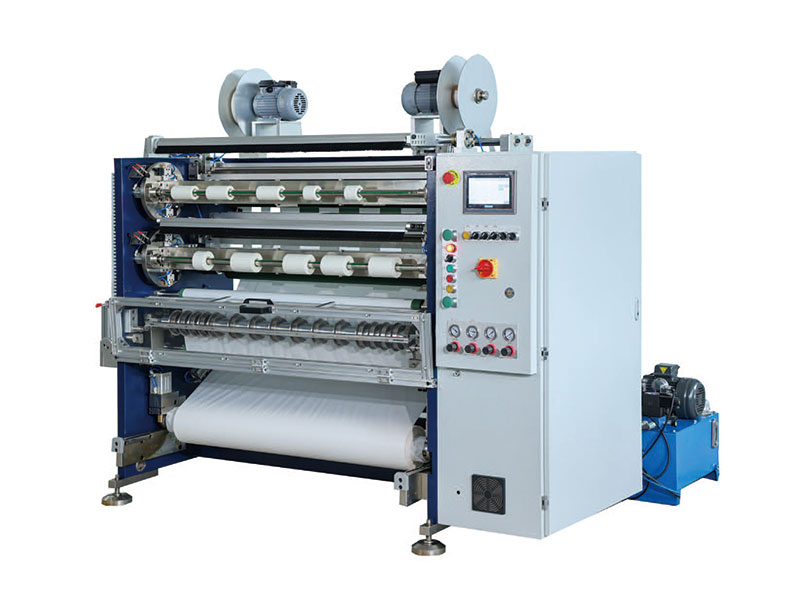
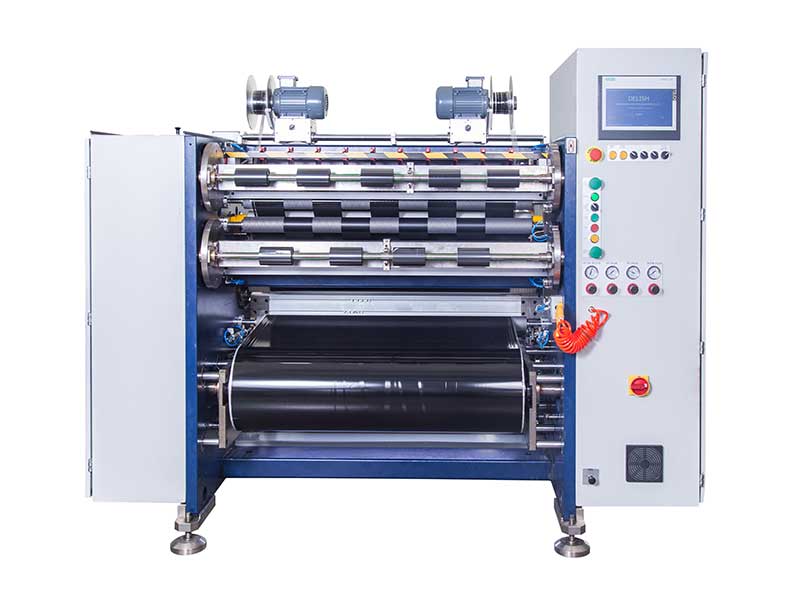
A film slitting machine typically consists of five main units: unwinding mechanism, slitting mechanism, winding mechanism, tension control system, and correction detection system. The typical process flow is: the main roll film is drawn out by the unwinding spindle, wrinkles are eliminated by the leveling roller, then calibrated by the straightening device before entering the slitting area. The blade group cuts it into multiple strip-shaped films of the required width, which are then rolled separately by the rewinding reel into finished film rolls.
Different devices have different layouts. The vertical dual-shaft high-speed slitting machine places the feed end on the upper part of the equipment, providing more ample operating space. At the same time, with reasonable wheel arrangement, the coiling speed can reach 300-400 meters per minute. Horizontal layouts are commonly found in standard equipment, with compact structures that are easy to maintain.
2. Tension Control: The Core Guarantee of Slitting Quality
Tension control is the most critical part of the slitting machine technical solution, directly determining the flatness, compactness, and end face neatness of the finished film roll. Improper tension can cause the film to wrinkle, stretch and deform, roll off course, or even crack.
Modern high-end slitting machines generally use closed-loop servo tension control systems, which detect film tension in real time through tension sensors, and controllers automatically adjust the torque of the unwinding, traction, and rewinding motors to maintain constant tension. For more demanding applications, taper tension control is also required—as the winding diameter increases, the system automatically attenuates tension according to the set curve, preventing internal tightness that can cause collapse or external looseness and collapse.
Older equipment relies on magnetic particle clutches or brakes to control tension, resulting in low precision, slow response, and severe heat generation, making it difficult to meet the needs of precision slitting. If slitting products exhibit issues such as "end face cross-film," "rigid stripes," or "tight inside and loose outside," the root cause is often an outdated tension control system.
3. Slitting Method and Tool Assembly Selection
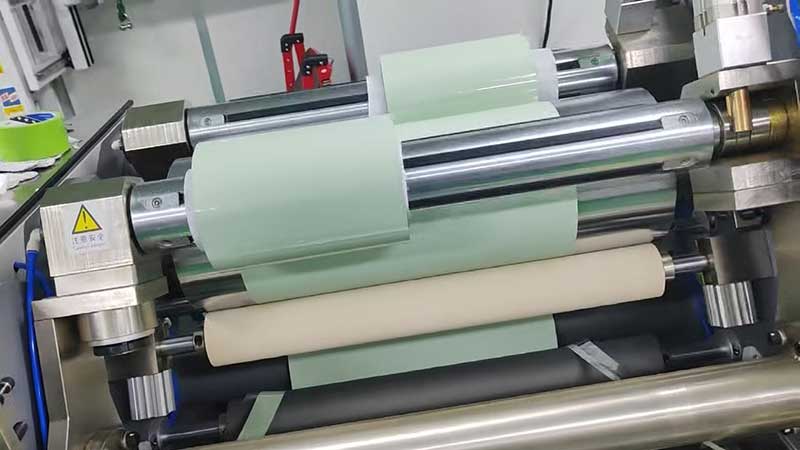
The choice of slitting method should be determined based on the film's material, thickness, and precision requirements. Common methods include:
• Circular blade shear slit: The upper and lower circular blades are interlaced to create shear force, resulting in high edge quality and long blade life, with the widest range of applications. It can handle various films such as BOPP, PET, and PE.
• Razor slitting: suitable for thinner, more stretchable films, lower cost, but blade wear out quickly.
• Slit slit: mainly used for thicker materials or sheets.
For metallized films or ultra-thin films (such as 2μm class capacitive films), special attention must be paid to tool wear resistance and anti-static design, with slitting accuracy required to reach ±0.02mm. Some equipment is equipped with ultrasonic slitting blades, which can effectively prevent material delamination.
The flexibility of the tool group spacing is equally important. Modern slitting machines can quickly adjust blade positions through linear drives or rail mechanisms, allowing for frequent switching between different slitting specifications. For production scenarios with frequent order changes, one-click order change and process recipe storage can significantly shorten setup time.
4. Winding Scheme and Slip Shaft Technology
The quality of winding directly affects the appearance of the finished product and its subsequent performance. There are mainly two winding methods: center winding and surface winding: center winding is driven by the rewinding shaft core, suitable for general-purpose films; Surface winding is driven by friction between the pressure roller and the film roll surface, suitable for materials that are prone to deformation or thick films.
For multiple films with varying widths and large tension differences after slitting, the slip shaft (also called the differential shaft) is the ideal solution. Each winding position on the slip shaft can slide independently, allowing each film to be wound under different tensions, avoiding uneven tension that can cause uneven film tightness. In one patented solution, multiple strip-shaped films are grouped together, each equipped with slip shaft winding, and combined with an offset detection component and a linear drive component, independent correction control of each film is achieved, effectively preventing collisions between strips and improving yield rates.
5. Correction and detection system
During movement, the film may drift laterally due to uneven wear of the blade group and deviations in roller parallelism (i.e., the "serpentine" phenomenon). The correction control system uses photoelectric sensors or CCD vision systems to detect the position of film edges or printed lines, automatically adjusting the angle of the centering roller or the position of the unwinding seat to keep deviations within the qualified range. Typical correction accuracy can reach ±1mm, and high-precision applications can be combined with CCD wiring systems to achieve even higher accuracy.
For special products such as capacitor films, an enabling system is also required—applying a 0~900V adjustable DC voltage to the metallized film during slitting to remove conductive impurities from the film dielectric and improve capacitor quality.
6. Differentiated selection driven by material properties
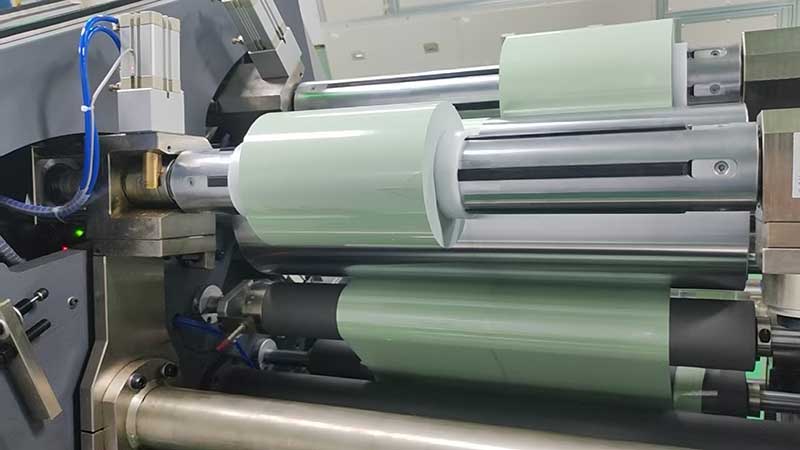
There are significant differences in film materials across different industries, so slitting machine solutions need to be designed accordingly:
• Capacitive films for consumer electronics: large batches, medium precision, optional medium-speed semi-automatic models (200-400m/min), standard static elimination device.
• New energy/photovoltaic thin-film applications: high precision (±0.02mm), constant tension control, some metallized films require nitrogen protection to prevent oxidation.
• Thick film for power electronics (15-30μm): requires heavy-duty slitting machines, tension control accuracy within ±1%, and tools with diamond coating for wear resistance.
• Medical/aerospace-grade ultra-thin film (≤2μm): requires a cleanroom design and ionized air cleaning system, with tension fluctuations ≤0.5%.
It is recommended to conduct material trial cutting before final selection to verify the actual performance of the equipment.
7. Automation and intelligent upgrade directions
Traditional slitting machines rely too heavily on operator experience, limiting batch consistency and production efficiency. Modern slitting machine solutions are evolving toward full automation and intelligence:
• Fully independent servo drive: Unwinding, traction, and rewinding units are independently controlled by servo control, achieving high-precision synchronization and tension closed-loop.
• Automatic Tool Change System (ATC): Reduces downtime for tool change.
• Online defect detection: Real-time detection of film surface defects through a visual system.
• MES/ERP integration: Enables production data collection, quality traceability, and remote monitoring.
The investment return on upgrading the modern slitting machine is significant: yield rate can be reduced from 3% to below 1%, production efficiency improves while reliance on senior operators is reduced, and the ability to expand orders for high value-added products can be expanded.
Conclusion
Choosing a thin film slitting machine solution is a systematic engineering project that requires a comprehensive evaluation of core elements such as tension control scheme, slitting method, winding technology, and automation level based on an understanding of the material characteristics, precision requirements, and capacity goals. For users whose existing equipment does not meet precision standards or whose winding quality is unstable, upgrading is no longer just a simple equipment replacement, but a strategic investment to improve product quality and production efficiency.
 English
 Deutsch
 Français
 Español
 Português
 日本語
日本語 русский
 한국어
한국어 عربي
عربي ภาษาไทย
 Tiếng Việt
 Italiano
 Film Slitting Machine
 Ribbon Slitting Machine
 Tape Slitter
 Barcode Ribbon Slitting Machine
 Single Side Adhesive Slitter
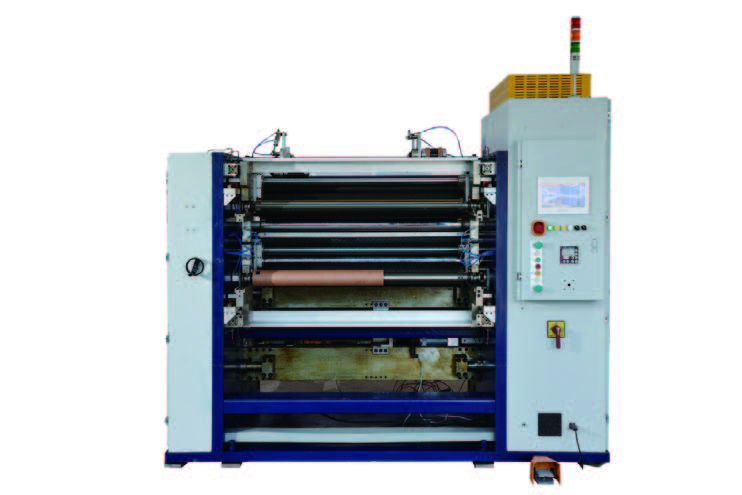 Capacity Film Slitter
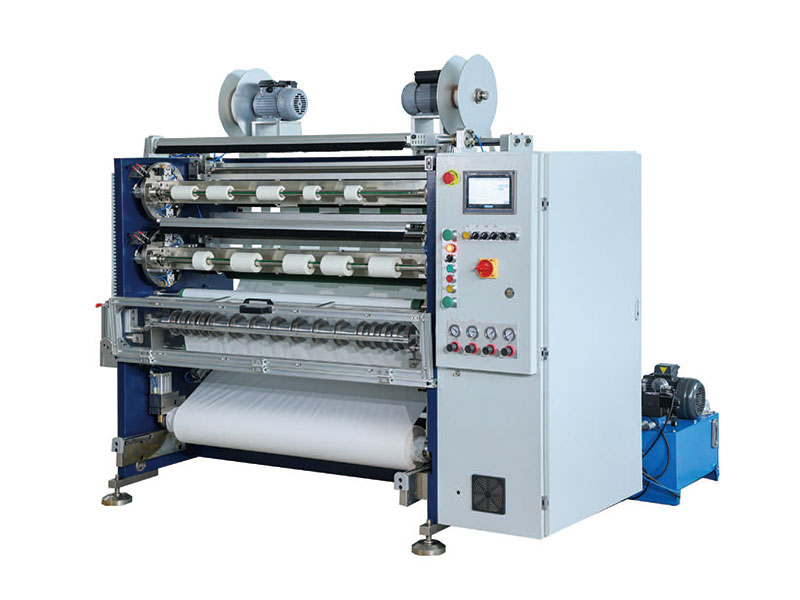 Double Side Adhesive Slitter
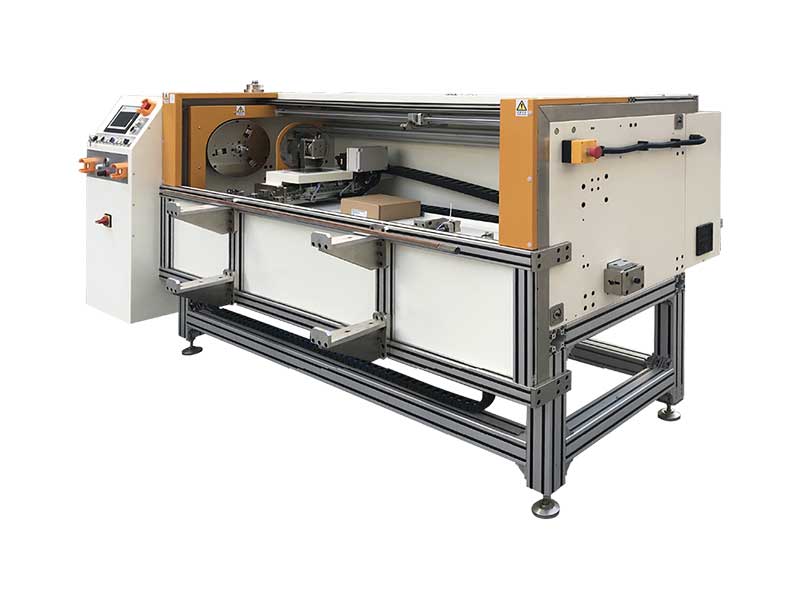 Automatic Foil Roll Cutter