In the production process of hot stamping foil, slitting and rewinding are two closely connected core steps. In traditional models, the two are often separated into independent processes, which not only inefficiency but also easily leads to material loss due to repeated loading and unloading. The integrated wiring solution, with its advantages of "seamless connection and intelligent control," is becoming a key breakthrough for improving quality and efficiency in the industry.
1. The pain points of the traditional model
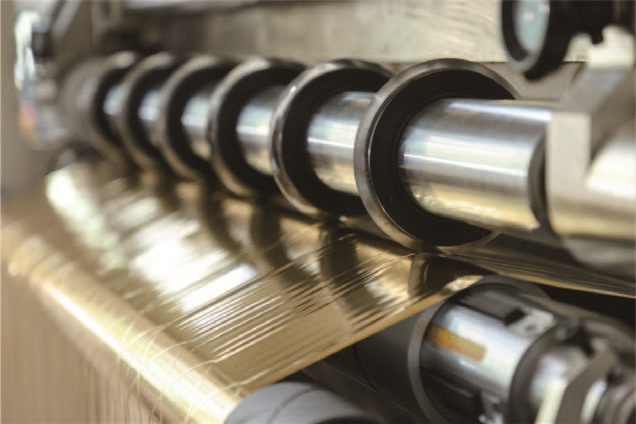
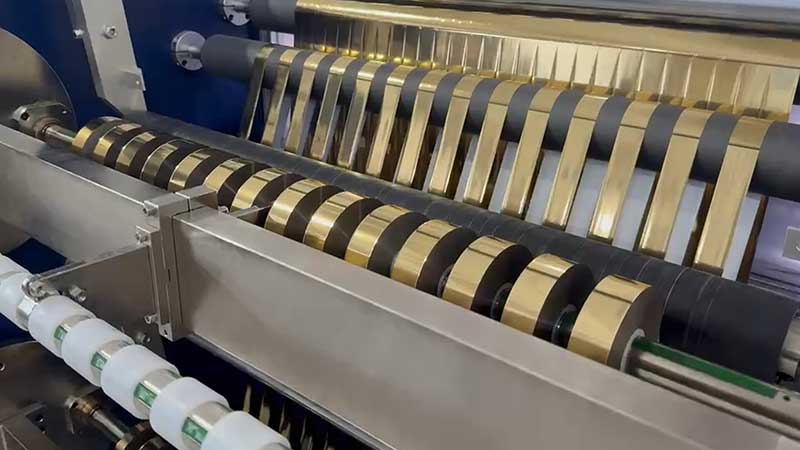
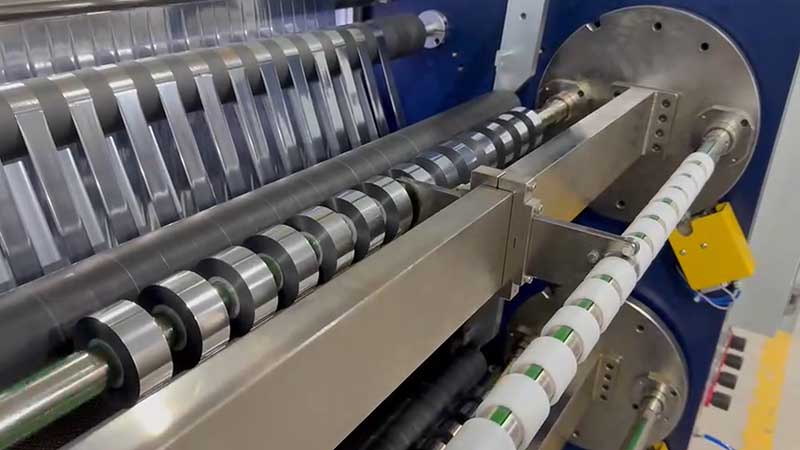
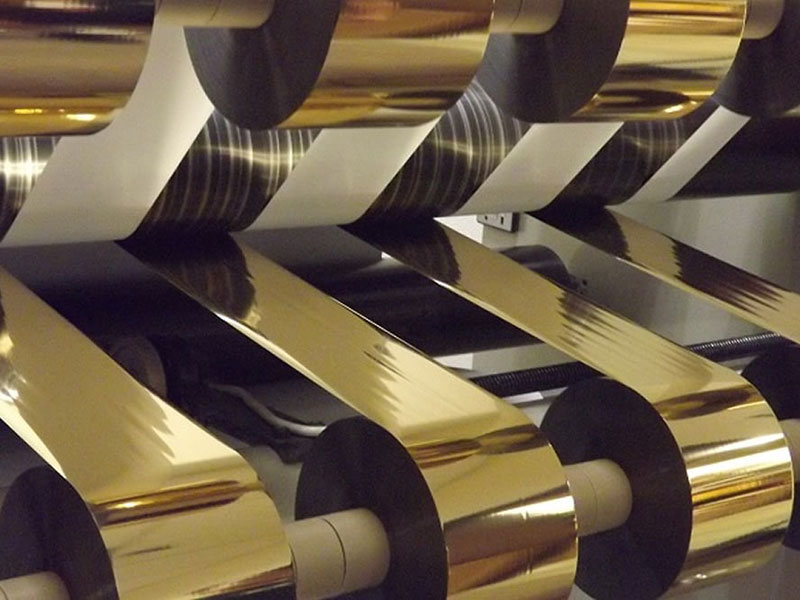
In the past, the slitting and rewinding of foil stamping was usually done by two separate machines. After the slitting machine cuts the wide master coil into several narrow strips, it needs to manually remove the slitted coil core and then transfer it to the rewinder for winding. There are three major problems in this process:
• Efficiency bottleneck: auxiliary time such as rewinding, handling, and re-threading accounts for more than 30%.
• Quality hazards: With each additional loading, unloading and start-stop cycle, there is an additional risk of scratches, wrinkles, or uneven end faces.
• Manual dependence: Operators need to frequently intervene in tension adjustment and correction, which requires high skills and is labor-intensive.
2. The core composition of the integrated connection scheme
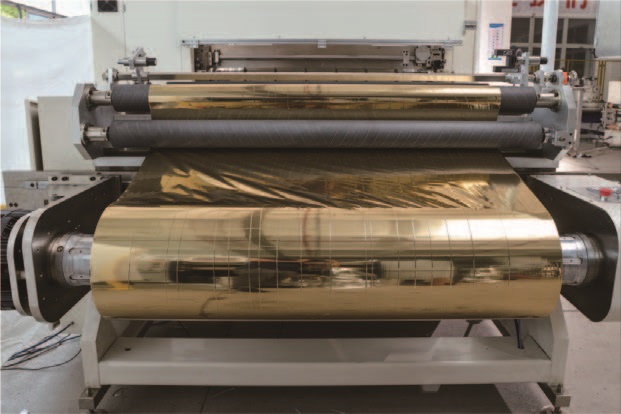
The core idea of the integrated connection solution is "one membrane through, synchronously completed". It integrates the slitting unit and the rewinding unit into an automatic production line through buffer storage racks, closed-loop tension control systems, and synchronous motion control.
1. Unwinding Unit: Equipped with automatic taper tension control and EPC (Edge Position Correction), it ensures that the large coil diameter master coil is stable and not offset during high-speed unwinding.
2. Slitting unit: Adopting a circular knife or razor slitting system, the knife holder can adjust the width independently, and the order change time is shortened to 2-3 minutes.
3. Cushion Storage Rack (Reservoir): This is the key to wiring. When the slitting unit is continuously discharging, the reservoir can dynamically adjust the length of the strip, providing a time window for non-stop receiving for subsequent rewinding.
4. Rewinding Unit: Each narrow strip corresponds to an independent rewinding shaft, equipped with digital automatic tension control and slip axis technology, ensuring that cores of different widths and diameters can achieve constant and independent tension.
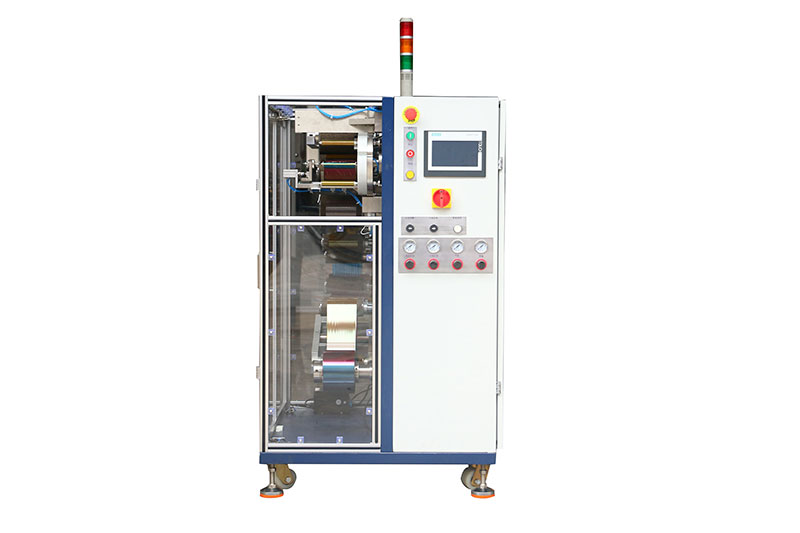
5. Centralized control system:P LC synchronously drives each servo motor through the fieldbus to realize the automatic matching of slitting speed and rewinding speed.
3. Key process control after connection
Integration is not a simple splicing of equipment, but a coordinated control of tension, linear speed, and correction.
• Tension zone control: the unwinding area maintains a large tension to unwind; The tension in the slitting area is reduced to avoid extrusion deformation of the knife edge. The rewinding area adjusts the tension independently according to the real-time diameter of each narrow roll to prevent internal looseness and external tightness or end face star patterns.
• Speed synchronization and buffering: The floating roller or photoelectric sensor in the reservoir detects the amount of sagging or tension fluctuations of the strip in real time, and the PLC fine-tunes the speed of the rewinding motor accordingly. When changing the reel, the stocker releases the stored strip and the slitting unit does not need to be slowed down.
• Closed-loop correction and slitting positioning: ultrasonic correction sensors before slitting ensure the cutter is always aligned with the main roll marking line; Before rewinding, each narrow strip can be equipped with an individual guide edge correction to ensure end-to-face alignment ≤± 0.5mm.
4. Practical application benefits
After a hot stamping foil company introduced an integrated wiring solution, actual test data showed:
| Indicators | Traditional model | Integrated wiring | Improvement |
| Linear velocity | 80-120m/min | 200-300m/min | More than double |
| Order exchange time | 25-30 minutes | 5-8 minutes | 70%↓ |
| Number of material joints | Twice-to-roll per roll | 0 times (no intermediate joint) | 100%↓ |
| Operators | 3 people per line | 1 person per line | 67%↓ |
| Finished product end face defect rate | 2.5%-3% | 0.3%-0.5% | 80%↓ |
Additionally, by reducing manual contact and floor handling, defects such as pinholes and scratches on the product surface are greatly reduced, meeting the stringent surface quality requirements of high-end hot stamping foils (such as holographic laser foil).
5. Selection and Implementation Recommendations
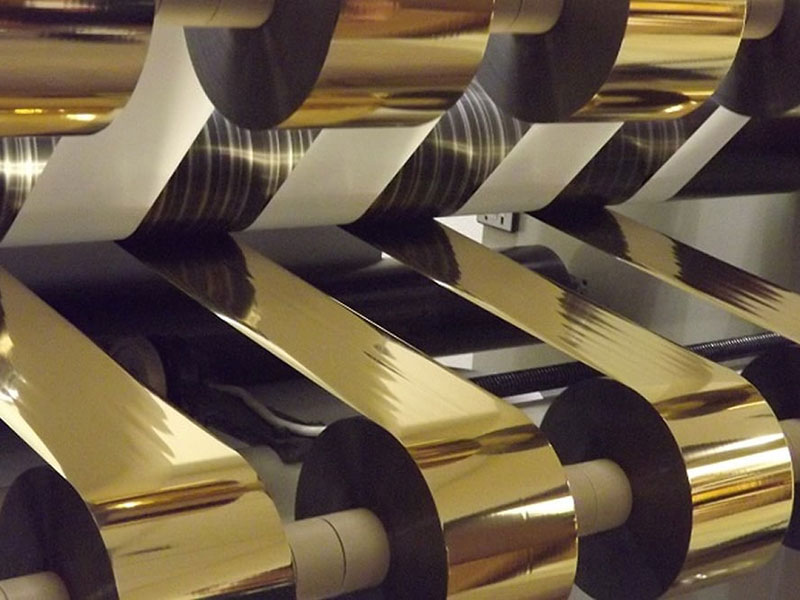
Not all slitting machines are suitable for direct wiring. Enterprises should pay attention to the following when planning:
1. Material compatibility: Ultra-thin (≤6μm) or highly ductile hot stamping foil is sensitive to tension fluctuations and must be equipped with a tension system with low-inertia floating rollers.
2. Space layout: The length of the feeder determines the time it takes to receive materials without stopping the machine. It is recommended to design the rack length by maintaining uninterrupted discharge at the maximum speed for 15-30 seconds.
3. Level of automation: Modules for automatic labeling, automatic core change, and automatic unloading can be upgraded in the future, achieving full automation from slitting to packaging.
6. Conclusion
The integrated connection from slitting to rewinding essentially reconstructs the post-processing process of hot stamping foil using systematic thinking. It is no longer just a pile of equipment, but a deep integration of tension control, motion control, and information control. For companies pursuing high yield, low labor, and flexible production, this is not only an upgrade in equipment but also a leap in production models. In today's increasingly fierce competition for gold foil, whoever can first open the integrated "slitting-rewinding" meridian will establish a true moat on the track of efficiency and quality.
 English
 Deutsch
 Français
 Español
 Português
 日本語
日本語 русский
 한국어
한국어 عربي
عربي ภาษาไทย
 Tiếng Việt
 Italiano
 Cold Foil Slitter
 Card Print Ribbon Rewinder
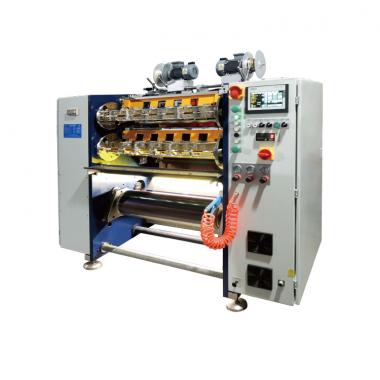 Card Print Ribbon Slitter
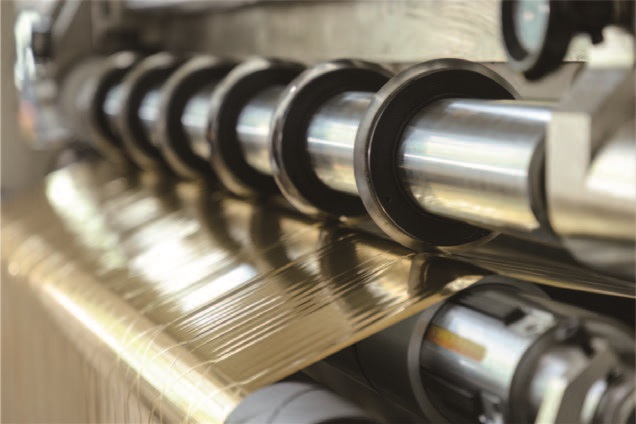 Hot Stamping Foil Slitting Machine
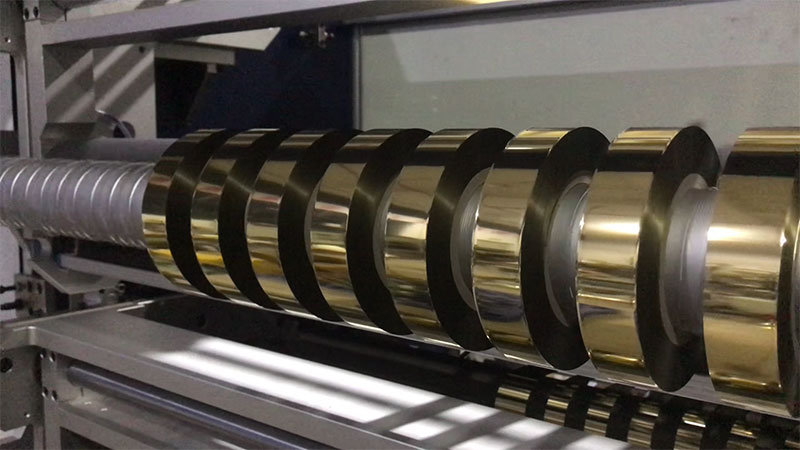 Holographic Foil Slitter
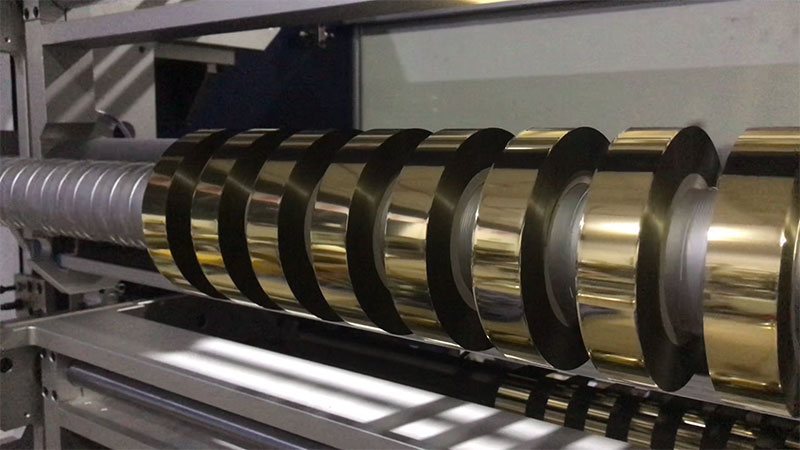 Digital Enhancement Foil Slitter
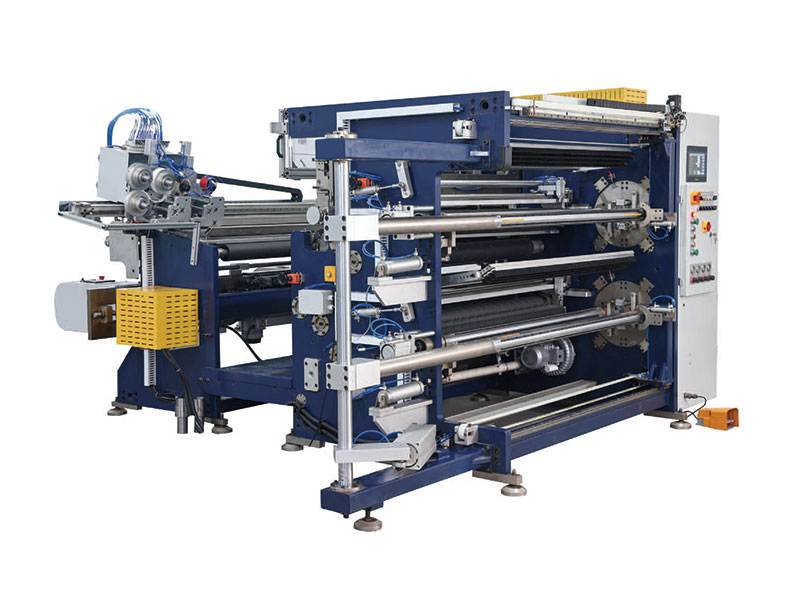 Hot Stamping Foil Slitter RSDS7H 1350 PLUS
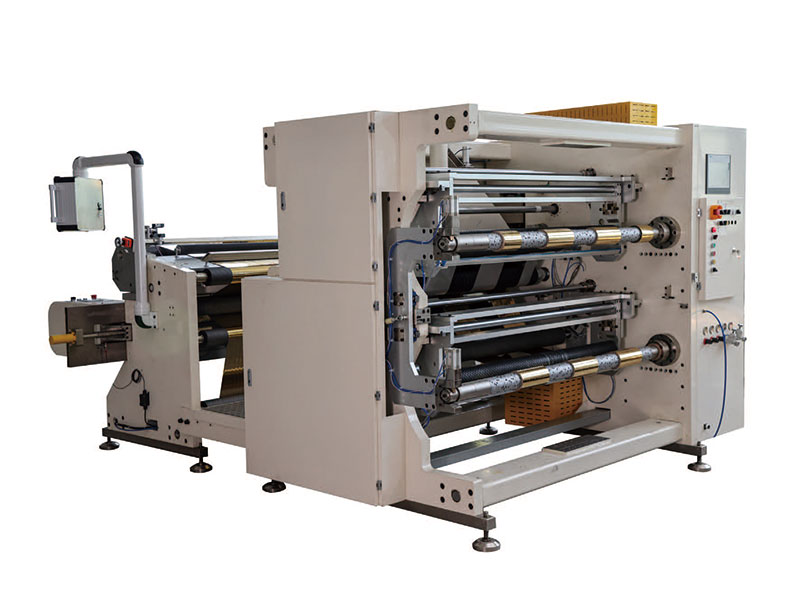 Hot Stamping Foil Slitter (RSDS7H) 1350