The dazzling golden logo on cosmetic boxes, or the delicate metallic stripes on tobacco and alcohol packaging, all these elevated hot stamping effects originate from a precision material with a thickness of only 10 to 20 microns—hot stamping foil. The wide stamping foil master roll is precisely processed into the narrow finished roll needed downstream, with the cutting stage serving as the "throat" connecting upstream and downstream. The precision and stability of this step directly determine the success or failure of the hot stamping process: even a slight burr at the slitting edge or slight deformation caused by tension fluctuations can trigger foil breakage, incomplete stamping, or even a chain reaction of entire line shutdowns on high-speed hot stamping machines.
To cut this fragile and precise foil layer just right, the precision tuning of the equipment is the core of the essentials. This is not just simple mechanical adjustment, but a comprehensive technical system involving tool systems, tension control, feed paths, and intelligent monitoring.
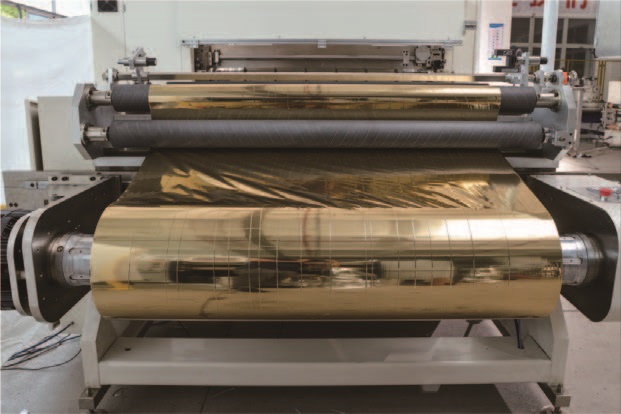
Cutting Tools: The "Last Mile" of Slitting
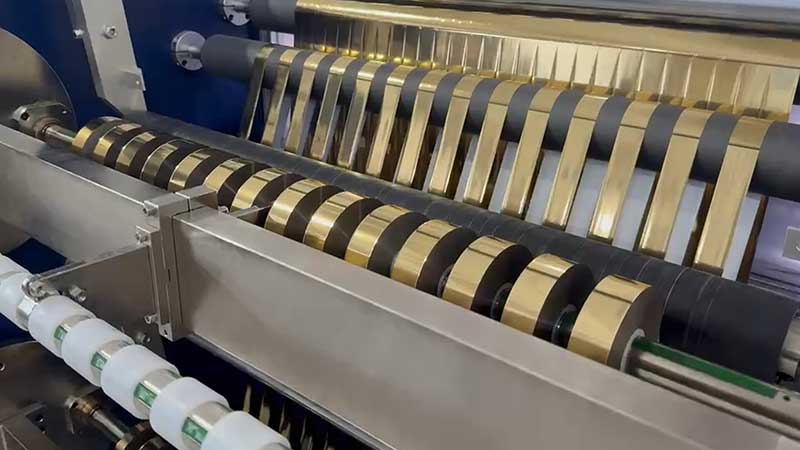
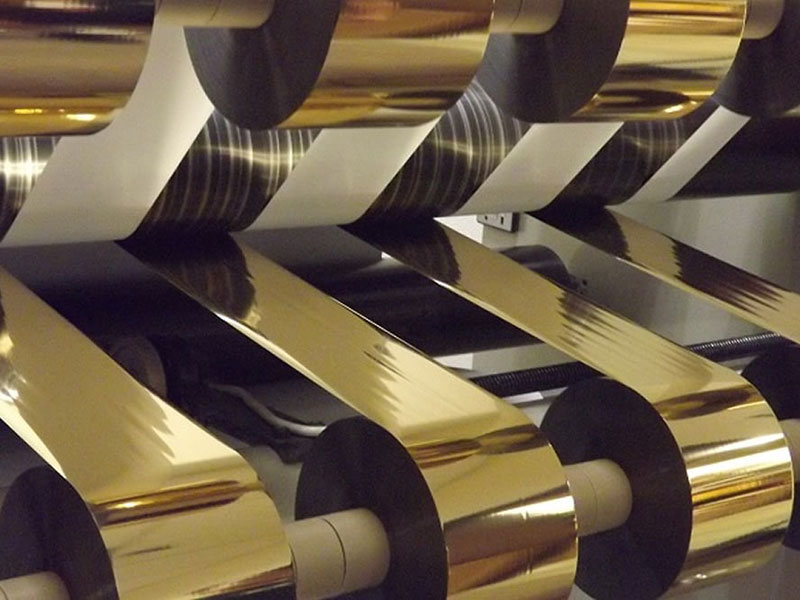
The quality of slitting first depends on the way the blade and the material "communicate." Hot stamping foil is not a single-layer film, but a precision structure composed of a PET base film, release layer, tinting layer, aluminum coating, and adhesive layer. This means that slitting is not just physical cutting, but also a non-destructive separation of these multilayer structures.
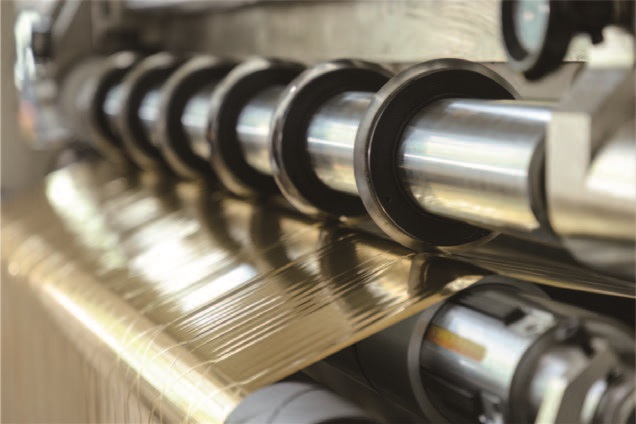
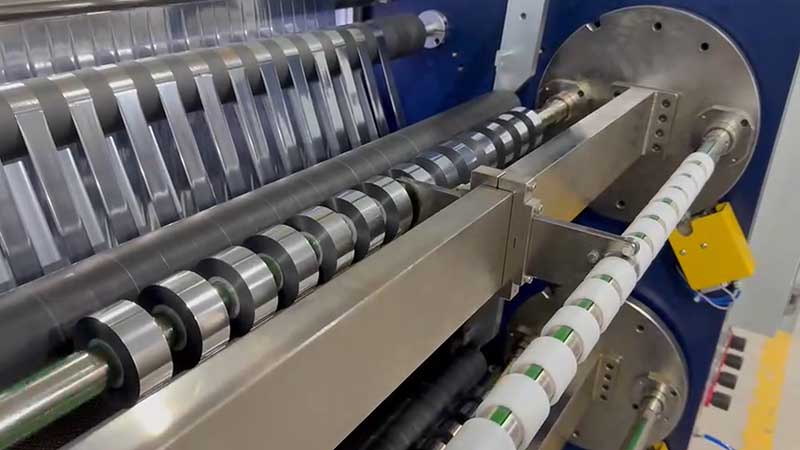
The mainstream industry solution is to use upper and lower disc cutters (shear-type slitting). This cutting method is like cutting fabric with scissors, providing a smoother cut surface and longer blade lifespan, allowing for frequent specification changes. In precision tuning, two key parameters must be strictly controlled:
1. Overlap amount and lateral clearance: The overlap depth on the side surfaces of the upper and lower blades should usually be controlled between 0.5~1.5mm (depending on material thickness, with thin materials taking the lower value). The lateral clearance between the two blade edges is generally recommended to be 0.03~0.08mm. For ultra-thin hot stamping foil below 12μm, the gap should be as small as possible, with a "just cut cut without squeezing."
2. Cutter shaft runout and angle: The radial runout of the cutter shaft must be controlled at ≤0.003mm; otherwise, wavy edges will form. The blade blade angle is usually 20°~30°, and it requires mirror polishing (roughness ≤0.1μm) to ensure sharpness.
Tension Control: The "Lifeline" of Thin Material Slitting
Electrochemical aluminum substrates are extremely thin and easily stretched; excessive tension resembles pulling on spider silk, causing irreversible deformation of the substrate; If the tension is too low, the roll becomes loose and misaligned, resulting in uneven ends of the finished roll. Unstable tension is the most common hidden cause of uneven trimming.
Modern high-end slitting machines generally use fully automatic closed-loop tension control systems. During tuning, attention should be paid to the following aspects:
• Multi-Zone Independent Control: Unwinding, slitting, and rewinding are divided into independent tension zones, with real-time feedback via floating swing rollers or high-precision sensors to avoid mutual interference. Ideally, tension fluctuations need to be < 0.5N.
• Taper tension technology: especially critical during the winding stage. As the winding diameter gradually increases, the system must automatically reduce tension according to the set curve (recommended tension taper of 15%~25%) to prevent aluminum layer transfer or adhesion caused by excessive pressure in the inner foil layer.
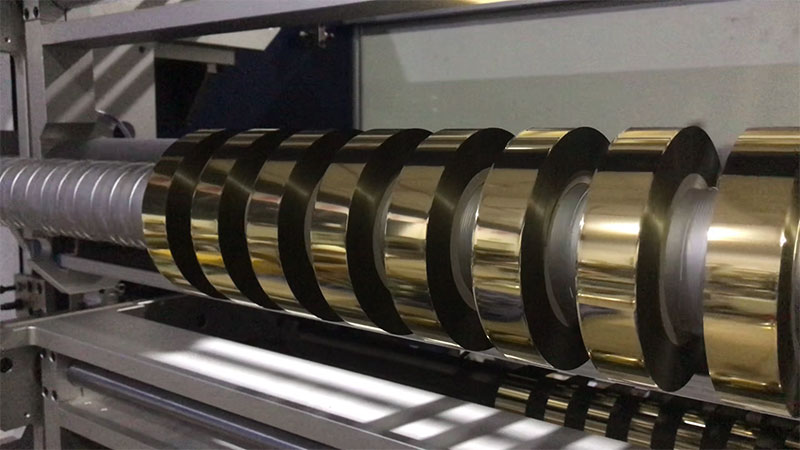
• Slip shaft applications: For narrow strip slitting with multiple spindies winding simultaneously, slip shaft technology can independently adjust the slip amount for each narrow roll, effectively avoiding tightness differences caused by slight thickness differences between coils.
Material Routing and Correction: A physical line of defense to prevent "deviation."
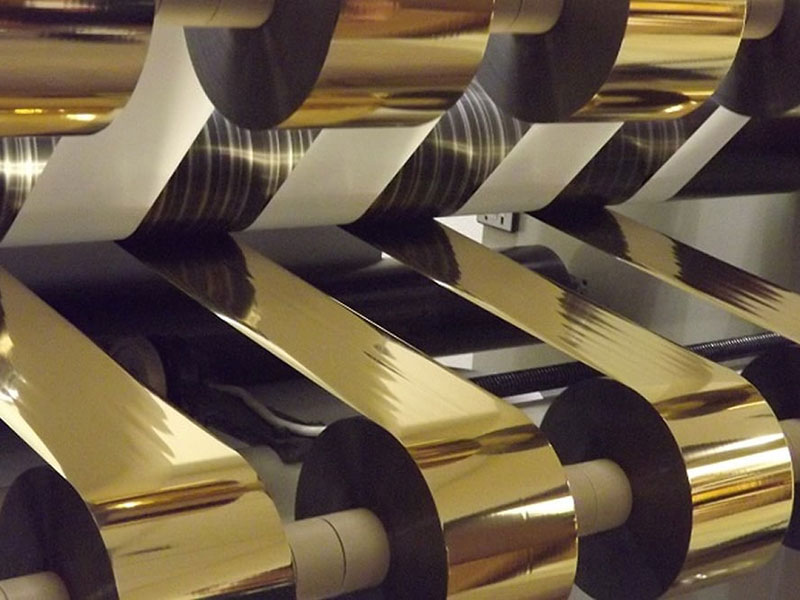
If the blade and tension are normal but the cut edges are still uneven, the problem is most likely in the feeding path. Any slight deviation in the material's path can be magnified as defects in the slitting product.
• Guide roller parallelism calibration: Use a tape measure or laser centerer to measure the distance from the ends of adjacent guide rollers to the frame reference plane, with a difference of ≤ 0.5mm/m. Focus on checking the pressure rollers, traction rollers, and discharge rolls before and after slitting.
• Correction system (EPC) tuning: Photoelectric or ultrasonic sensors must always lock the material edges. If the material repeatedly "drifts" on the centering roller, clean the sensor lens and reset the "center" or "one-sided" mode. The precision of the high-precision correction system can reach ±0.1mm.
Calibration confirmation and advanced intelligence
After completing the above hardware adjustments, verification testing must be conducted. Take a slit strip of foil, measure its width with a micrometer or projector, and observe whether the edges are smooth and free of burrs. For companies pursuing ultimate quality, laser profilometers and machine vision inspection systems have become standard, capable of real-time monitoring of edge burr height (threshold set ≤5μm) and microscopic defects.
From a broader perspective, the precision calibration of hot stamping foil slitting machines is no longer the "craftsman's experience" of experienced craftsmen, but is evolving toward data-driven intelligent management. Weekly calibration of equipment straightness (error < 1μm/m) using laser interferometers, or using AI algorithms to predict blade shaft thermal deformation and perform real-time offset correction, is becoming the new normal to ensure "micron-level slitting."
On the battlefield of foil foil within a tiny space, every precise slitting is a sophisticated dialogue between materials, machinery, and control technology. Only by perfecting every detail of precision tuning can the dazzling gold foil effect shine perfectly on the packaging.
 English
 Deutsch
 Français
 Español
 Português
 日本語
日本語 русский
 한국어
한국어 عربي
عربي ภาษาไทย
 Tiếng Việt
 Italiano
 Cold Foil Slitter
 Card Print Ribbon Rewinder
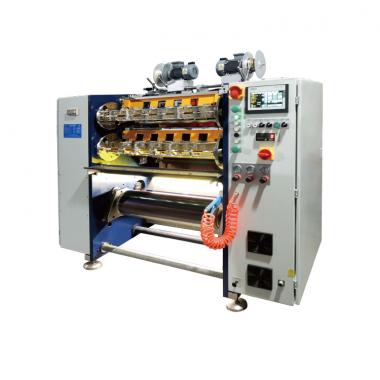 Card Print Ribbon Slitter
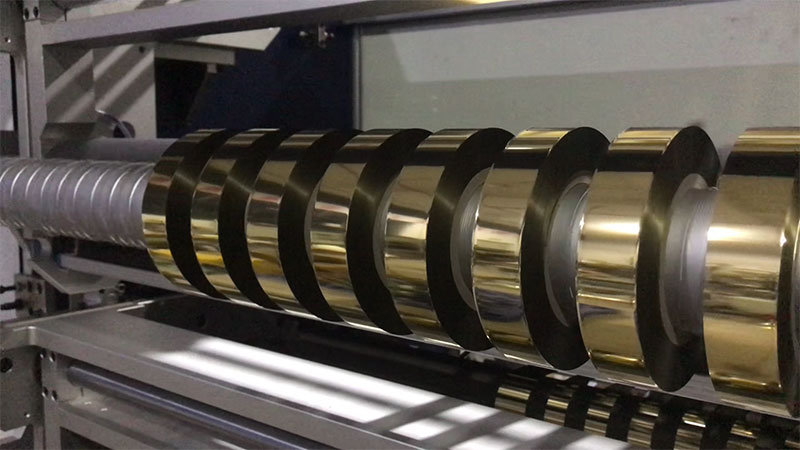 Holographic Foil Slitter
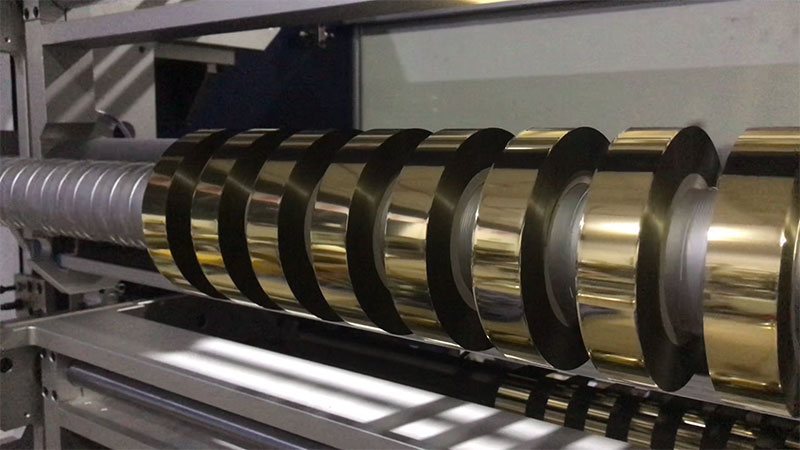 Digital Enhancement Foil Slitter
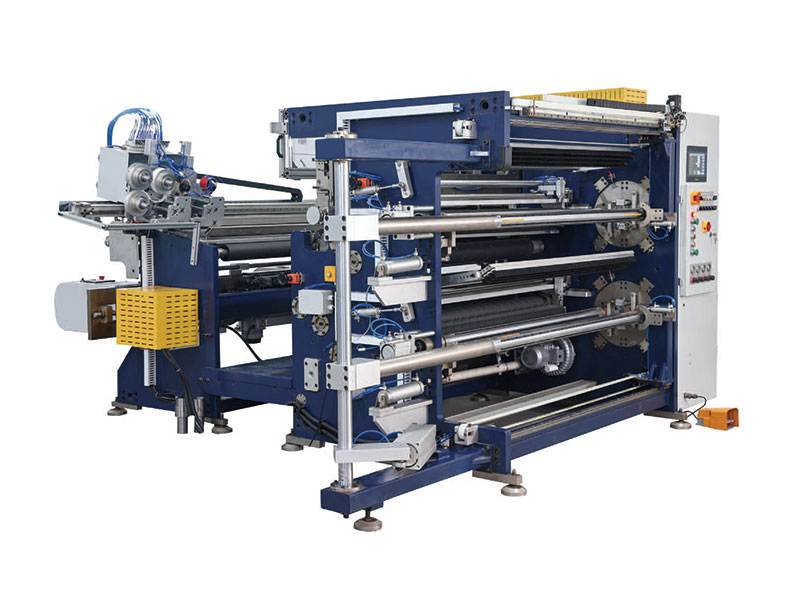 Hot Stamping Foil Slitter RSDS7H 1350 PLUS
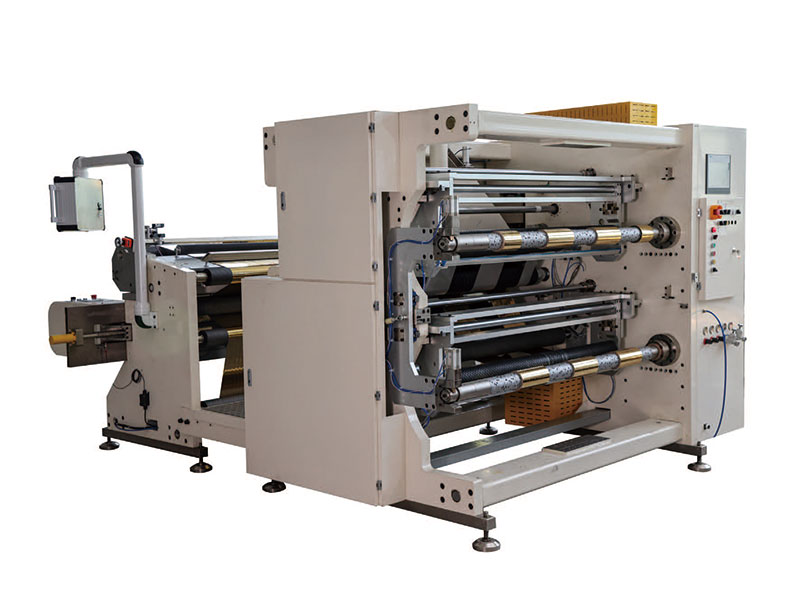 Hot Stamping Foil Slitter (RSDS7H) 1350