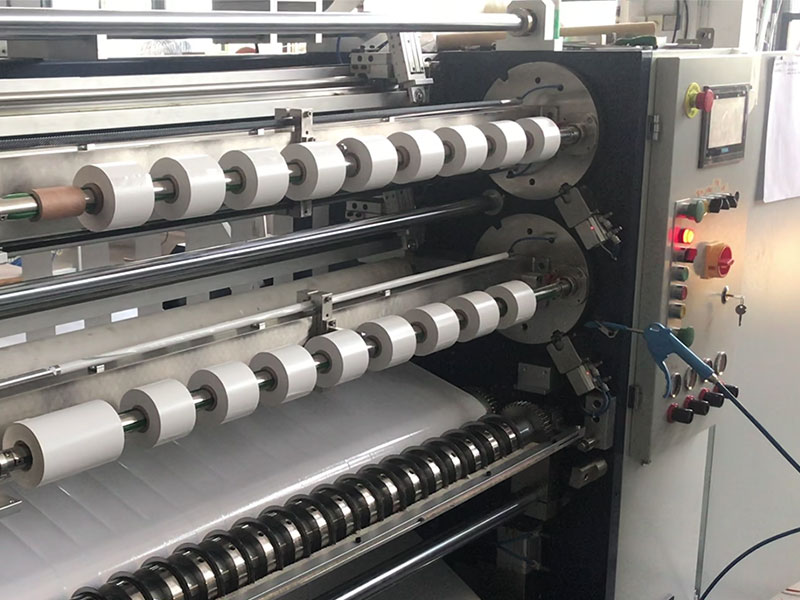
In the adhesive products industry, thin single-sided tapes (such as PET protective film, ultra-thin electrical tape, non-woven single-sided adhesive, etc.) are increasingly widely used. However, these materials are prone to fracture and wrinkling in the traditional slitting process, resulting in high scrap rates and low production efficiency. In response to this pain point, the new generation of precision single-sided rubber slitting machine provides a systematic solution through a number of key technology upgrades.
The root of the pain point: Why is the thin substrate easy to break and wrinkle?
1. Uneven tension control: Traditional slitting machines rely on mechanical friction or simple magnetic powder clutches, leading to high tension fluctuations. The tensile strength of the thin substrate is low, and the tension is too tight and will be directly broken. Too loose will lead to loose winding and wrinkles.
2. Adhesion between the blade and the adhesive layer: When slitting ultra-thin release film or low-gram weight single-sided adhesive, the blade and the adhesive surface are prone to adhesion, producing instant impact and instantly tearing the edge of the substrate.
3. Parallelism of guide rollers and surface adsorption: If there is a slight deviation of the guide roller, the thin substrate will produce longitudinal wrinkles due to uneven force. At the same time, the accumulation of static electricity on the surface of the guide roller will entangle the substrate, exacerbating the risk of fracture.
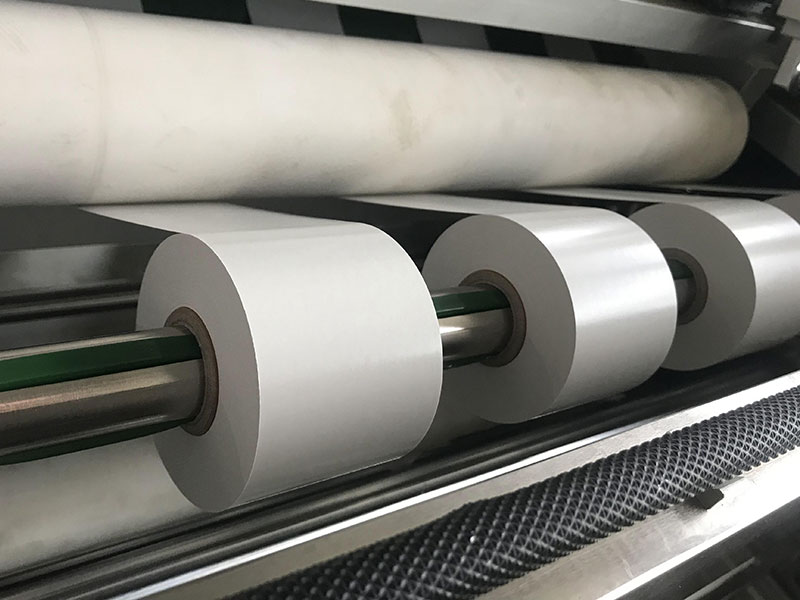
Core technology upgrade: targeted improvement of single-sided adhesive slitting machine
Modern high-precision single-sided adhesive slitting machines reconstruct the slitting logic from the following dimensions:
• Closed-loop tension control system (key breakthrough)
Servo motor + tension sensor real-time feedback is used to replace traditional open-loop control. The system automatically adjusts the torque of each station of unwinding, traction and rewinding with millisecond response, so that the thin substrate can withstand constant tension throughout the process. For different materials (e.g. BOPP, PET, cotton paper), the "low tension curve" can be preset to avoid brittle fracture caused by tension spikes during start-up or emergency stop.
• Anti-stick and precision slitting knife sets
Equipped with carbide circular knife + release coating treatment, the blade angle is optimized to 15°-20° to reduce the contact area with the adhesive layer. At the same time, the tool shaft can be equipped with a high-frequency micro-vibration device to separate the adhesive layer and the knife surface through small vibrations to avoid adhesion and tearing. For ultra-thin PET single-sided adhesive (thickness < 0.01mm), the shear structure of the lower circular knife and upper pressure roller is adopted, so that the substrate is cut without tensile stress, and the edges are free of burrs and no wrinkles.
• Low friction and high smooth feeding path
All overfeed rollers are made of ultra-precision bearings + surface ceramic or Teflon coating, with a friction coefficient of ≤ 0.1. Active flattening rollers (with spiral grooves or curved convex lines) are available in key areas to stretch the thin substrate to the sides before slitting, eliminating potential wrinkles. The parallelism of the guide roller is adjusted to ≤0.01mm/m to eliminate periodic wrinkling caused by mechanical deviation.
• Static elimination and cleaning system
Pulsed AC ion rods are installed at the unwinding and rewinding stations to neutralize static electricity in real time and prevent the substrate from adsorbing on the guide rollers and causing pulling fractures. At the same time, it is equipped with a non-contact blowing and suction dust removal device to remove the tiny rubber chips generated by slitting and prevent impurities from being pinched into the film layer to form protruding indentations.
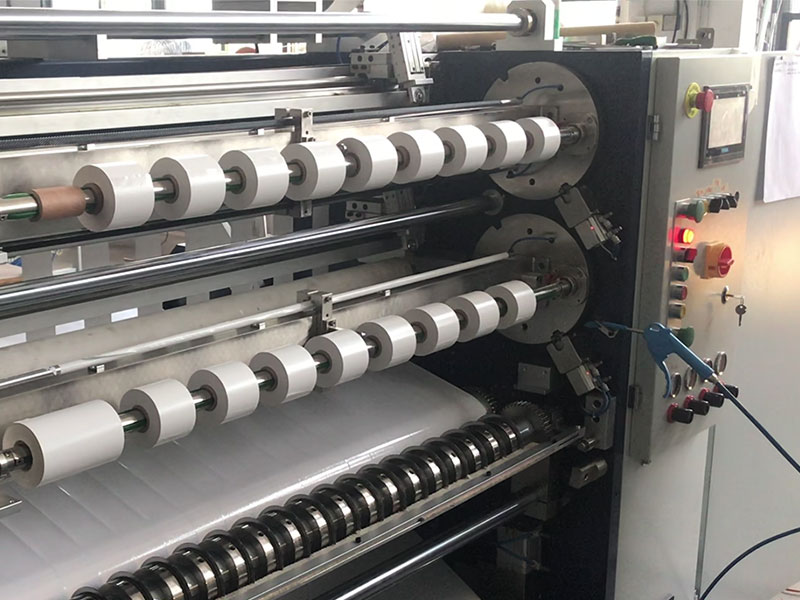
Practical application effect: data verification breakthrough
Taking a protective film manufacturer as an example, using an improved single-sided adhesive slitting machine to slit 0.008mm thick PET single-sided adhesive:
• Breaking rate: from 12% to less than 0.5% of conventional machines;
• Wrinkle defect rate: from 8% to less than 0.8%;
• Slitting speed: can run stably at 150m/min (only 80m/min in the past);
• Product yield: The flatness of the final coil meets the requirements of electronic grade protective film, and there is no warping or stretch pattern on the edge.
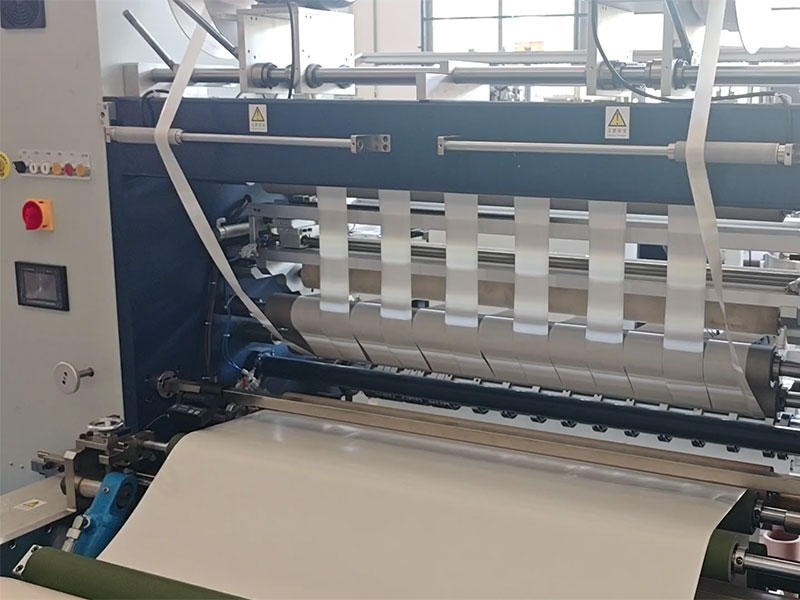
Selection and usage suggestions
If your business is struggling with thin single-sided adhesive slitting challenges, focus on the following when selecting a machine:
1. It must be equipped with digital closed-loop tension control, and can be set in sections (unwinding, traction, and winding can be adjusted independently).
2. The tool set should support the "release process" or "micro-vibration" function, and ask if the blade angle can be adapted to the ultra-thin substrate.
3. Measured flattening effect: Run the wrinkled material with the lowest tension (such as 10N total tension) and observe whether it stretches naturally after passing the roll.
4. Require suppliers to provide on-site test cutting reports of the same thickness and material, not just theoretical parameters.
Epilogue
The slitting of thin single-sided tape is no longer an "insurmountable gap". Modern single-sided adhesive slitting machines have been able to stably process ultra-thin substrates as low as 0.005mm thick through precise innovations in tension, tool set, feeding path and electrostatic control. Choosing a suitable precision slitting equipment not only means reducing waste losses caused by fracture and wrinkling, but also directly unlocks the processing capabilities of thin tapes in high-end electronics, medical, new energy and other fields, becoming a key part of improving the competitiveness of enterprises.
 English
 Deutsch
 Français
 Español
 Português
 日本語
日本語 русский
 한국어
한국어 عربي
عربي ภาษาไทย
 Tiếng Việt
 Italiano
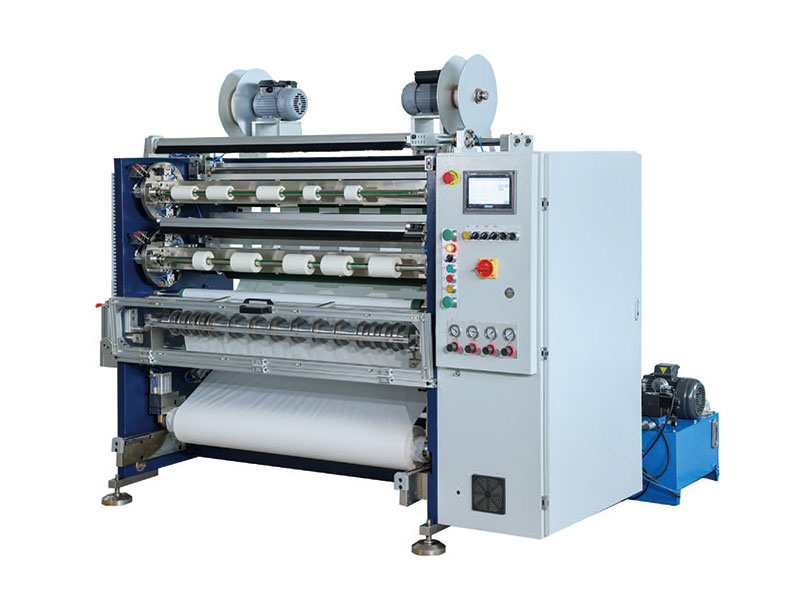 Single Side Adhesive Slitter