In the film processing industry, "burrs" and "dust" can be called two stubborn diseases. They not only affect the appearance and yield of the product, but also cause chain problems in the subsequent processes such as aluminizing, lamination, and coating - dust pollutes the workshop environment, burrs lead to uneven winding, and even cause customer complaints and returns. Nowadays, with the popularization of a new generation of high-precision film slitting machines, this situation has been completely broken: the cutting accuracy has been improved by more than 50%, and high-quality slitting without dust and burrs has been truly realized.
1. Burr and dust: the invisible "profit killer"
In the traditional slitting process, factors such as tool passivation, tension fluctuations, and gap shifts will leave fine cracks or irregular tears on the edge of the film, forming "burrs". At the same time, the fine powder generated by the friction of the knife edge and the powder of the film itself will form "dust". The problems caused by the superposition of the two include:
• Pollution purification workshops, affecting downstream high-end applications (such as optical films, battery separators, medical packaging);
• Cause edge warping and tower wheel-like winding at the winding end, reducing the yield;
• Increase manual trimming and cleaning costs, reducing comprehensive profits.
The data shows that the scrapping and downgrading of materials caused by burrs and dust can eat up 3%~8% of the gross profit of enterprises every year.
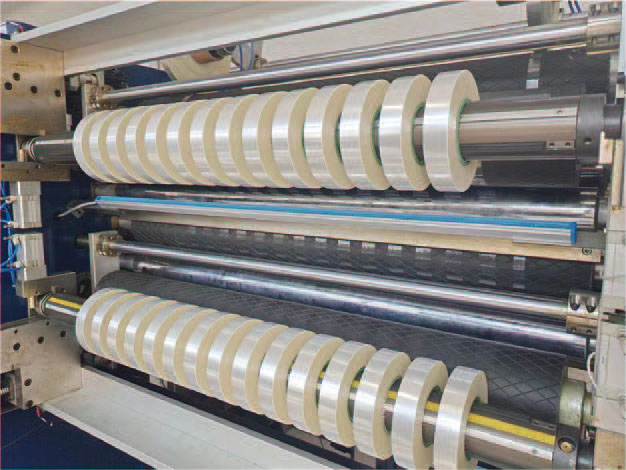
2. Technological breakthrough: Why can the accuracy be improved by 50%?
The new generation of film slitting machine is not simply "changing to a faster knife", but is optimized from the three dimensions of mechanical, control and inspection:
1. Micron-level tool gap control
The automatic tool setting system driven by servo motor has a knife gap adjustment resolution of 0.005mm, and with laser ranging closed-loop feedback, it ensures that the overlap between the upper and lower cutters is always in the optimal range. Compared with traditional manual or cylinder pressing methods, the notch deviation is greatly reduced.
2. Intelligent tension zone adjustment
Through the multi-axis independent servo and tension sensor array, the tension of "front-roll-crimp" is independently optimized. Automatically reduce the microtension within 10mm from the edge to avoid burrs caused by tensile deformation.
3. Online visual inspection + real-time compensation
The high-speed camera scans the trim quality with 0.1mm recognition accuracy, and once it captures signs of burrs or tiny dust accumulation, the system actively fine-tunes the tool holder position or purge parameters to compress the runaway time to less than 0.5 seconds.
4. Dust-free cutter and waste disposal system
The use of low-heat, self-lubricating ceramic fixed knife and nano-coated circular knife, combined with negative pressure chip collection channel, reduces dust generation from the source and immediately extracts residual fine powder.
Based on the above technologies, the trimming quality index CpK (process capability index) under actual mass production conditions is increased from 0.8 to more than 1.2 of traditional equipment, reducing the corresponding trimming defect rate by 50%~60% and increasing the equivalent trimming accuracy by 50%.
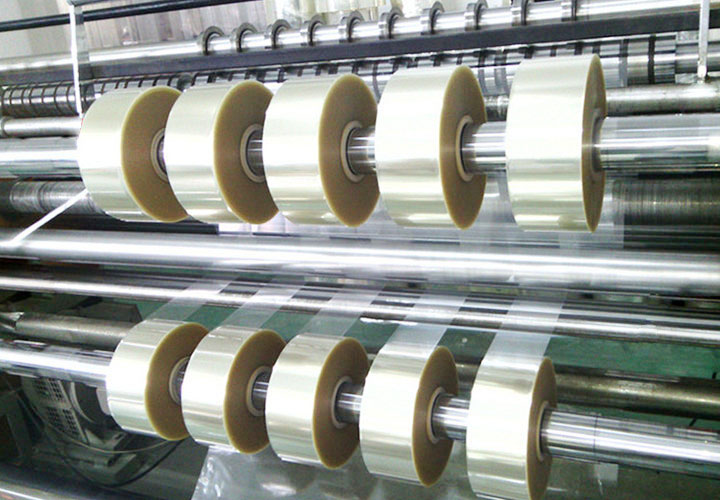
3. Real cases: from "side complaints" to "zero rework"
A pouch battery aluminum-plastic film manufacturer, originally using an old slitting machine, returned more than 400,000 yuan per month due to burrs caused by scratches on the aluminum foil layer and holes in the insulation layer. After the introduction of a new generation of high-precision film slitting machine:
• Trimming burr height reduced from 35μm to ≤12μm;
• 82% reduction in dust particle count (≥0.5μm);
• Reduced the trimming accuracy error from ±0.2mm to ±0.08mm, a 60% improvement;
• The complaint rate of downstream customers has been reduced to zero, and the annual cost of consumables has been saved by 170,000 yuan because it can reduce one trimming process.
4. Industry trend: The precision competition has begun
In the fields of 5G materials, optical displays, and new energy, the thickness of the film is continuously reduced (minimum 2μm), and the edge quality requirements have reached "microscope level". Some leading enterprises in the European Union, Japan and South Korea have proposed the internal standard of "zero burr + zero dust".
The 50% increase in trimming accuracy is not the end, but the ticket. In the future, film slitting equipment will develop in the direction of fully automatic closed-loop quality self-optimization and multi-sensor fusion predictive maintenance. Without high-precision slitting, there would be no moat for high-end film manufacturing.
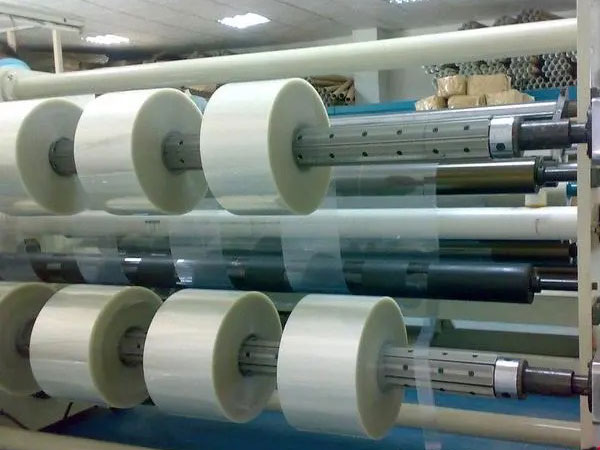
5. Some suggestions for procurement and production managers
1. Upgrade of acceptance indicators: In the procurement contract, it is clear that "burr height ≤Xμm" and "dust particle count ≤Y/㎡", no longer only based on feel or visual measurement.
2. Focus on process capabilities: Require suppliers to provide CpK reports of edge cutting accuracy, rather than a single optimal value.
3. Supporting maintenance system: High-precision slitting machines are more sensitive to tool cleanliness and environmental temperature and humidity, and need to establish a digital inspection process.
4. Small-scale trial cutting verification: For films that are prone to static electricity or stretching (such as PP, PE, and films with anti-adhesive layers), 48 hours of continuous edge cutting verification must be carried out with actual materials.
Epilogue
Saying goodbye to burrs and dust is not only about roughness and inefficiency, but also about moving towards a new stage of precision, cleanliness and high value in film processing. A slitting machine that improves the cutting accuracy by 50% is becoming a key variable for more and more factories from "can do it" to "do it well". In the era of competition where profits are as thin as films, every smooth and clean edge is a real and calculable competitiveness.
 English
 Deutsch
 Français
 Español
 Português
 日本語
日本語 русский
 한국어
한국어 عربي
عربي ภาษาไทย
 Tiếng Việt
 Italiano
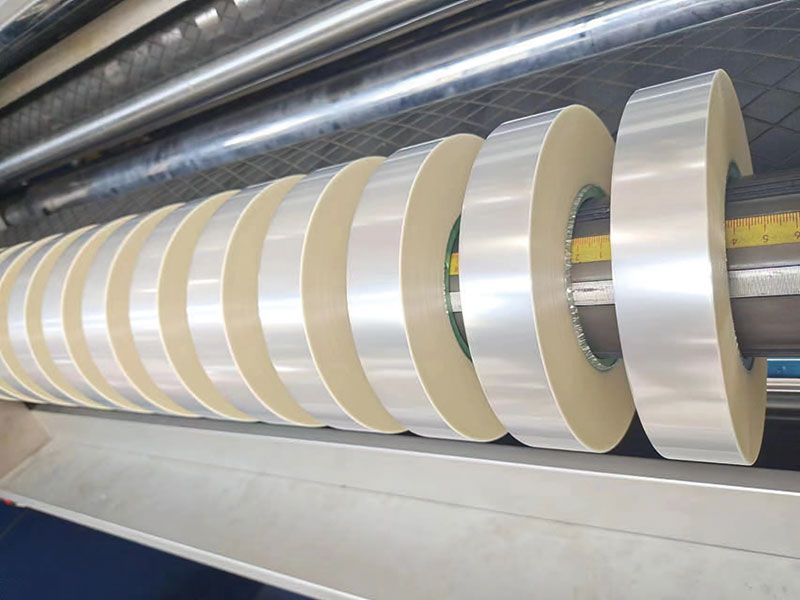 Film Slitting Machine
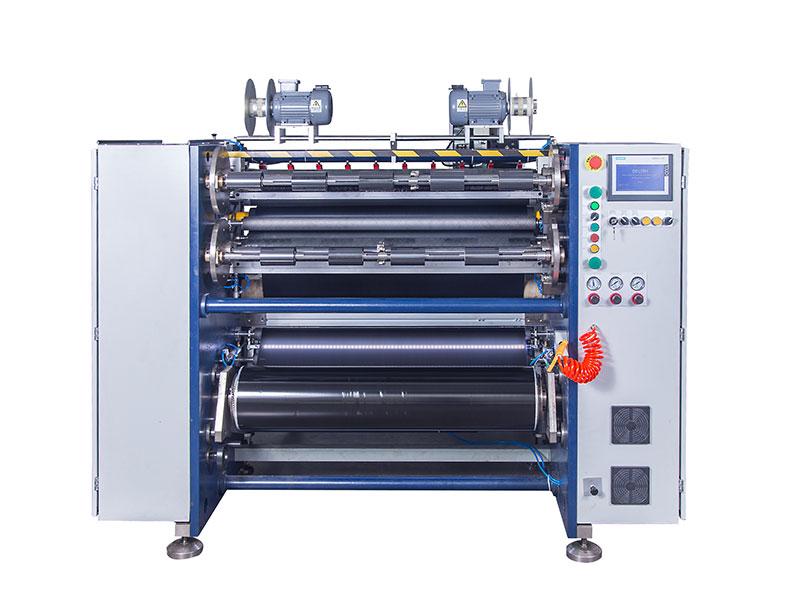 Ribbon Slitting Machine
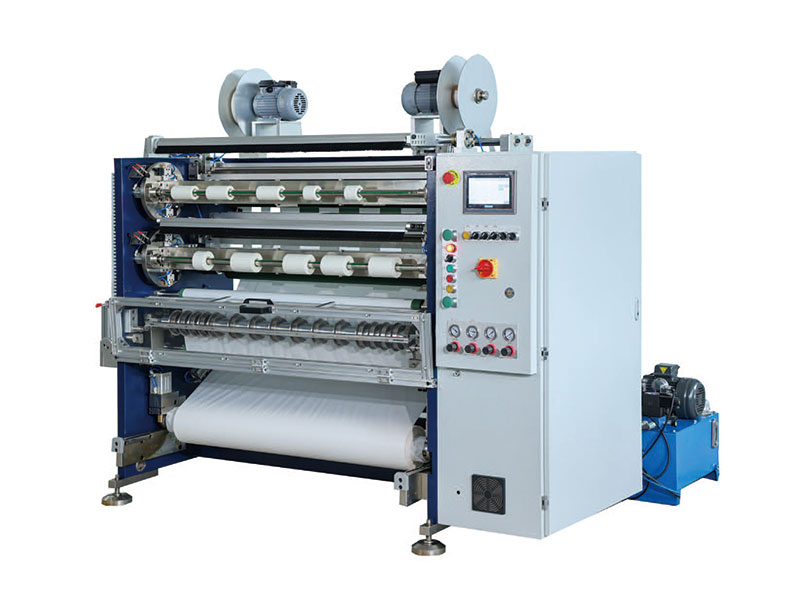 Tape Slitter
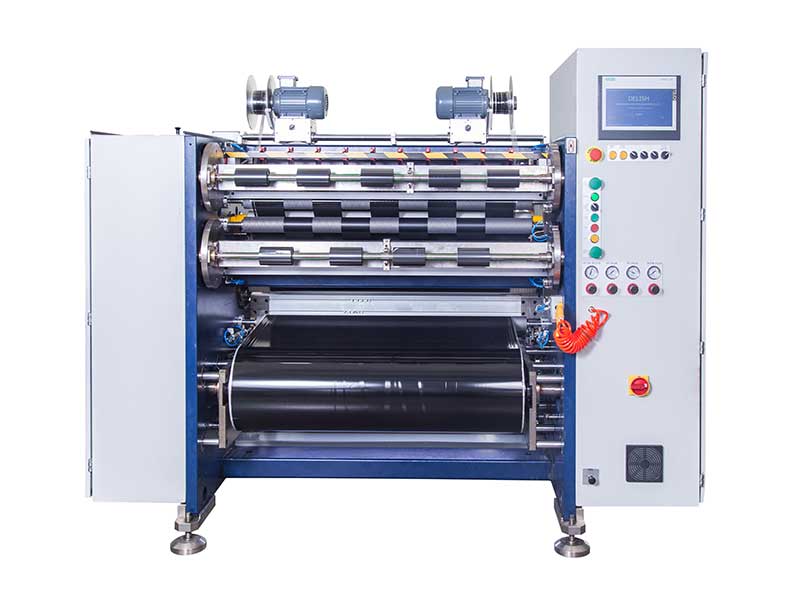 Barcode Ribbon Slitting Machine
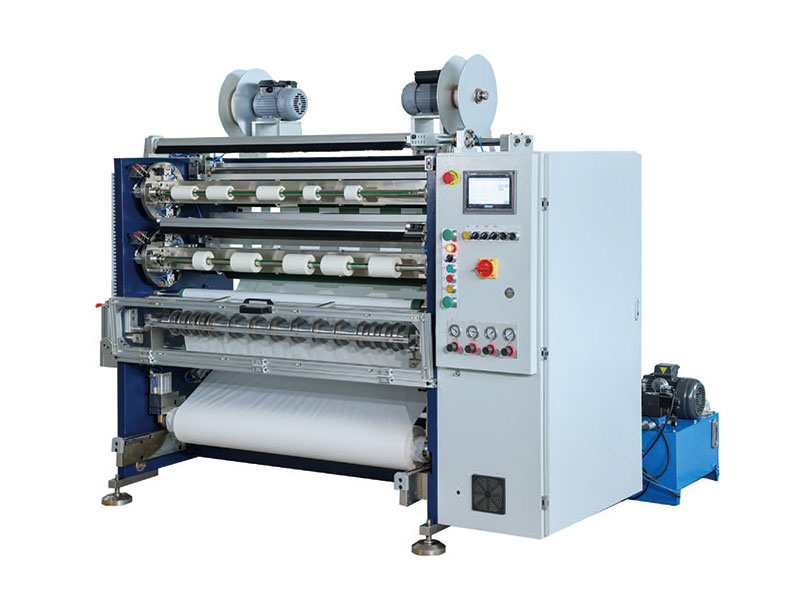 Single Side Adhesive Slitter
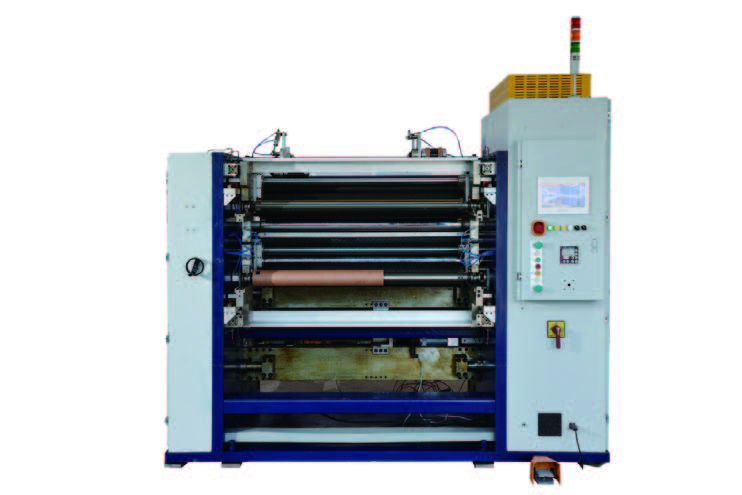 Capacity Film Slitter
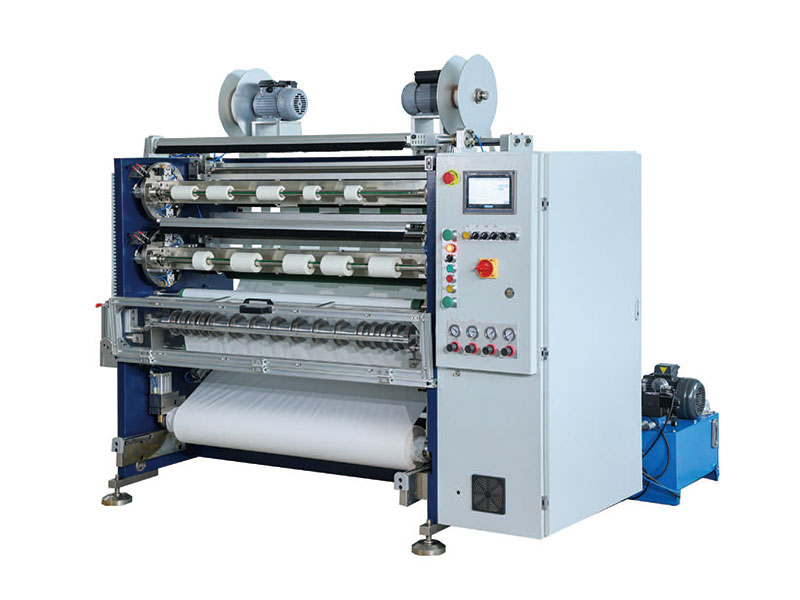 Double Side Adhesive Slitter
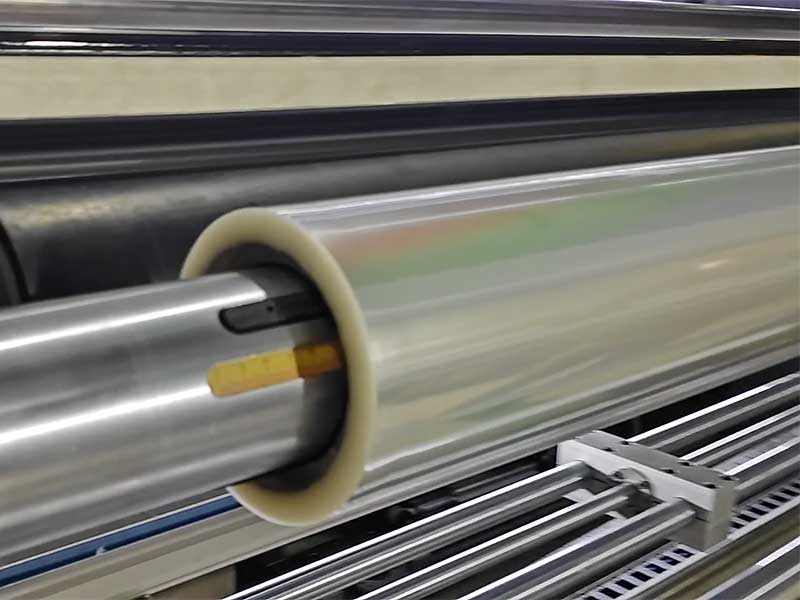 Solar Film Slitter