In the production and slitting process of hot stamping foil, static electricity problems have always been one of the common faults that plague enterprises. Excessive static electricity can lead to foil adhesion, uneven rewinding, unwinding and slipping, and even electric shock or fire hazards for operators. This paper will focus on the two core treatment schemes of grounding system optimization and static roller selection and layout, focusing on the causes of static electricity.
1. Where does static electricity come from?
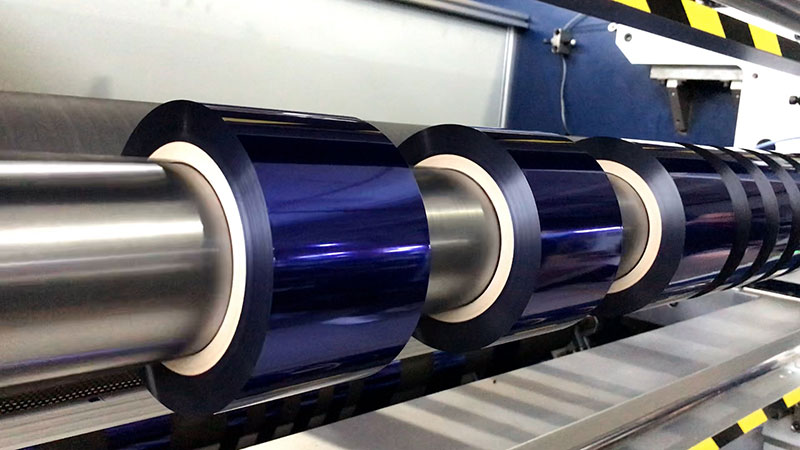
Foil stamping is usually made of PET film as the substrate, and the surface is coated with a release layer, color layer, and adhesive layer. During the slitting process, the foil film contacts and separates from the guide rollers, tool slots, rewinding shafts and other components of the slitting machine at high speed, resulting in contact and friction electrification. PET material itself is a high insulator, the charge is not easy to leak, and the slitting workshop environment is relatively dry (especially in winter or air-conditioned environment), the accumulation rate of static electricity is much greater than the dissipation rate, resulting in obvious electrostatic discharge.
Common manifestations include:
• The foil film is adsorbed on the guide roller or frame, and the deviation is serious;
• The end face of the winding is uneven, and there is a "plum blossom roll";
• Slitting dust is difficult to remove due to electrostatic adsorption;
• The operator has obvious electric shock sensation.
2. The core idea of governance: guidance + neutralization
There are two main paths to control static electricity in slitting machines:
1. Conduction: Allow the generated charge to be quickly released to the earth through conductive pathways, avoiding accumulation.
2. Neutralization: Using the principle of corona discharge or induction, it provides ions of opposite polarity to the surface of the electrostatic foil film to neutralize the excess charge.
Among them, the grounding system is a basic "guide" measure, except for the electrostatic roller, which has both the function of guiding and neutralizing, and the combination of the two has the best effect.
3. Grounding system: the most overlooked foundation
When many factories check the grounding of the slitting machine, they often only look at whether the machine shell is connected to the ground, but ignore the electrostatic discharge path of the rotating parts and non-metallic parts.
1. Equipment overall grounding inspection
• The main frame of the slitting machine should be reliably connected to the ground trunk line of the workshop through copper braided belt, and the grounding resistance is recommended to be less than 4Ω.
• Check whether all metal guide rollers, wall plates, and retraction reels are electrically connected to the frame (measured with multimeter resistance gear, the resistance value should be less than 1Ω).
2. Grounding treatment of rotating shaft and guide roller
• Bearing grease can form an insulating layer that causes the rotating guide rollers to be in "electrical suspension". A common solution is to install a carbon fiber or copper grounding brush at the end of the guide roller shaft, and lightly press the brush wire on the roller surface or shoulder to ensure continuous conduction during rotation.
• For metal guide rollers, ground carbon brushes can be installed directly; For guide rollers coated with rubber or polyurethane, the conductivity of the roll surface needs to be considered (which will be covered in the subsequent electrostatic roller removal scheme).
3. Grounding of the retraction reel
• The surface of the inflatable shaft or mechanical shaft is prone to poor contact due to oil stains and oxide layers. It is recommended to clean the shaft face regularly and add a grounding slip ring or carbon brush assembly to the shaft end.
4. Removing static rollers: active and passive selection
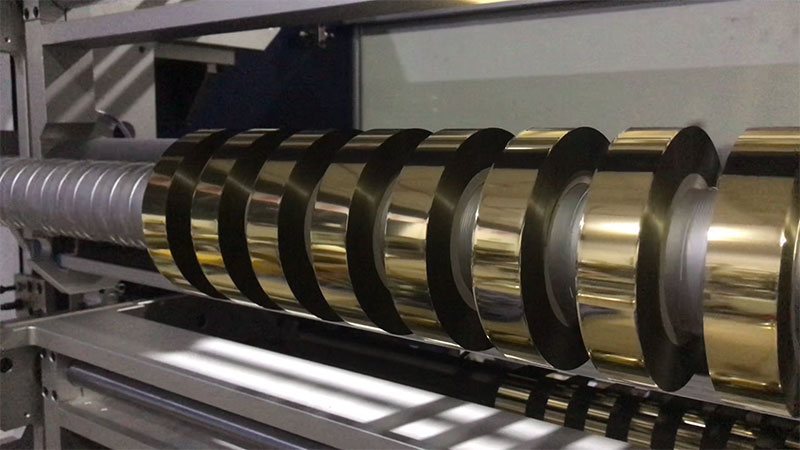
Relying solely on grounding cannot eliminate the existing static charge on the surface of the foil film, because the PET film itself is not conductive, and the charge cannot be "flowed away" through the grounding roller. At this time, it is necessary to remove the electrostatic roller to intervene.
1. Passive conductive rollers
• Structure: The roller body is made of conductive rubber, carbon fiber composite material or surface coated metal, and the resistance value is controlled between 10⁴~10⁸Ω (both conductive and not short circuit discharge ignition).
• Principle: When the electrostatic foil film touches the conductive roller, the charge can be discharged to the earth through the roller body→ bearing→ grounded carbon brush→
• Applicable scenarios: Occasions where static electricity is not too severe and the film surface is highly demanding.
• Note: Both ends of the conductive roller must be effectively grounded, and the roller surface must be clean and free of oil stains.
2. Active Static Elimination Rollers (Ion Rollers)
• Structure: The roller body is equipped with a high-voltage ionization needle or ion generator rod, and the roller surface has dense small holes or a grid structure.
• Principle: The high-voltage power supply generates positive and negative ions, which are blown to the surface of the foil film through the roller surface to quickly neutralize static electricity.
• Advantages: It has a significant effect on insulating films and does not depend on the contact area between the film and the rollers.
• Disadvantages: High cost, need to be equipped with a high-voltage power supply, and need to clean the ionization needle regularly.
3. Layout suggestions
• The first guide roller after unwinding: the static electricity is the strongest when the foil film is first unfolded, and the conductive roller or ion roller can be installed here to release most of the charge as soon as possible.
• Before and after the slitting knife groove: The friction during the slitting process is severe, so it is recommended to install conductive rollers in front of the knife and ion rollers behind the knife to guide and neutralize.
• Last roller before rewinding: Make sure the electrostatic potential of the membrane surface before entering the rewinding shaft is less than ±2kV, otherwise it will affect the reeling neatness.
5. Example of combination scheme (for medium and high speed slitting machine)
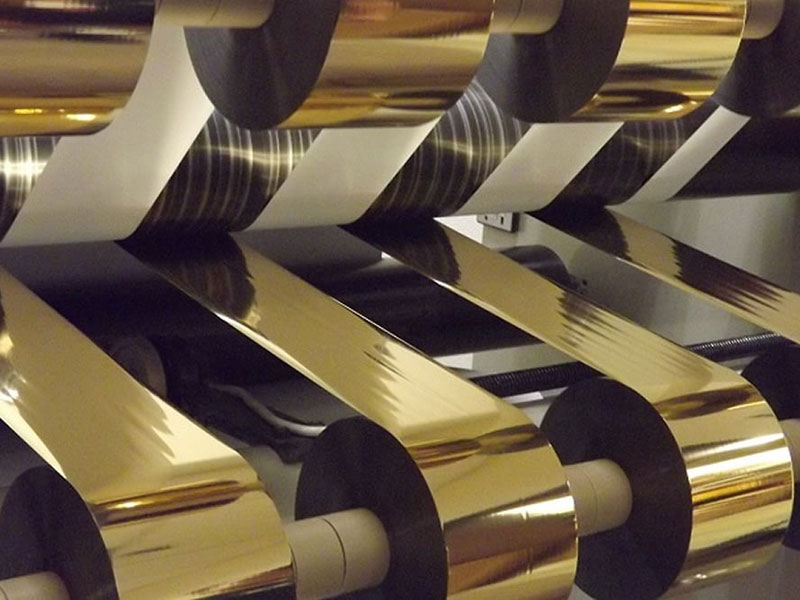
Taking the hot stamping foil slitting machine with a working speed of 150m/min and a width of 800mm as an example, the following combinations are recommended:
| location | measures | Function |
| Put the scroll | Install a grounding carbon brush | Ensure that the shaft is connected to the earth |
| The first guide roller after unwinding | Conductive rubber roller (with grounded carbon brush) | Directs the charge on the back of the substrate |
| Before the cut | Ion Air Wand (Non-Contact) | Neutralizes static electricity on the membrane surface |
| After cutting and before winding | Active ion rollers | Completely eliminate static electricity generated by slitting |
| The whole machine frame | Independent grounding trunk with resistance < 4Ω | Safety Fundamentals |
At the same time, it is recommended to control the humidity in the workshop between 50%~65%, which can significantly reduce the intensity of static electricity generation.
6. Reminder of common misunderstandings
1. Myth 1: When the machine shell is connected to the ground, all parts are grounded.
→ Fact: The rotating parts are suspended due to bearing insulation, and a separate grounding brush needs to be installed.
2. Myth 2: The metal roller itself conducts electricity and does not need to be treated.
→ Fact: If the metal roller is not grounded, it is still an isolated conductor, but will carry high-voltage static electricity and discharge the damaged film.
3. Myth 3: Except for the electrostatic roller, there is no need to worry about it.
→ Fact: The conductive roller surface will be dirty, and the ion roller ionization needle will accumulate dust and needs to be cleaned at least once a week.
7. Conclusion
The static electricity problem of hot stamping foil slitting machine cannot be solved by a single measure. Reliable grounding system + reasonable arrangement of static removal rollers (conductive rollers and ion rollers in cooperation) is a mature and effective combination solution in current industrial practice. From the installation of the basic grounding brush to the selection of the ion rollers, every step can significantly improve the quality of the slitting and the safety of the operation. It is recommended that enterprises add electrostatic test items (electrostatic field testers can be used) in daily spot inspections to achieve quantitative management and prevent problems before they occur.
Note: When selecting the specific model, please consult the electrostatic removal equipment supplier to provide a measured solution according to factors such as slitting speed, foil film width, ambient temperature and humidity.
 English
 Deutsch
 Français
 Español
 Português
 日本語
日本語 русский
 한국어
한국어 عربي
عربي ภาษาไทย
 Tiếng Việt
 Italiano
 Cold Foil Slitter
 Card Print Ribbon Rewinder
 Card Print Ribbon Slitter
 Hot Stamping Foil Slitting Machine
 Holographic Foil Slitter
 Hot Stamping Foil Slitter RSDS7H 1350 PLUS
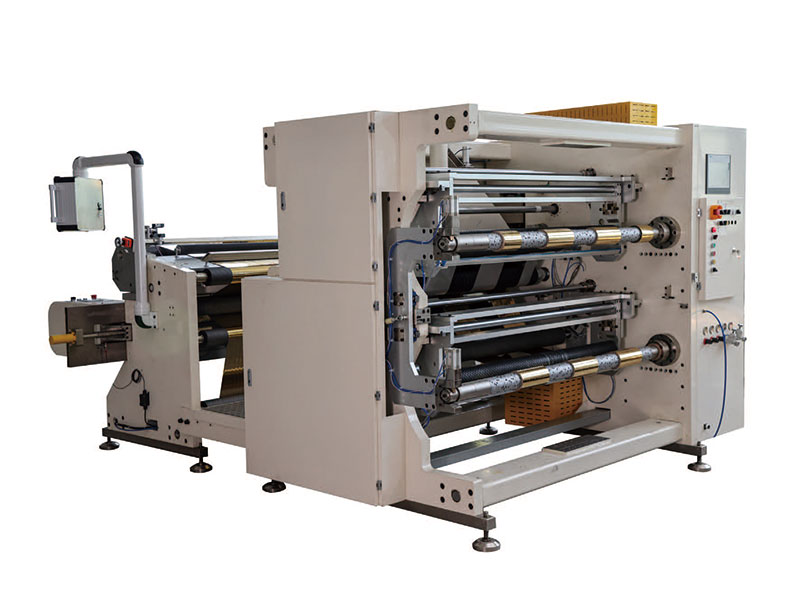 Hot Stamping Foil Slitter (RSDS7H) 1350