The solar film slitting machine is a key equipment in the processing of materials such as optical film, automotive film, and architectural film. After long-term operation of the equipment, various failures will inevitably occur, affecting production efficiency and product quality. This article summarizes common fault phenomena, causes and troubleshooting methods, and provides systematic maintenance suggestions to help operators quickly solve problems and extend the life of equipment.
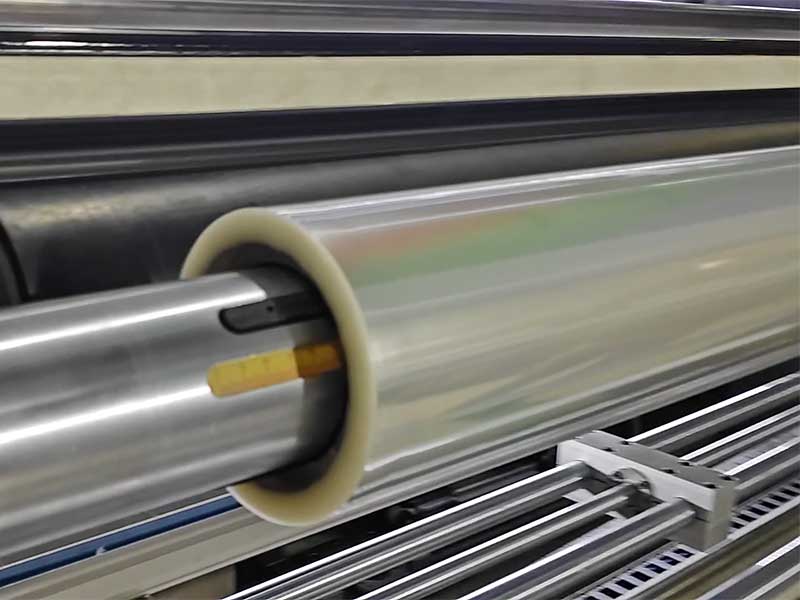
First, common faults and troubleshooting methods
1. The slitting edges are uneven, with burrs or jaggedness
Possible causes:
• Worn or localized chipping of the round blade
• Improper upper and lower knife clearance (too large or too small)
• Loose cutter shaft bearings
• The tension of the film coil fluctuates too much
Troubleshooting steps:
1. Stop the machine to check the blade, use a magnifying glass to observe the edge condition, and replace the worn or chipped blade
2. Readjust the gap between the upper and lower knives, generally the gap is 5%~10% of the film thickness
3. Inspect the knife shaft bearings, tighten or replace damaged bearings
4. Check the unwinding and unwinding tension control system and calibrate the tension sensor
2. The slitting width is inconsistent and the size deviation exceeds the standard
Possible causes:
• Loose tool holder positioning
• Axial movement of the tool shaft
• Membrane roll deviation (serpentine)
• Failure of the correction system
Troubleshooting steps:
1. Check and tighten the locking device of each tool holder
2. Measure the axial clearance of the cutter shaft and adjust the thrust bearing
3. Observe the running trajectory of the membrane and check whether the guide rollers are parallel and whether the surface is unevenly worn
4. Test the guidance sensor (ultrasonic or photoelectronic), clean the lens, and recalibrate the zero point
3. The winding end face is uneven, in the form of a "bell" or "star"
Possible causes:
• Improper retraction tension (unreasonable taper tension curve)
• Uneven pressure of the rollers
• The reel bends or jumps
• Uneven stress distribution inside the membrane coil
Troubleshooting steps:
1. Check the winding tension curve and adjust the initial tension and taper values according to the film type and thickness
2. Check the levelness of the roller and the pressure difference between the two ends, and grind or replace the roller if necessary
3. Use a dial indicator to measure the radial runout of the winding shaft, and it needs to be corrected or replaced if it exceeds 0.05mm
4. Reduce the winding speed and observe the improvement of the end face
4. Abnormal noise or vibration during operation
Possible causes:
• Damaged or poorly lubricated bearings
• Loose or worn belts
• Failure of the dynamic balance of the knife shaft
• Coupling is poorly aligned
Troubleshooting steps:
1. Use a stethoscope to determine the source of noise, check the temperature of each bearing and the feel of rotation
2. Check the tension of the transmission belt and replace the aging belt
3. Remove the cutter shaft to check whether it is bent and do a dynamic balance test
4. Check the motor and spindle couplings and re-correct the alignment
5. Scratches or indentations on the membrane surface
Possible causes:
• Foreign objects or scratches on the surface of the guide rollers
• Excessive static electricity absorbs dust
• The blade is installed at the wrong angle, and the back of the knife rubs against the film surface
• Over-roll does not rotate (bearing jamming)
Troubleshooting steps:
1. Wipe all guide rollers, check the smoothness of the surface, repair or cover the damaged roller surface
2. Install the static elimination rod and check whether the grounding is good
3. Readjust the blade inclination angle (usually 15°~25°) to ensure that the blade back is not in contact with the membrane
4. Manually rotate the over-rollers one by one to replace the lag bearing
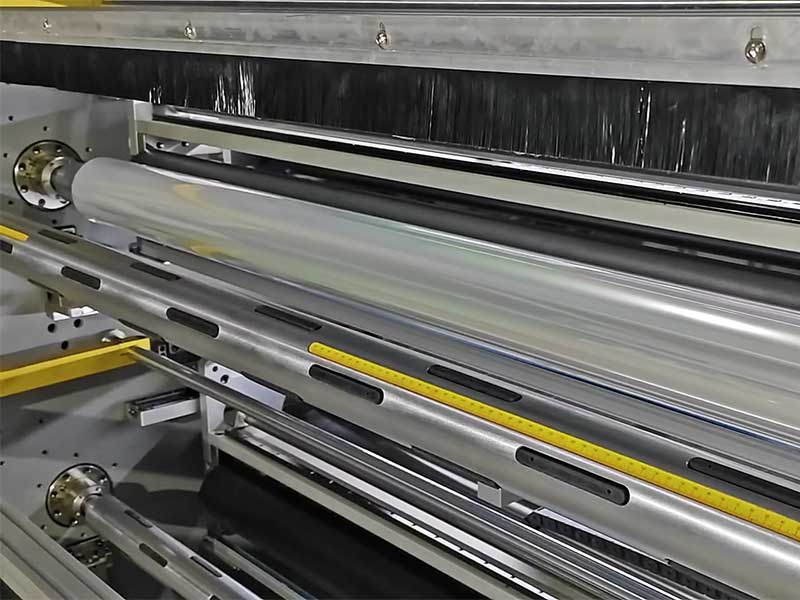
Second, daily maintenance guide
1. Daily inspection (before and after shutdown)
• Cleaning: Use a non-woven cloth dipped in alcohol to wipe the knife shaft, guide roller, and pressure roller to remove residual rubber powder and dust
• Lubrication inspection: Fill each oil nozzle with an appropriate amount of grease, and apply lubricating oil to the chain and guide rail
• Air pressure check: Confirm that the air source pressure is 0.5~0.7MPa, and check whether there is air leakage in the gas pipe
• Blade Condition: Visually inspect the blade for significant defects
2. Weekly maintenance
• Check the tension and wear of each drive belt
• Clean the guiding sensor lens and reflector
• Check whether the clamping force of the winding/unwinding expansion shaft is sufficient
• Test the functions of protective devices such as emergency stop buttons and safety light curtains
3. Monthly maintenance
• Calibrated tension sensor (using standard weight wire pulling method)
• Check the clearance of each bearing and replace the bearing with abnormal noise or heat
• Measure the parallelism between the knife shaft and the guide roller, and the error is controlled within 0.1mm/m
• Clean the dust inside the electrical control cabinet and check whether the terminal blocks are loose
4. Quarterly maintenance
• Remove all blades for grinding or replacement
• Check the oil level and oil quality of the reducer, change the oil for the first 500 hours of operation, and then every 2000 hours
• Correction of the dynamic balance of the retractor
• Check the inverter parameters and back up the equipment parameter settings
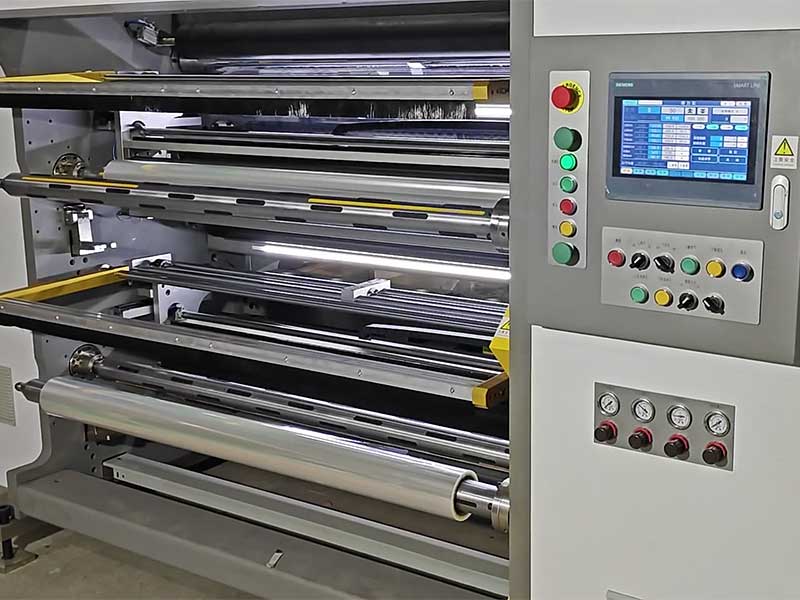
Third, reference for the replacement cycle of wearing parts
| Part name | Normal replacement intervals | Replacement conditions: |
| Round blade | 3~6 months | The amount of chipping or wear > 0.2mm |
| bearings | 1~2 years | The clearance exceeds the standard or rotates with abnormal noises |
| Drive belt | 1 year | Visible cracks or elongation >5% |
| Correction sensor | 3~5 years | Unresponsive or unstable signal |
| Static elimination rod | 2 years | The electrostatic effect is reduced, and the needle tip is worn |
Fourth, fault recording and improvement suggestions
It is recommended to establish an equipment operation ledger to record the time, phenomenon, cause, treatment measures and spare parts consumption of each failure. Through data analysis, it can be discovered:
• High-frequency fault points: If the blade frequently breaks at a certain position, check whether the cutter shaft runs out or whether the incoming joint is too hard
• Seasonal law: The problem of static electricity in summer is aggravated, and it is necessary to strengthen dehumidification and static elimination
• Service life: Statistics on the actual lifespan of different brands of blades, and select the best procurement
Epilogue
The stable operation of the solar film slitting machine relies on the idea of "prevention first, investigation is evidenced". Operators should receive systematic training to master the adjustment logic of the three core parameters of tension, clearance and correction. It is recommended to invite equipment manufacturers to conduct a comprehensive physical examination every six months, combined with the daily maintenance of this guide, which can effectively reduce unplanned downtime and increase the slitting yield rate to more than 98%.
Note: The structure of different brands and models of slitting machines may be different, please refer to the equipment manual for specific maintenance operations.
 English
 Deutsch
 Français
 Español
 Português
 日本語
日本語 русский
 한국어
한국어 عربي
عربي ภาษาไทย
 Tiếng Việt
 Italiano
 Solar Film Slitter