Introduction
With the rapid development of consumer electronics, new energy, optoelectronic display and packaging industries, PET (polyester film) as a basic material, its application scenarios are increasingly subdivided. From traditional packaging films to high-end OCA optical adhesive release films, lithium battery separator base films, and flexible circuit board substrates, the market has put forward extremely stringent requirements for the slitting accuracy, end face quality and production efficiency of PET films.
Standardized slitting machines are no longer suitable for complex and variable process requirements. In this context, customized PET film slitting machines have become a rigid demand in the industry. How to accurately design mechanical structure, tension control, dust removal system and intelligence around the core of "non-standard" is a common problem faced by equipment manufacturers and film processing enterprises.
1. Sources of non-standard demand
Customization requirements often stem from the following dimensions:
1. Differences in Material Properties:
PET films have a wide thickness span (from thin films of 3 μm to thick films of 350 μm), and functional films with antistatic, anti-stick or ceramic coatings are added, with varying friction coefficients, hardness and brittleness. Thin films are prone to wrinkles, thick films are prone to warping, and coating films are extremely sensitive to scratches.
2. Special Process Requirements:
◦ Optical grade slitting: no dust, no scratches, and strict crystal point control.
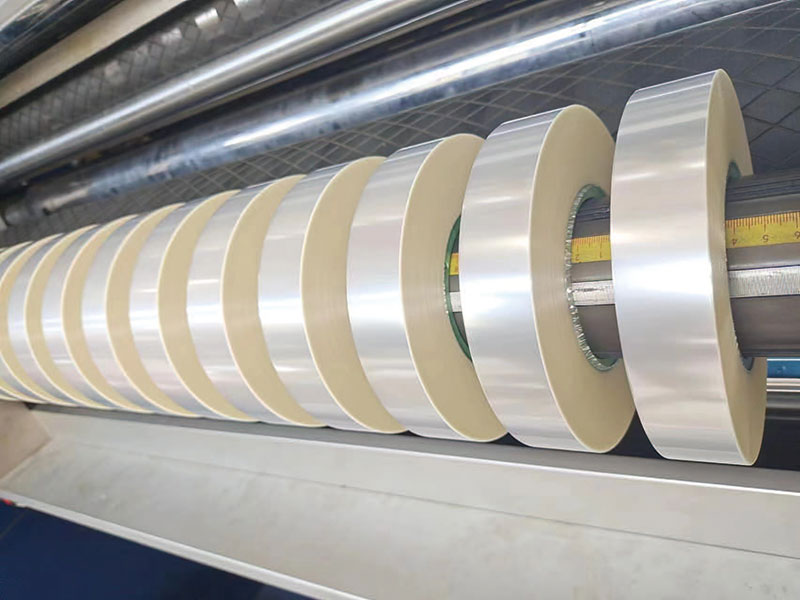
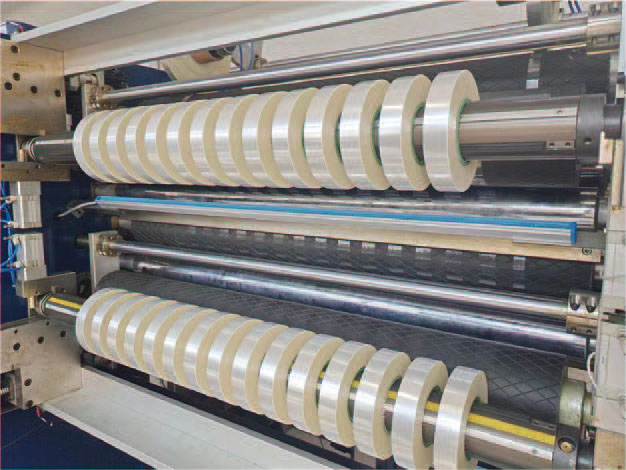
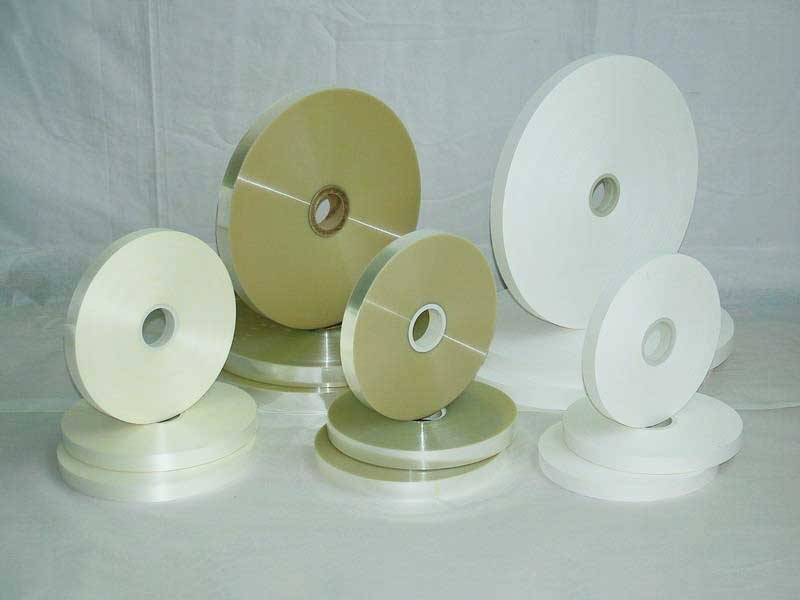
◦ Narrow band slitting: Before coating the lithium battery electrode piece, the wide PET film needs to be cut into narrow strips ranging from a few millimeters to tens of millimeters, which requires extremely high winding accuracy and end face neatness.
◦ Multi-layer composite slitting: Some applications require PET to be bonded with release film and protective film before slitting, which poses a challenge to the alignment accuracy and tension matching of the equipment.
3. Production Environment and Automation Integration:
Operate in a clean workshop (1,000 or even 100 levels), and have special standards for dust prevention, waste discharge and corrosion resistance of equipment; At the same time, enterprises need equipment that can be connected to MES (Manufacturing Execution System) to achieve recipe management, data traceability and automatic rewinding.
2. Key points of customized design
In response to the above non-standard requirements, the design of customized PET film slitting machine needs to revolve around the following five core modules:
1. Precision structure design and stiffness matching
The high-speed operation of the slitting machine (usually 300-500 m/min or even higher) requires extremely high mechanical stability.
• Wall plates and rollers: welded with high-rigidity castings or thick-walled steel plates, and treated with stress-relieving annealing to prevent deformation during long-term operation. For wide (more than 2 meters) or ultra-thick films, the diameter of the guide rollers (usually more than 150 mm) should be thickened, and the dynamic balance level of the rollers (G2.5 or above) should be strictly controlled to reduce vibration during high-speed operation.
• Shaft core customization: For 3-inch, 6-inch and even special specifications of aviation plug expansion shafts, the expansion and tightening force range of the shaft core needs to be customized according to the customer's winding core material (plastic, paper tube, metal) to avoid core deformation or slippage.
2. Tension Control System: From "Constant" to "Taper"
In the process of slitting PET film, if constant tension is used to wind it, as the roll diameter increases, the outer film will cause "burst ribs" or end face misalignment due to extrusion. At the heart of custom design is:
• Zonal tension control: unwinding adopts closed-loop vector frequency conversion control to keep the tension constant; For winding, the "taper tension control" mode must be used. That is, with the increase of the coil diameter, the tension decreases according to the preset curve.
• Low inertia pendulum roller: In the acceleration and deceleration stage, traditional PID adjustment is prone to tension fluctuations. Customized equipment usually introduces low-inertia floating rollers (pendulum rollers) as a buffer, and with a highly responsive servo drive, it ensures that the material is not stretched and deformed at the moment of start-stop.
• Optimization for ultra-thin films: For ultra-thin PETs below 6μm, a "zero-tension start" or "air floating" over-roll design is required to reduce the contact friction between the film and the roller surface by using the air layer.
3. Selection and layout of slitting methods
The choice of slitting method directly affects the yield and is the top priority of non-standard design.
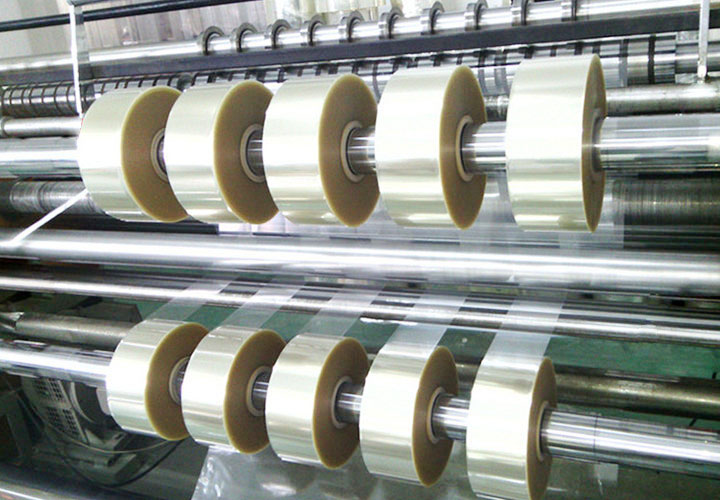
• Flat knife (shear): suitable for thick (>50 μm) or hard coating films. Custom design requires attention to the overlap of upper and lower knives and the fine-tuning accuracy of lateral clearance, usually up to 0.01mm.
• Round knife (Razor): suitable for thin films. In customized designs, customers often require a "hanging cut" structure, that is, the film does not touch the lower slot, and only the upper blade exerts pressure to cut off, which can completely avoid scratches on the back of the film.
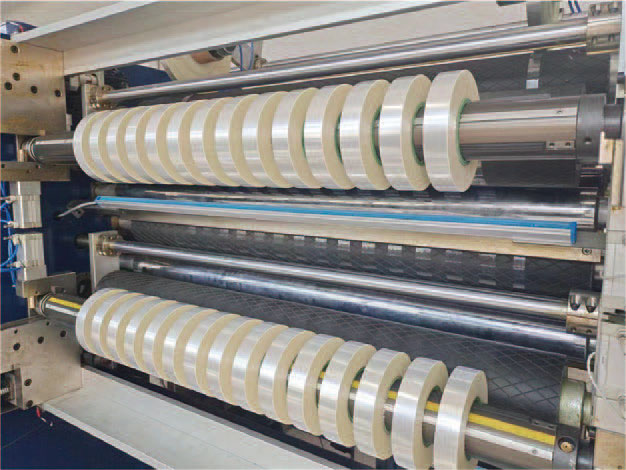
• Tool holder layout: Modular tool holder is designed according to the width combination of the customer's order. The use of the "servo tool rowing" system instead of manual tool rowing can shorten the order change time from 30 minutes to less than 3 minutes, which is crucial for non-standard production of multiple varieties and small batches.
4. Dust removal and static elimination system
PET film is prone to static electricity, which not only causes winding and adsorption of bubbles, but also attracts dust and causes waste.
• Non-standard integration: Customized equipment needs to be equipped with multi-point static elimination rods (AC or pulsed DC type) according to the cleanliness level.
• Dust removal unit: "contact + non-contact" composite dust collection box is set up after unwinding and before unwinding. Through the sticky dust roller (sticky dust paper roll) and a powerful vacuum nozzle, for scenarios where the coating requires high dust removal efficiency, it is also necessary to configure an ion air knife to neutralize static electricity while purging.
5. Automation and digital customization
Modern non-standard slitting machines are not only mechanical equipment, but also data terminals.
• Automatic material replacement: For continuous production lines, the customized "double-station rotary frame" realizes automatic rewinding without stopping. This requires the control system to synchronize the speed of the old and new rolls, and to match the timing of the cutting and roller movements in a very short time.
• Visual inspection linkage: Integrate an in-line surface defect inspection system (AOI) into the slitter control system. Once the master coil is detected to have defects (such as crystal dots and scratches), the system automatically controls the slitting machine to slow down or mark when it reaches the defect location, and even automatically rejects the defective segments to achieve "excellent cutting and optimal harvesting".
• MES interface: Customized development of PLC and host computer communication protocol to realize remote delivery of process formulas (tension curve, speed, slitting specifications) and real-time upload of production data.
3. Typical case analysis: optical grade PET protective film slitting machine
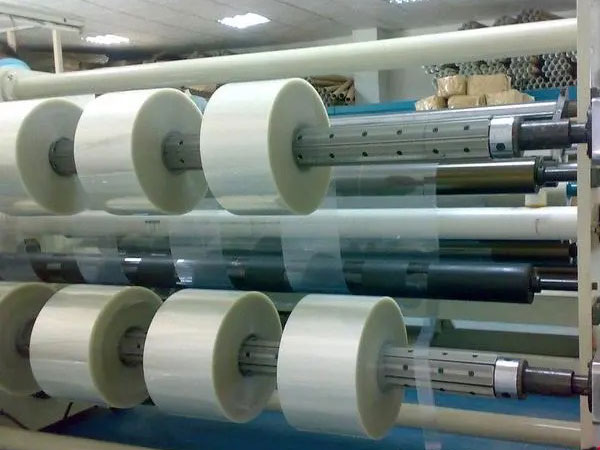
Taking a customer's customized slitting machine for OLED screen optical grade protective film as an example, the key points of its non-standard design are as follows:
• Problem: The material is ultra-transparent PET, with a thickness of 50μm, and the end face after slitting is required to have "zero white edge" (no burrs), and the control of crystal points is extremely strict, and it must be operated in a thousand-level clean room.
• Solution:
1. Material treatment: All over rollers are treated with super mirror (Ra < 0.05μm) and coated with anti-stick coating to avoid film sticking.
2. Structure: The "upward" path design is adopted to reduce the sagging of the film due to its own weight and the angle of the roller surface, reducing the risk of scratches.
3. Slitting: Imported high-precision razor blades are selected, with pneumatic proportional valves to control the cutting knife pressure to ensure constant pressure and no impact.
4. Environment: The whole machine adopts stainless steel fully enclosed protective cover, equipped with FFU (fan filter unit) to form internal positive pressure to isolate external dust; The waste discharge system adopts a central dust collection pipe to prevent waste edge filaments from flying in the machine.
4. Conclusion
The design of customized PET film slitting machine is by no means a simple mechanical assembly, but a deep integration of material mechanics, automation control, precision machining and customer production process.
With the development of downstream applications in the direction of high precision, ultra-thinness and multi-function, future non-standard slitting machines will pay more attention to "perception" and "decision-making" capabilities. By introducing AI visual recognition of edge defects, predictive maintenance algorithms, and remote debugging based on digital twins, customized slitting equipment will not only meet the basic needs of "cutting open", but also realize the intelligent leap of "cutting precisely, cutting steadily, and cutting economically".
For manufacturing enterprises, choosing a customized partner with deep process understanding, mechanical manufacturing skills and software integration capabilities will be the key to improving material utilization and seizing high-end market share.
 English
 Deutsch
 Français
 Español
 Português
 日本語
日本語 русский
 한국어
한국어 عربي
عربي ภาษาไทย
 Tiếng Việt
 Italiano
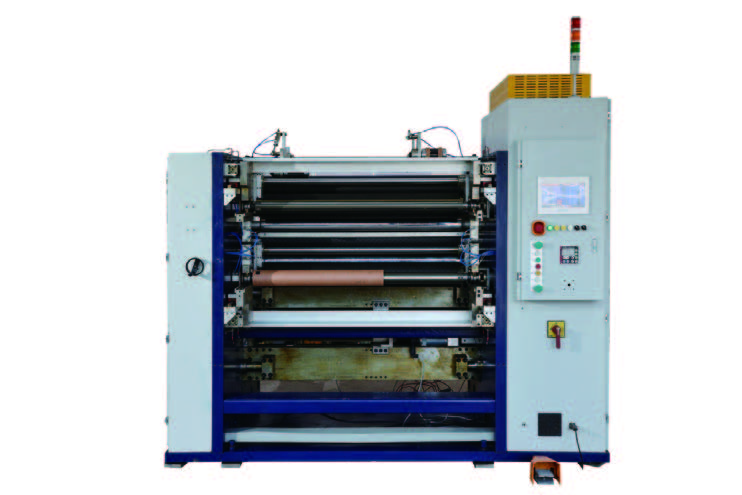 New Energy Film MPET Slitter
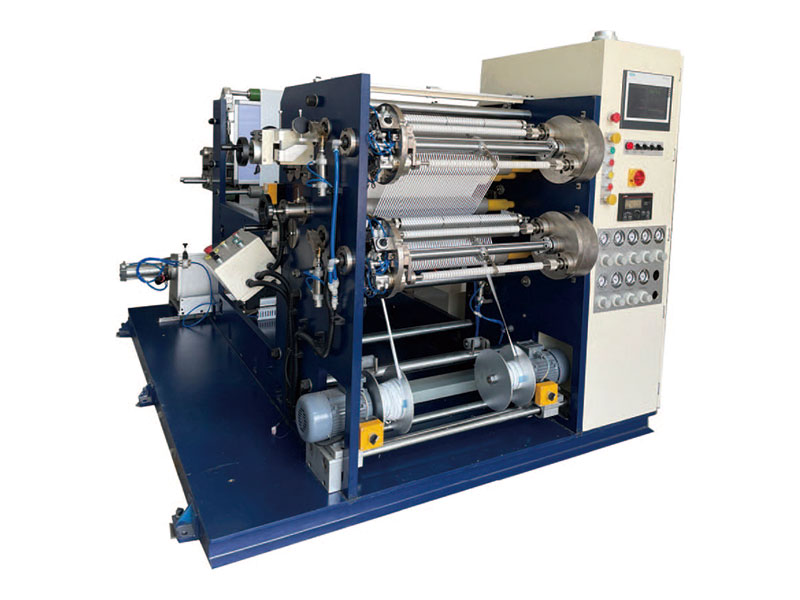 Correction Tape Slitter CTS-550-M
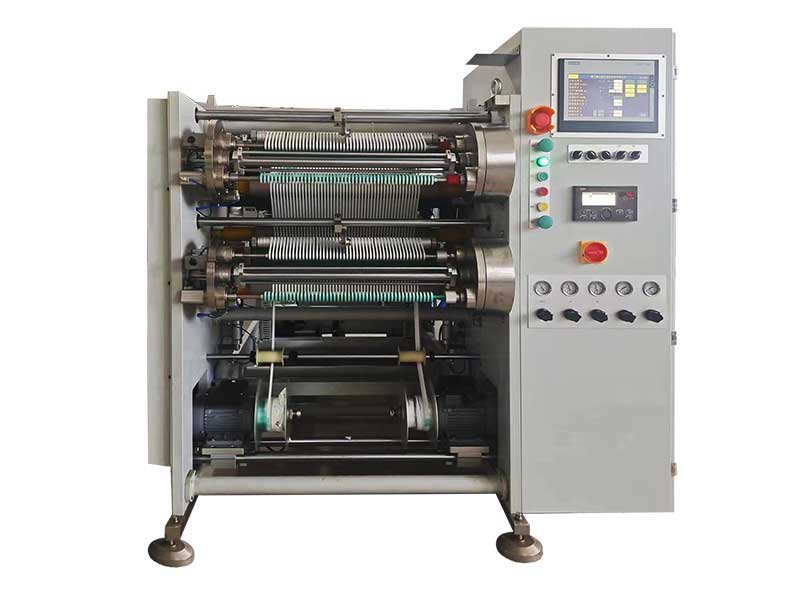 Correction Tape Slitter CTS-570-A
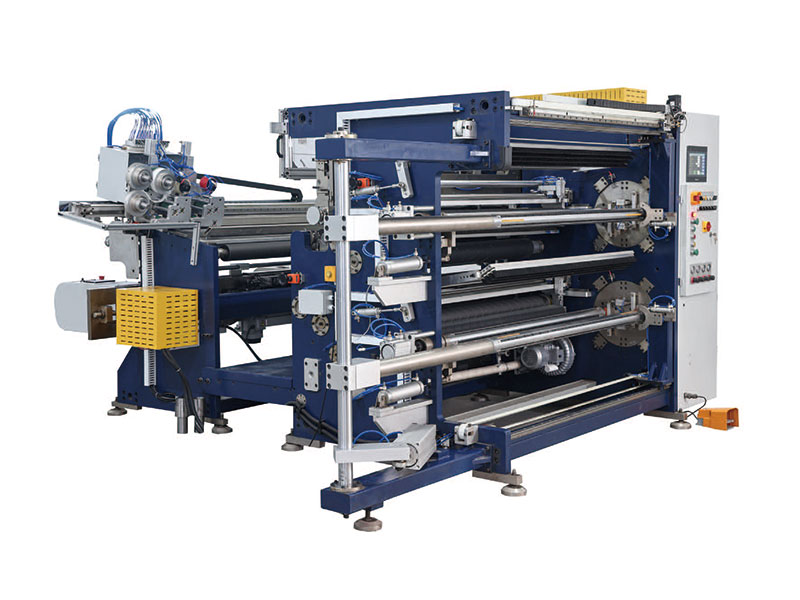 PET Film Slitter RSDS7H 1350 PLUS
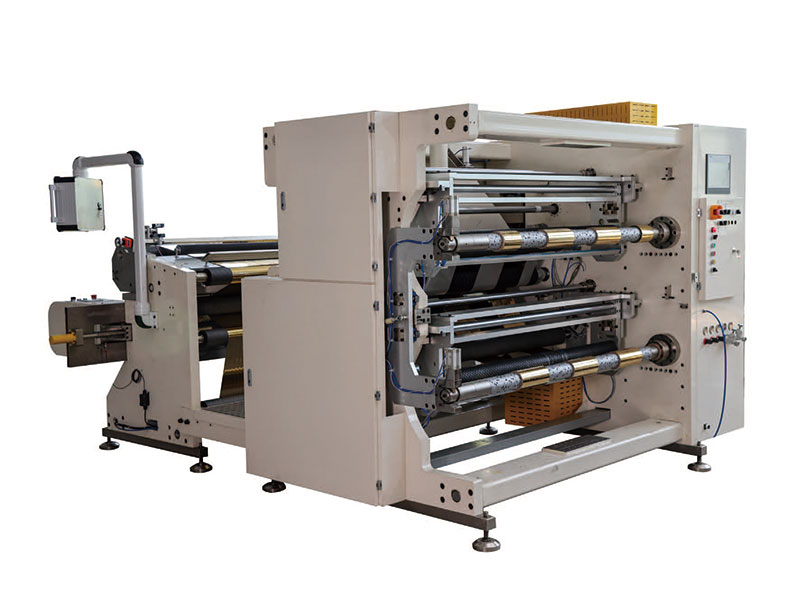 PET Film Slitter (RSDS7H) 1350