1. Definitions
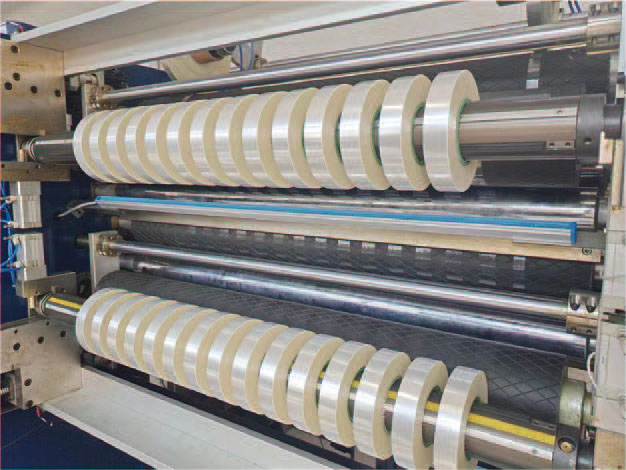
PET film slitting machine is a precision processing equipment specially designed to cut and rewind wide and large rolls of PET film (polyester film) longitudinally according to preset specifications and rewind into narrow small rolls.
PET film is widely used in packaging, electronics, optical display (such as release film, protective film), new energy (such as lithium battery separator substrate) and other fields due to its excellent mechanical properties, heat resistance, and insulation. As a key equipment for back-end processing of film production, the accuracy of the slitting machine directly determines the yield rate of the final product during high-speed coating, lamination or printing.
Unlike ordinary plastic film slitting, PET film usually has the characteristics of high hardness, high brittleness, and tight thickness tolerance (micron level), so PET film slitting machine has extremely high requirements for tension control stability, tool sharpness, and anti-static ability.
2. Working principle
The working principle of the PET film slitting machine is based on the collaborative control of the four core actions of unwinding, guiding, slitting and winding, and its core logic is to realize the longitudinal division of the coil through precise management of tension and physical cutting of the slitting unit at a constant linear speed.
1. Unwinding and tension establishment
The large roll master roll is placed on the unwinding reel and fixed by the inflatable shaft. After the equipment is started, the control system (usually PLC combined with tension controller) outputs reverse torque to the unwinding motor to establish a stable unwinding tension. As the master coil diameter decreases, the system automatically reduces torque through closed-loop controls such as floating rollers or tension sensors, ensuring that the material remains tight without stretching deformation during travel.
2. Correction and guidance
The film is prone to serpentine oscillation during high-speed travel. The correction system detects the edges of the film through photoelectric or ultrasonic sensors and drives the actuator to move the unwinding frame or guide roller laterally, ensuring that the film always runs in a set straight line and providing a precise reference line for the slitting tool.
3. Slit execution
This is the most critical physical processing link. According to the characteristics of PET film, there are two main methods:
• Circular knife shearing: The upper knife forms a scissor-like bite with the lower knife. When the film passes through the knife edge, it is separated by the shear force. This method cuts smoothly and dust-free, making it suitable for high-speed operation.
• Flat knife pressing: The blade is vertically pressed on a hard roller for cutting, suitable for narrow width or large thickness PET film.
4. Winding and winding tension control
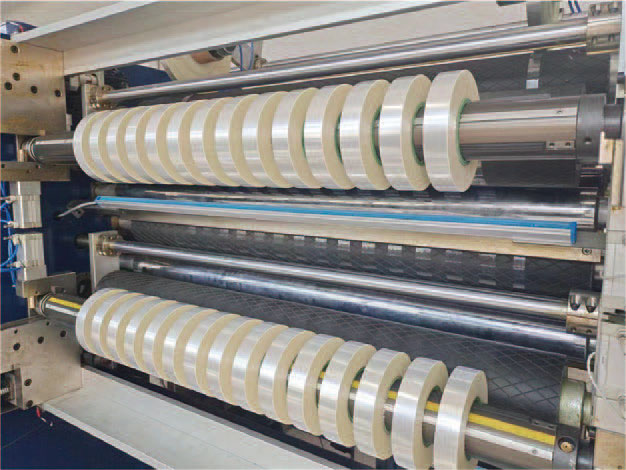
The slitted narrow strips of film are wound through the respective rewinding shafts. In order to ensure that the end face of the finished coil is neat (no burst ribs, no staggered layers), the winding part is usually wound on the surface (contact roller pressing the core) or center coiling (axis driven). The control system adopts a taper tension control strategy, that is, as the winding diameter increases, the winding tension is gradually reduced to prevent tightness on the inside and loose on the outside or "tensile deformation" or "wrinkling" of the film due to extrusion.
3. Core structure
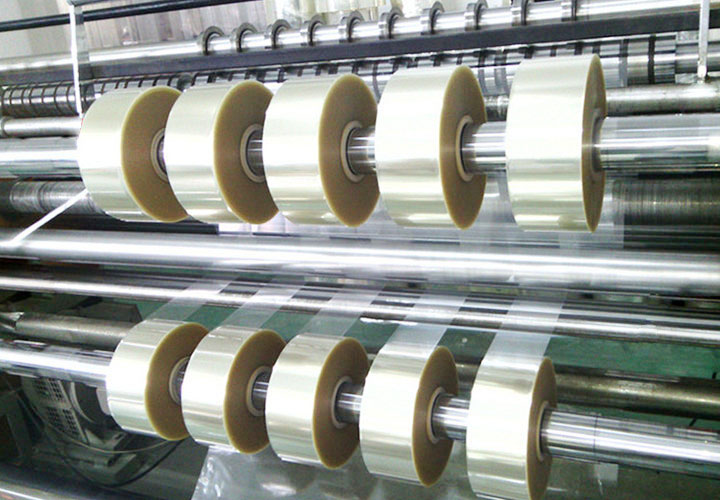
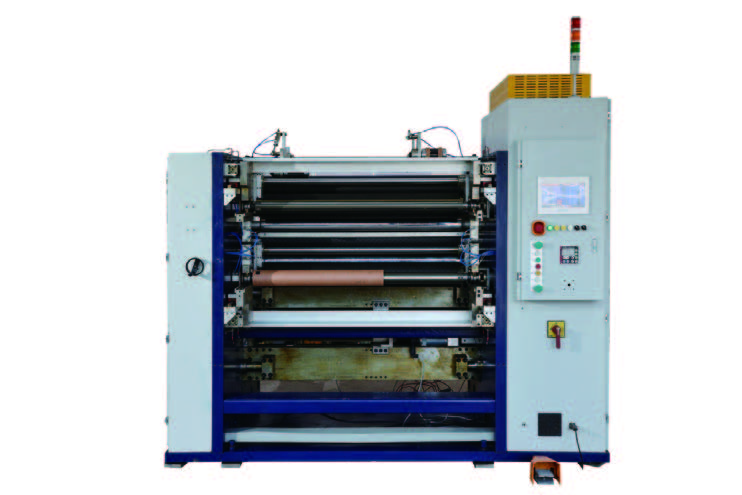
A high-performance PET film slitting machine is mainly composed of the following six core systems:
1. Unwinding system
• Structural composition: including unwinding frame, air expansion shaft, magnetic powder brake/servo motor, film splicing platform.
• Functional features: The air expansion shaft expands and tightens the paper tube through high-pressure gas, ensuring that the large roll of film does not slip during high-speed rotation. For high-end models, it is usually equipped with a double-station rotary frame to achieve automatic wind change without stopping, greatly improving production efficiency.
2. Slitting system
• Structural composition: tool holder beam, upper tool (round knife/flat knife), lower knife (bottom knife), knife groove roller.
• Features:
◦ Tool holders: Typically "freestanding" or "integral" construction, which can be freely moved and locked on the beam to accommodate different slitting specifications.
◦ Blade material: For the high wear resistance requirements of PET film, tungsten steel or ceramic blades are usually used to ensure that the incision is free of burrs and white edges (the PET film is stretched and whitened) under long-term operation.
3. Tension control system
• Structure composition: tension sensor (tension roller), floating roller (accumulator), servo drive motor.
• Functional features: This is the "neural network" of the PET slitting machine. The floating roller not only detects the tension, but also uses its gravitational inertia to absorb instantaneous tension fluctuations (such as the impact during rewinding) to ensure that the "low elongation" material of PET film does not break during acceleration and deceleration.
4. Winding system
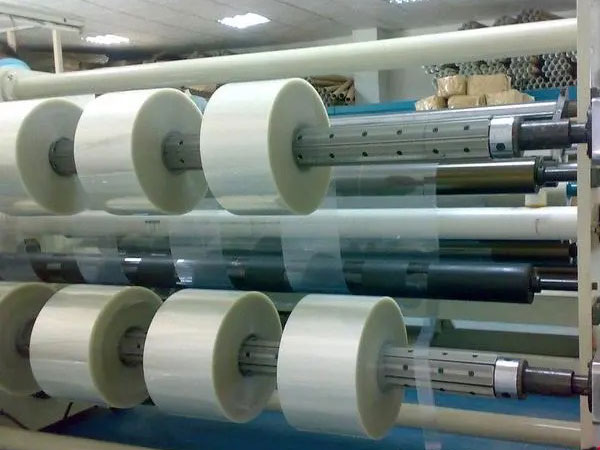
• Structural composition: winding shaft (mostly slip shaft), pressure roller, swing arm mechanism.
• Functional characteristics: In view of the characteristics of different widths of PET film after slitting, the winding shaft mostly adopts the slip shaft (differential shaft). Each slip ring of the slip shaft can be slipped independently, and automatically compensate for the difference in the linear speed of each winding unit caused by the cumulative error of coil thickness or uneven thickness of the master film, so as to ensure the consistent tightness of each roll of finished product and solve the "plum blossom-shaped" curl defect.
5. Correction system
• Structural composition: sensor (EPC/CPC), controller, actuator (ball screw or hydraulic drive).
• Functional characteristics: It is usually divided into two levels: unwinding and traveling correction. For optical-grade PET films, the correction accuracy is usually within ±0.5mm.
6. Automated control system
• Structure composition: man-machine interface, PLC (programmable logic controller), servo drive.
• Functional features: The modern PET film slitting machine adopts bus control technology, the operator only needs to input the winding diameter, slitting width, tension curve and other parameters on the touch screen, and the system can automatically complete the whole process of automatic control of acceleration, constant speed, deceleration, and stopping, and monitor the operation data in real time.
4. Technical difficulties and trends
1. Difficulties in the characteristics of PET
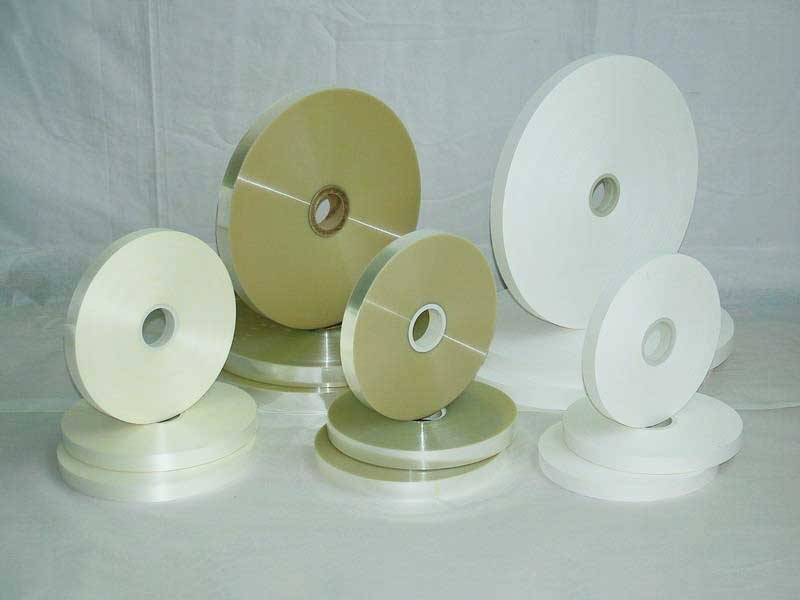
PET films have a high modulus (high rigidity) and are extremely sensitive to slitting stresses. If the blade angle is poor or the tension fluctuates too much, it is very easy to create "micro-cracks" at the slitting edges and break during subsequent customer use (e.g. stretching or heat treatment). Therefore, high-end slitting machines need to have micro-tension control (down to a few Newtons).
2. Development trend
• Intelligent: Remote diagnosis and life prediction are realized through the Industrial Internet (IIoT).
• Cleanliness: For optical films and new energy fields, equipment needs to integrate a high-efficiency dust removal system to prevent dust from slitting from contaminating the clean workshop.
• High precision: As PET films move towards thinner (less than 2 μm) and thicker (above 350 μm) poles, slitting machines need to have a wider tension adjustment range and higher speed stability (up to 800 m/min or even 1000 m/min).
Epilogue
The PET film slitting machine is not a simple cutting equipment, but a high-end equipment integrating precision mechanical manufacturing, automatic control algorithms, and material mechanics. Its performance directly determines the success or failure of PET film from "industrial raw materials" to "functional components". With the rise of China's new energy and optoelectronic industries, high-precision and intelligent PET film slitting machines are becoming the key core equipment for reducing costs and increasing efficiency in the industry.
 English
 Deutsch
 Français
 Español
 Português
 日本語
日本語 русский
 한국어
한국어 عربي
عربي ภาษาไทย
 Tiếng Việt
 Italiano
 New Energy Film MPET Slitter
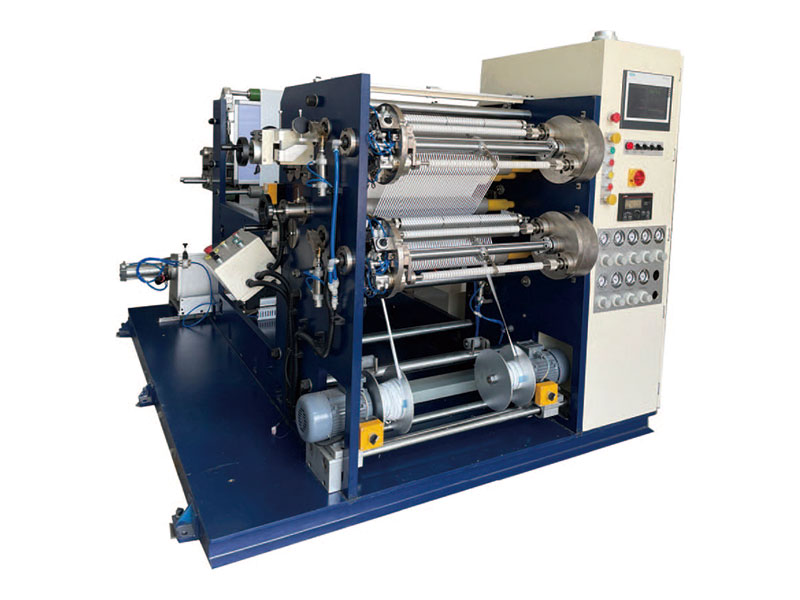 Correction Tape Slitter CTS-550-M
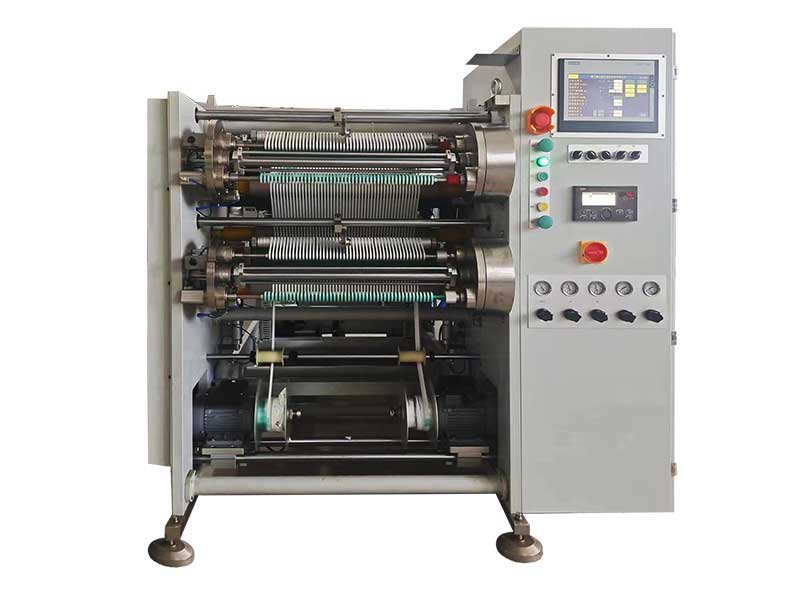 Correction Tape Slitter CTS-570-A
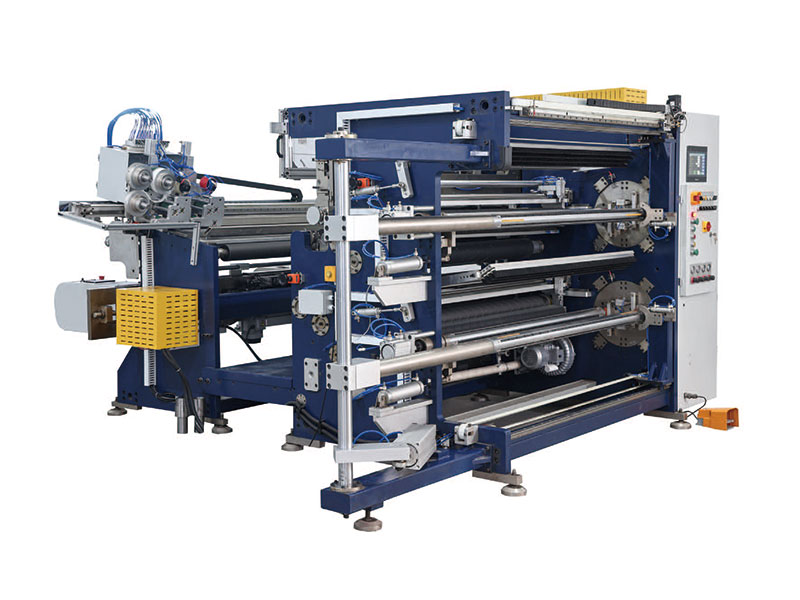 PET Film Slitter RSDS7H 1350 PLUS
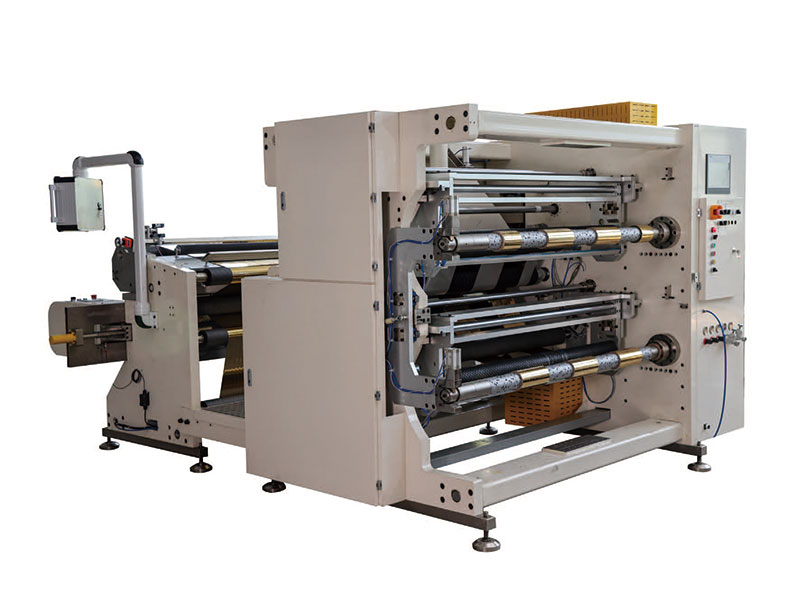 PET Film Slitter (RSDS7H) 1350