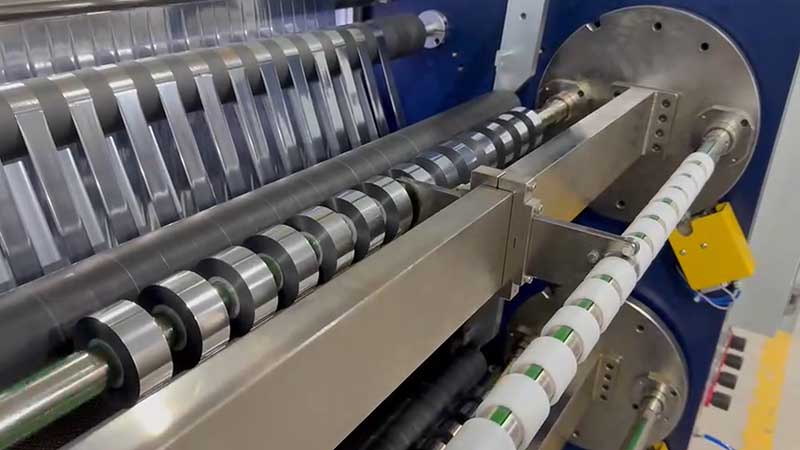
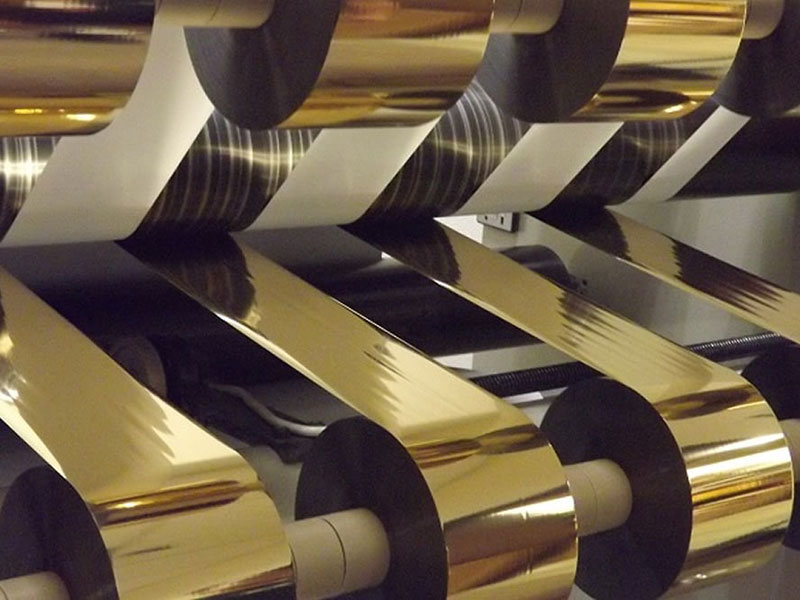
In the modern packaging and decoration industry, hot stamping foil, as a high-value hot stamping material, has a slitting accuracy that directly determines the quality and aesthetics of the final product. However, the thin nature of hot stamping foil—typically only 12-25 microns thick and covered with a fine metal or pigment coating—presents its slitting process with multiple challenges: burrs at the edges, coating peeling, and difficulty in tension control. Traditional slitting equipment often struggles to cope with these delicate requirements, leading to high material waste rates, sometimes exceeding 15%.
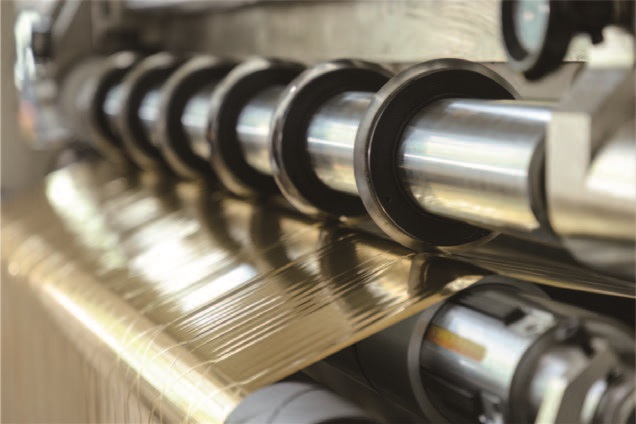
The traditional dilemma of hot stamping foil slitting
The slitting problems of hot stamping foil are mainly reflected in three aspects: first, its extremely thin substrate and fragile coating require almost no vibration and no deviation in the slitting process; Secondly, the special composite structure of the material is easy to generate static electricity during slitting, adsorbing dust or causing adhesion between layers. In addition, the tension characteristics of different batches of hot stamping foil are significantly different, and it is difficult for traditional equipment to adapt and adjust in real time. These problems not only affect production efficiency, but also directly weaken the visual texture and brand value of end products such as high-end tobacco and alcohol packaging, gift boxes, etc.
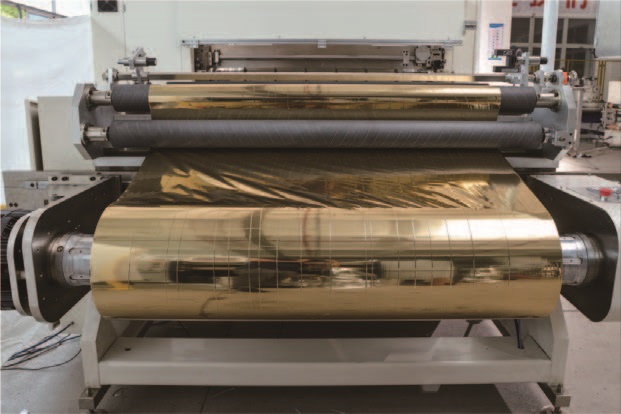
Breakthrough innovation in hot stamping foil special slitting machine
In the face of these industry pain points, the new generation of hot stamping foil special slitting machine has achieved outstanding performance through a number of technological innovations:
High-precision tension control system: adopts full closed-loop tension control technology, and realizes precise control from unwinding to winding through independent control of multi-stage tension zones. The system can monitor the changes in material properties in real time and automatically compensate for adjustments to ensure that the ultra-thin material maintains constant tension throughout the slitting process, fundamentally avoiding problems such as wrinkling and tensile deformation.
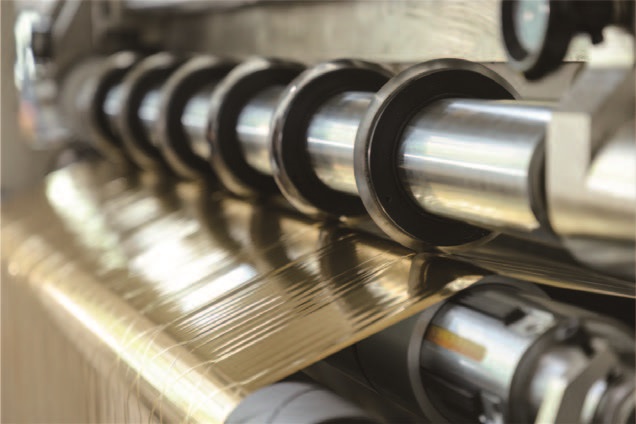
Nanoscale slitting tool technology: Developed special alloy ultra-thin blades, with air suspension tool holder design, so that the tool operates with almost zero vibration during the slitting process. The edge angle is hydrodynamically optimized to achieve "micron-level cut-in", controlling edge burrs to within 3 microns, well below the industry standard of 10 microns.
Integration of electrostatic elimination and dust removal: Ion wind electrostatic eliminator is arranged at the key nodes of the slitting path, with a micro positive pressure clean air curtain, so that the electrostatic voltage on the surface of the material is reduced to less than 50V, and the adhesion of environmental dust is eliminated. This innovation brings the cleanliness of hot stamping foil to optical film level standards.
Intelligent vision monitoring system: Integrated high-resolution line array CCD camera to scan the slitting edge in real time at a speed of 5000 frames per second, and use AI algorithms to instantly identify and warn of any abnormalities. The system can automatically record the quality data of each roll of material, forming a traceable digital "quality fingerprint".
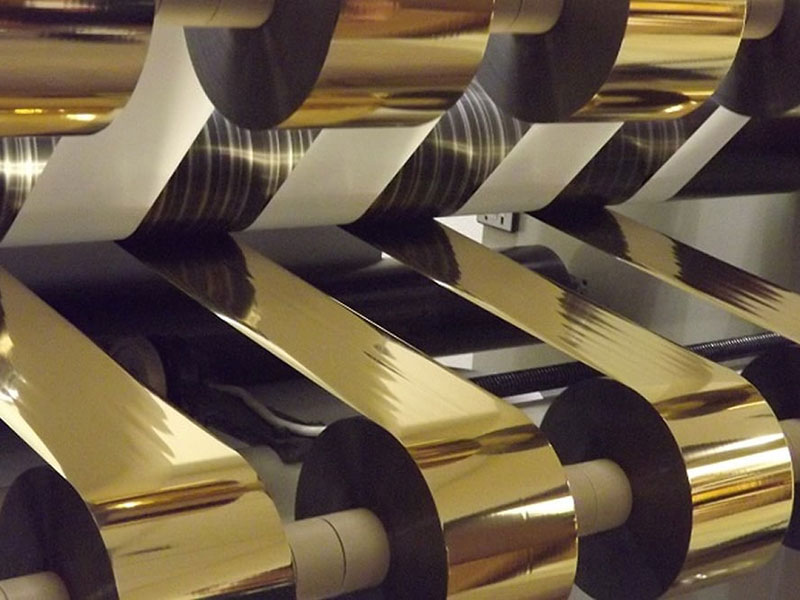
Industrial transformation brought about by excellent performance
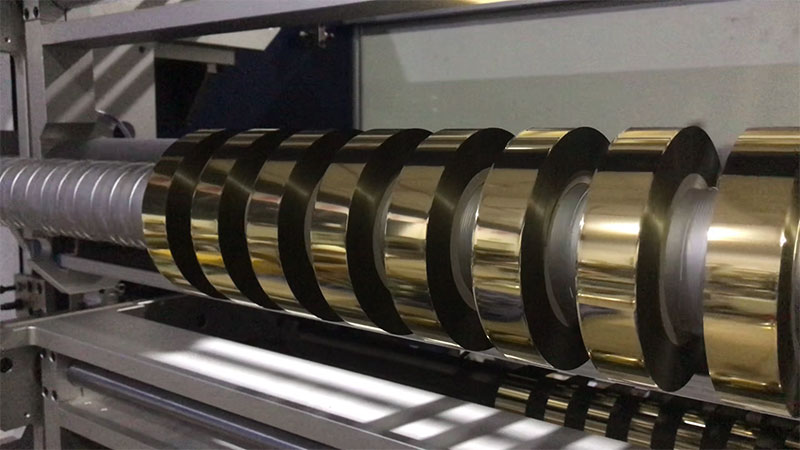
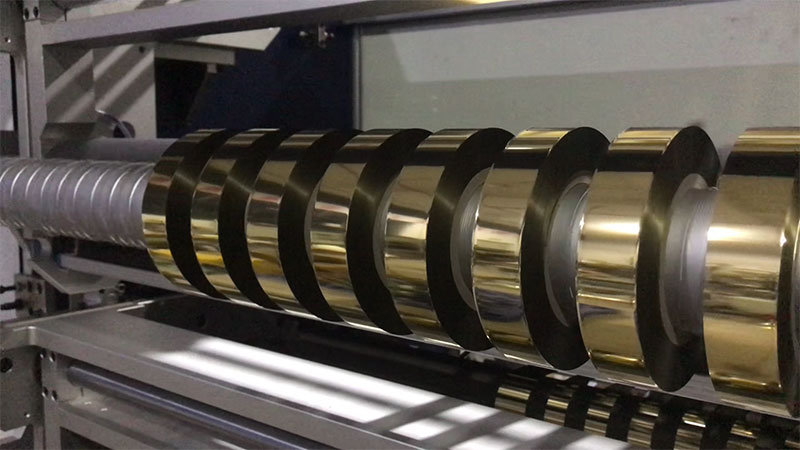
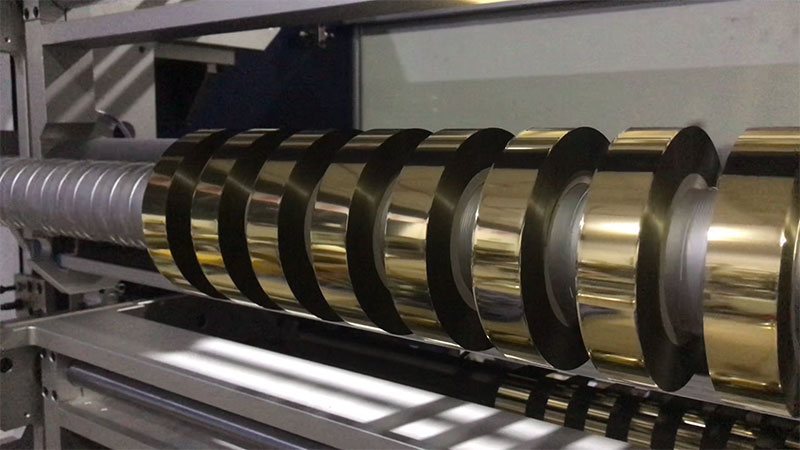
The practical application data of a high-end packaging enterprise shows that after switching to the use of hot stamping foil special slitting machine, the material waste rate plummeted from 14.7% to 2.3%, the slitting speed increased by 40%, and the product defect rate decreased by 90%. What's more, the slitted hot stamping foil has a mirror-like edge, showing excellent transfer integrity and edge clarity during the hot stamping process.
These technological advances are driving the upgrading of the entire industrial chain. Hot stamping companies are now able to take on more detailed design patterns, and designers are no longer limited by the precision of slitting and boldly adopt more complex hot stamping solutions. In the field of luxury packaging, this improvement is particularly obvious - extremely thin bronzing lines, microtexts and other effects that were difficult to achieve in the past have now become a new breakthrough in brand differentiation.
Future Prospects: The Convergence of Intelligence and Sustainability
Cutting-edge hot stamping foil slitting machines have begun to integrate industrial Internet of Things technology, which can predict tool wear cycles, automatically optimize slitting parameters, and achieve data exchange with upstream coating machines and downstream hot stamping machines. In addition, by reducing material waste and energy consumption, these equipment not only improve economic benefits, but also practice the concept of green manufacturing - every 1% reduction in material waste is equivalent to saving tons of raw materials and energy consumption for the earth.
As personalized packaging and sustainable design become global trends, the excellence of hot stamping foil slitting machines not only solves a technical challenge but also opens a door to a more precise, environmentally friendly, and creative manufacturing future. In this precision revolution of thin material slitting, technological innovation has once again proved that the most difficult industrial problems often give birth to key breakthroughs that promote the leapfrog development of the entire industry.
 English
 Deutsch
 Français
 Español
 Português
 日本語
日本語 русский
 한국어
한국어 عربي
عربي ภาษาไทย
 Tiếng Việt
 Italiano
 Cold Foil Slitter
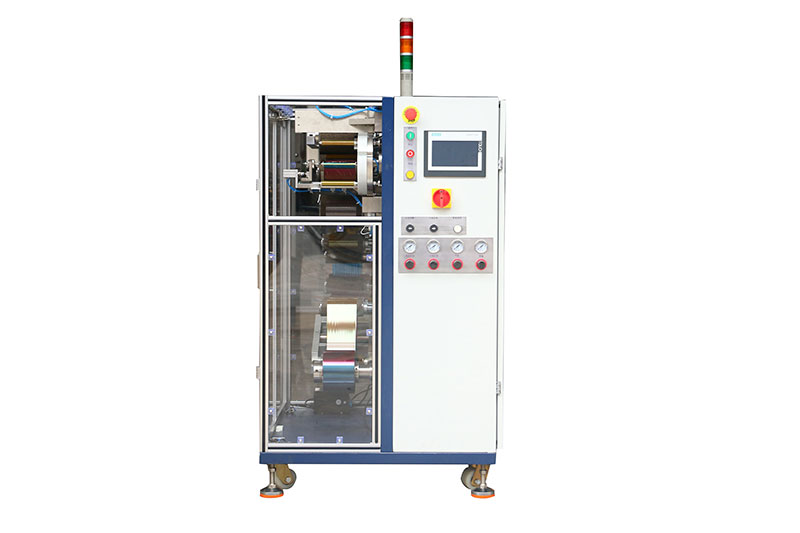 Card Print Ribbon Rewinder
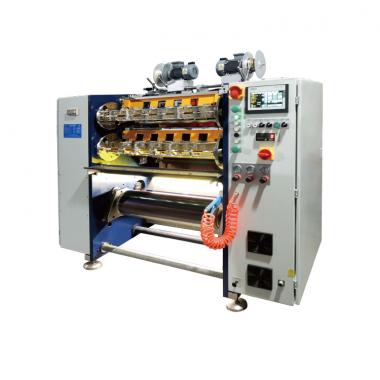 Card Print Ribbon Slitter
 Holographic Foil Slitter
 Digital Enhancement Foil Slitter
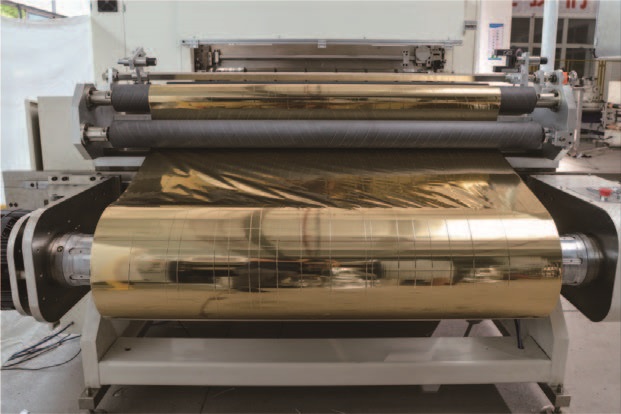
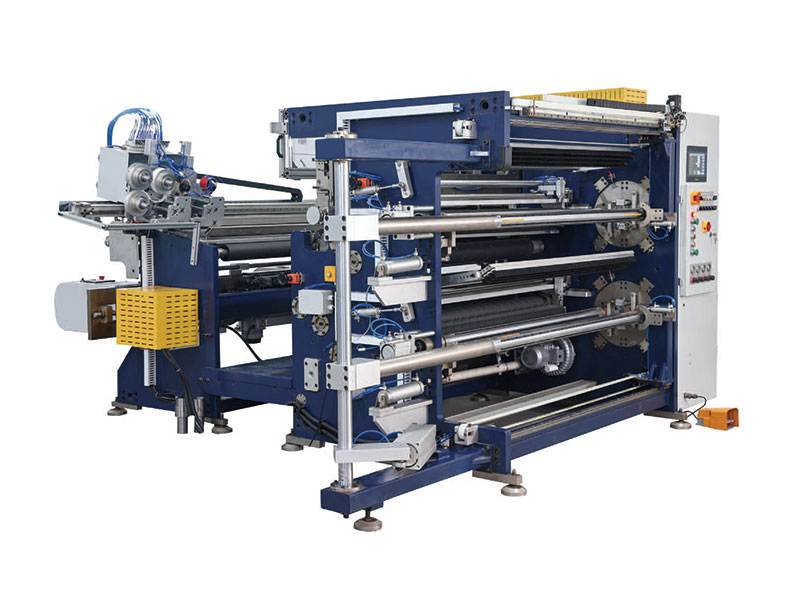 Hot Stamping Foil Slitter RSDS7H 1350 PLUS
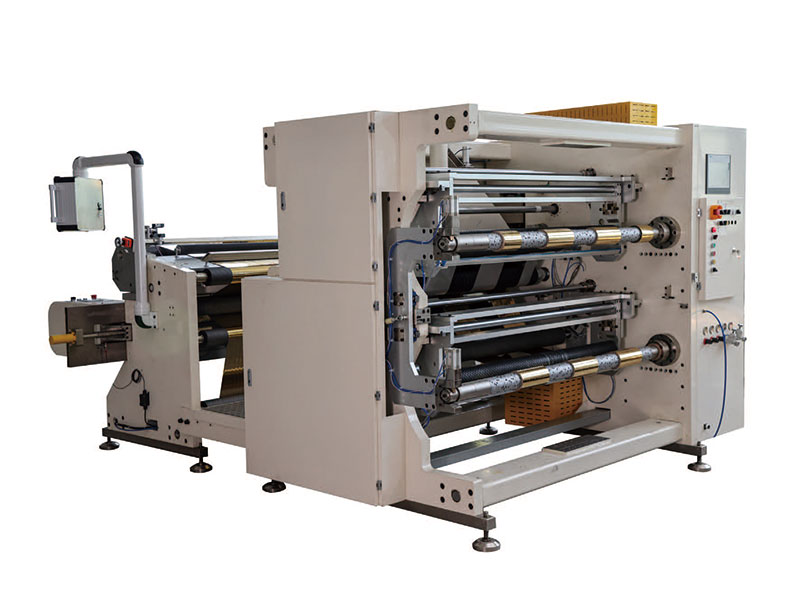 Hot Stamping Foil Slitter (RSDS7H) 1350