Next to the modern packaging line, rolls of pearlescent PET film are flowing at an astonishing speed. What is less well known, however, is that the hundreds of billions of dollars of global film industry wastes millions of tons of material each year due to inaccurate cutting – the equivalent of hundreds of thousands of hectares of forest output. These silent losses are expanding with the widespread application of PET film in food packaging, electronic products, pharmaceutical protection and other fields.
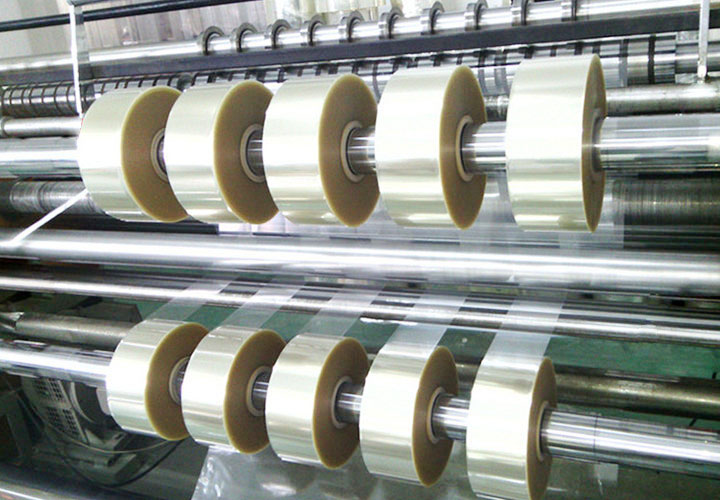
The dilemma of precision: the huge price of millimeters
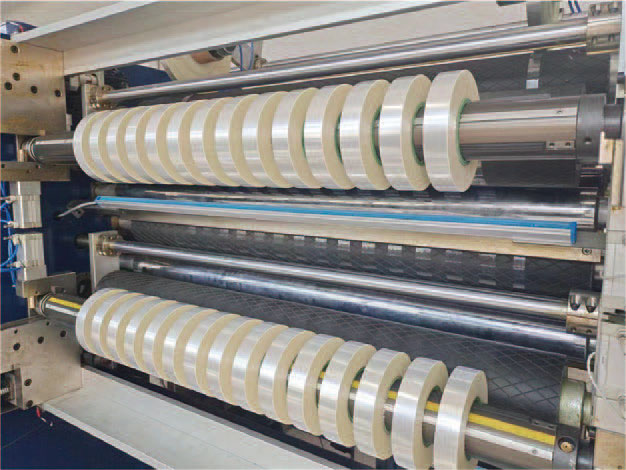
Traditional PET film slitting faces multi-dimensional challenges. The cutting deviation caused by mechanical vibration makes the edges uneven; Uneven tension control causes film wrinkling or tensile deformation; Tool wear is not detected in time, resulting in a continuous loss of quality. What's even more tricky is that the versatility of PET film requires its thickness from micron to millimeter, with different transparency, barrier properties, and temperature resistance, making it difficult for traditional "one-size-fits-all" equipment setups to meet this refined production needs.
These micro-level inaccuracies converge into huge macro waste: companies have to increase raw material purchases to compensate for losses, production lines reduce efficiency due to frequent parameter adjustments, and ultimately these costs are passed on to consumers and the environment. According to statistics, in China alone, the direct economic loss of the PET film industry due to inaccurate cutting exceeds 10 billion yuan every year.
Technological Breakthrough: Intelligent Systems Redefine Cutting Precision
Modern precision cutting solutions are fundamentally changing this. The intelligent tension control system controls the film tension fluctuation within ±0.5% through real-time monitoring and fine-tuning; The high rigidity machine tool structure is combined with vibration damping technology to minimize the impact of mechanical vibration; The introduction of machine vision systems has achieved 100% on-line inspection of cutting quality.
The most revolutionary is the deep integration of artificial intelligence algorithms. These systems can autonomously learn the optimal cutting parameters for PET films of different specifications, predict tool wear cycles and warn in advance, and even automatically optimize the cutting scheme according to the final product requirements. According to data from a leading manufacturer, the introduction of the intelligent precision cutting system has increased its PET film utilization rate from 89% to 97.2%, reducing material waste by more than 800 tons per year.
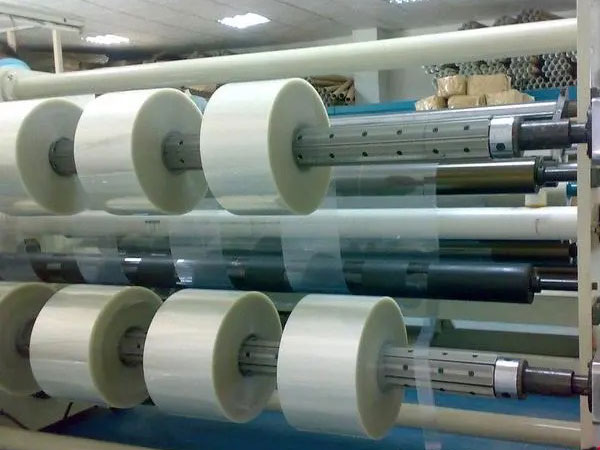
The beauty of precision: multi-dimensional value that goes beyond savings
The value of precision cutting goes far beyond material savings. The finish of the cutting edge is improved, which significantly enhances the subsequent processing performance of the film. Consistent specifications reduce adjustment time in downstream production; Precisely controlled tension better preserves the inherent physical properties of PET films.
At the level of sustainability, the impact of precision cutting is even more profound. Every 1% reduction in material waste translates to a reduction of about 1.5% in energy consumption and carbon emissions. When this savings are multiplied by the annual production of PET films worldwide, we see a grand picture of green manufacturing: less oil consumption, lower carbon footprint, more sustainable packaging solutions.
Industrial reshaping: from precision cutting to smart manufacturing
Precision cutting technology is driving the transformation and upgrading of the entire film processing industry. Equipment manufacturers have changed from mere machinery suppliers to partners providing full-process solutions. Film processing companies have achieved a leap from empirical decision-making to intelligent decision-making through data-driven production optimization.
This shift has given rise to new business models. Some forward-thinking businesses have begun offering "cut on demand" services, where customers can order films of specific specifications at any time without the need for large inventories. Others have developed unprecedented ultra-thin and ultra-high-strength composite films through precision cutting technology, opening up new market areas.
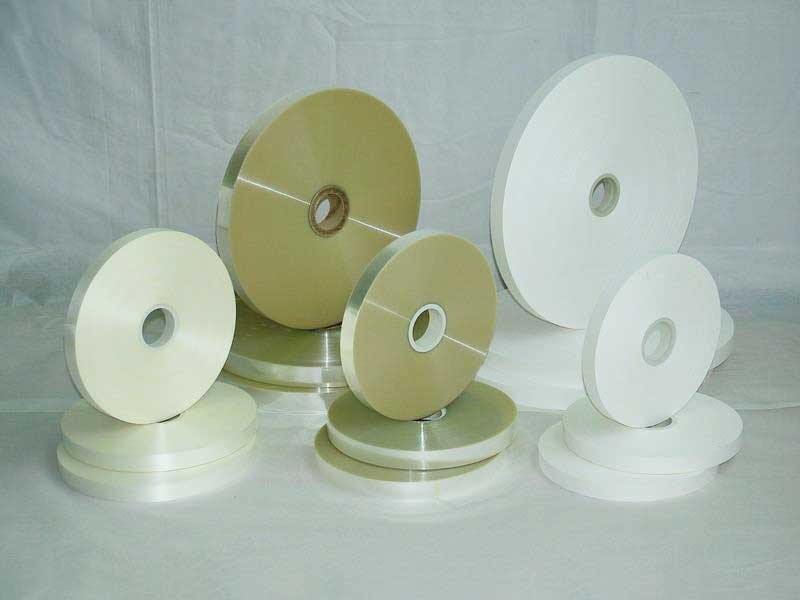
Future Outlook: The Intersection of Precision Cutting and the Circular Economy
With the increasing emphasis on plastic recycling around the world, the precision cutting of PET film has been given a new mission. The improvement of cutting accuracy makes the quality of the recycled film more stable and promotes the establishment of a closed-loop recycling system. Digital cutting records provide a complete "material passport" for each roll of film, helping to build a transparent and traceable material circulation system.
In the broader future, precision cutting technology will be further integrated with the Internet of Things, blockchain, and artificial intelligence to create a truly "zero-waste" intelligent film manufacturing ecosystem. The value of every bit of material will be maximized, and every cut will be the ultimate pursuit of resource efficiency.
From millimeter precision to system optimization of industrial ecosystems, the precision cutting solutions of PET film slitting machines are redefining the standards of efficiency and sustainability in modern manufacturing. This is not only a technological revolution, but also a shift in the mindset of the entire industry – in a world with limited resources, precision is no longer an option, but a necessity. When we have the ability to control materials at the micron scale, we also hold the key to a green industrial future.
 English
 Deutsch
 Français
 Español
 Português
 日本語
日本語 русский
 한국어
한국어 عربي
عربي ภาษาไทย
 Tiếng Việt
 Italiano
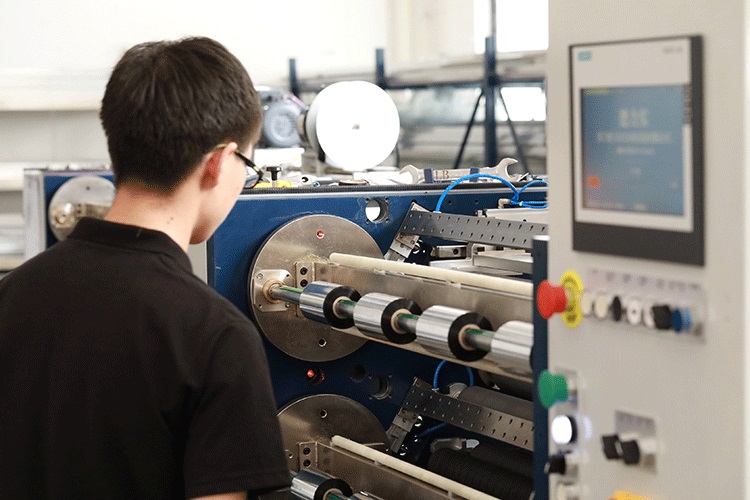
 New Energy Film MPET Slitter
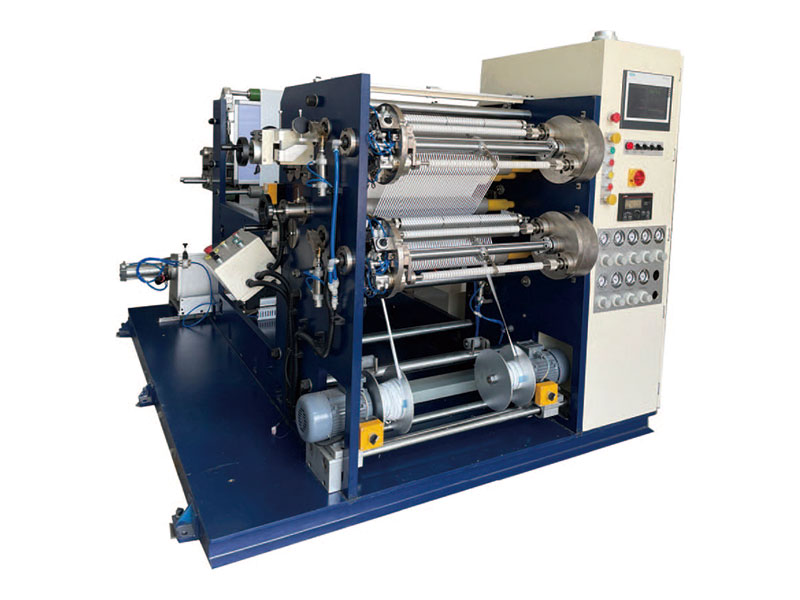 Correction Tape Slitter CTS-550-M
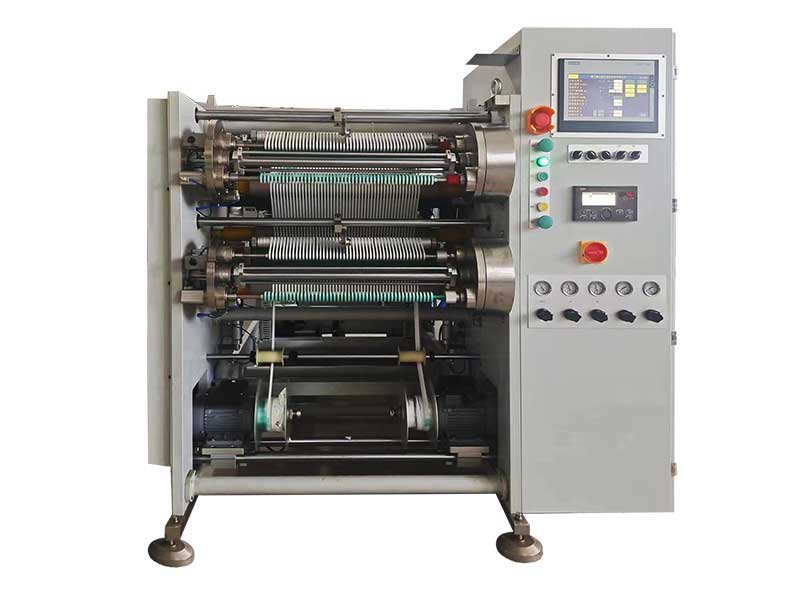 Correction Tape Slitter CTS-570-A
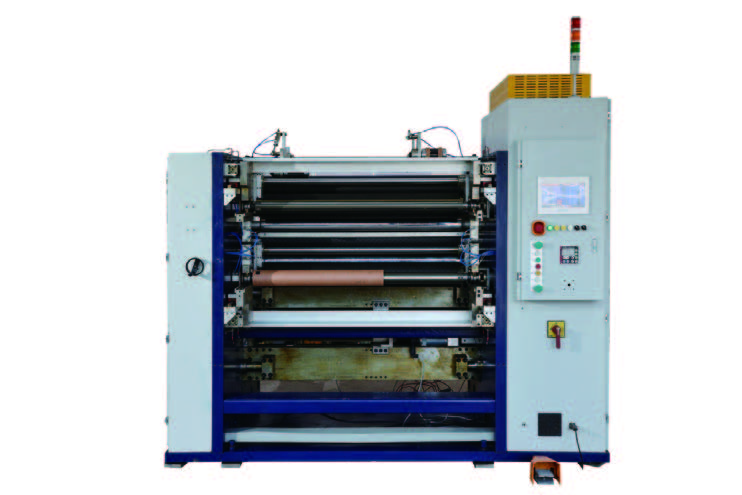
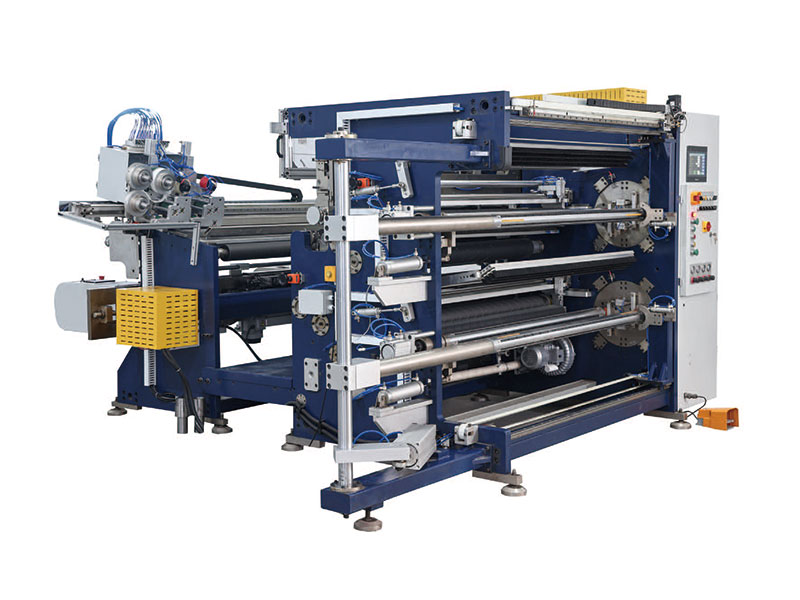 PET Film Slitter RSDS7H 1350 PLUS
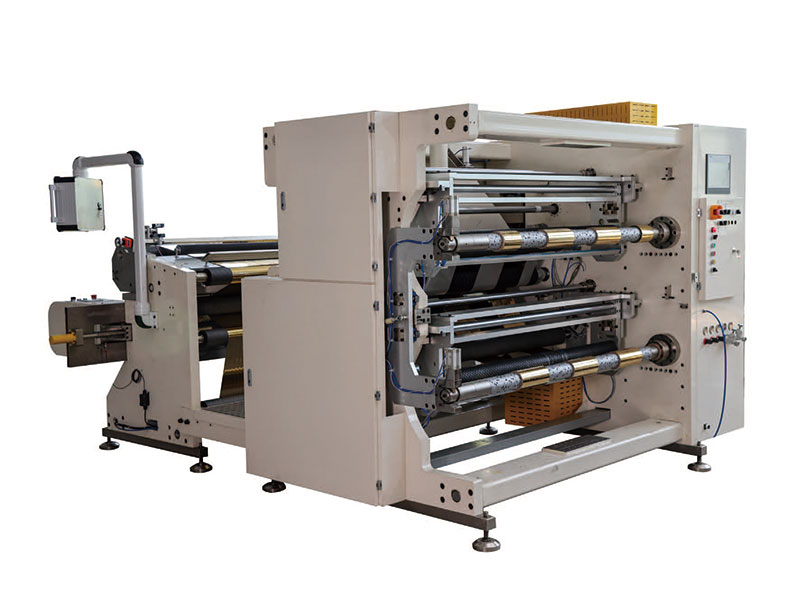 PET Film Slitter (RSDS7H) 1350